
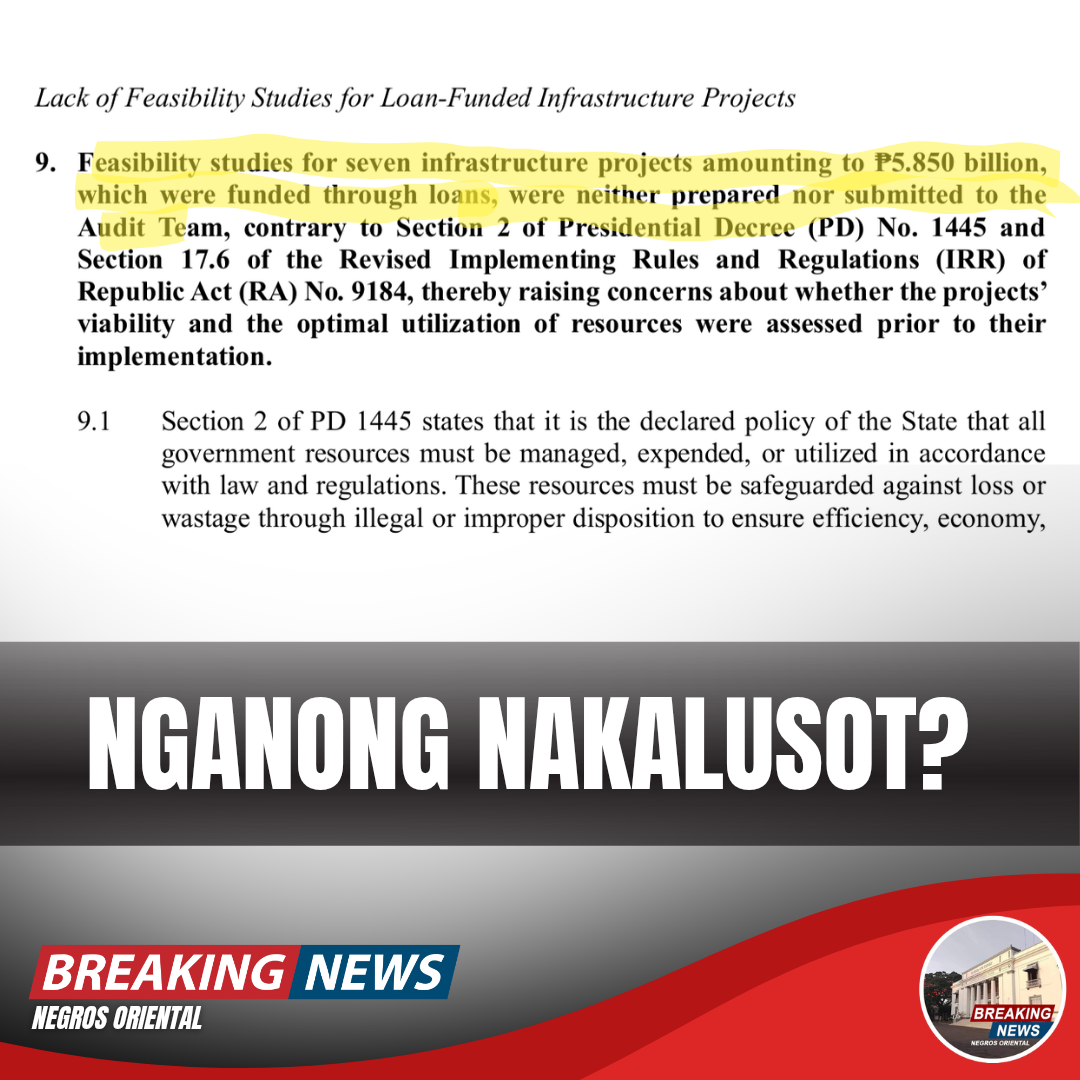
₱5.8B NEGROS ORIENTAL LOAN: COA FLAGS LACK OF FEASIBILITY STUDY, DEBT RISK
Yes, the law is clear, as are the principles of public accountability: ultimate responsibility rests with the Governor—the buck stops here. But today, the people of Negros Oriental are asking a question that cannot be ignored.
How did this pass through the Sangguniang Panlalawigan?
Under former Governor Degamo, even the smallest request—whether a modest loan, a memorandum of agreement, or a routine program—was subjected to scrutiny, questioned, and often challenged by the Provincial Board. Nothing passed automatically. Trust alone was never enough.
Today, that discipline appears to have vanished.
On little more than whispers, within minutes, the largest loan in the province’s history was approved.
₱5.8 billion.
Debt.
Incurred in the name of the people.
The question must be asked: Do our legislators still perform their duty?
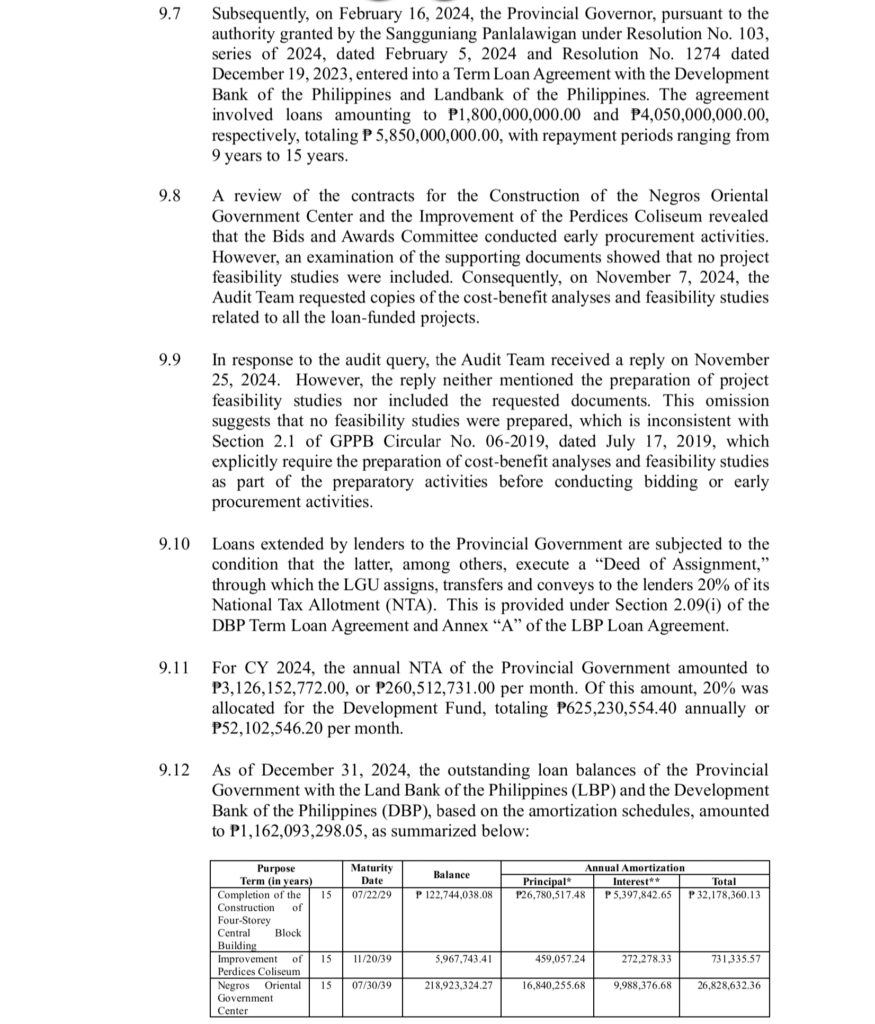
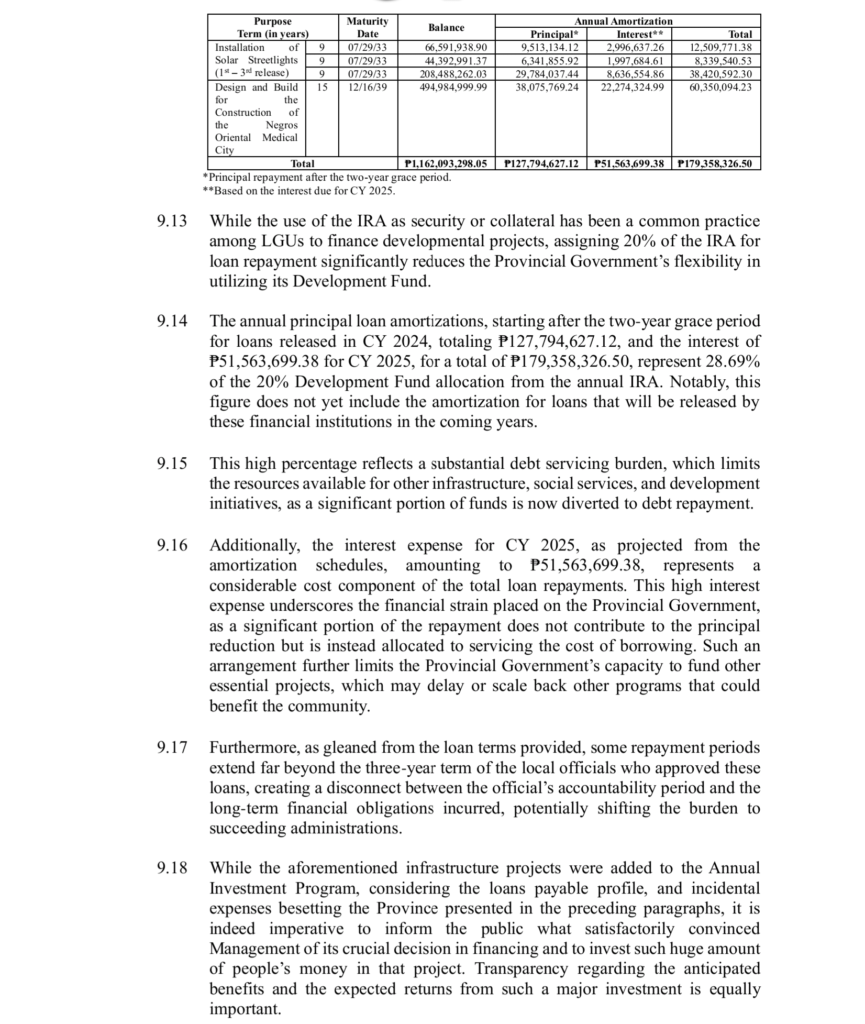
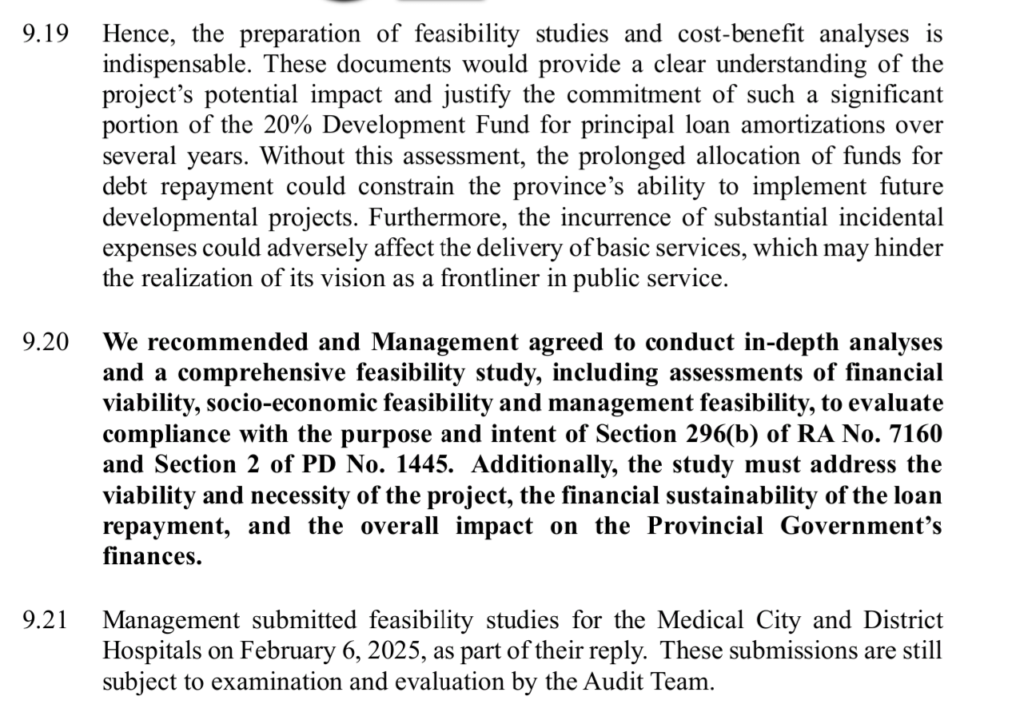
The Commission on Audit itself records that there was no feasibility study. No cost-benefit analysis. No clear assessment of the province’s capacity to repay. Twenty percent of the National Tax Allotment was assigned directly to banks. And the decision will impose a severe and lasting financial burden on the province in the years to come.
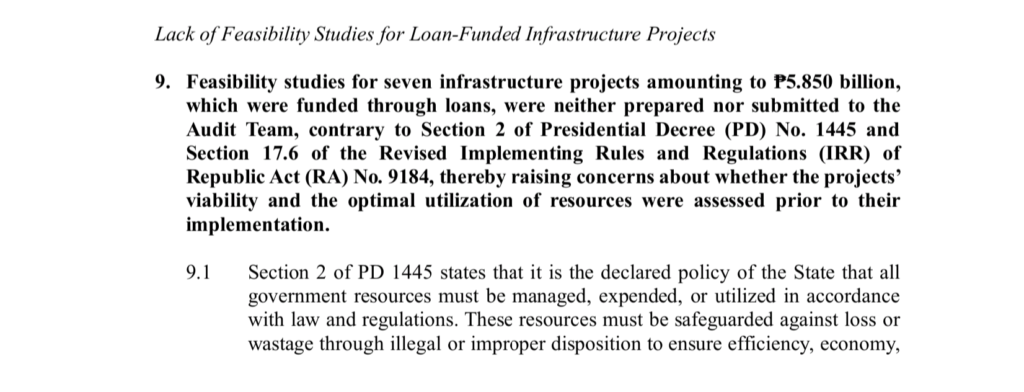
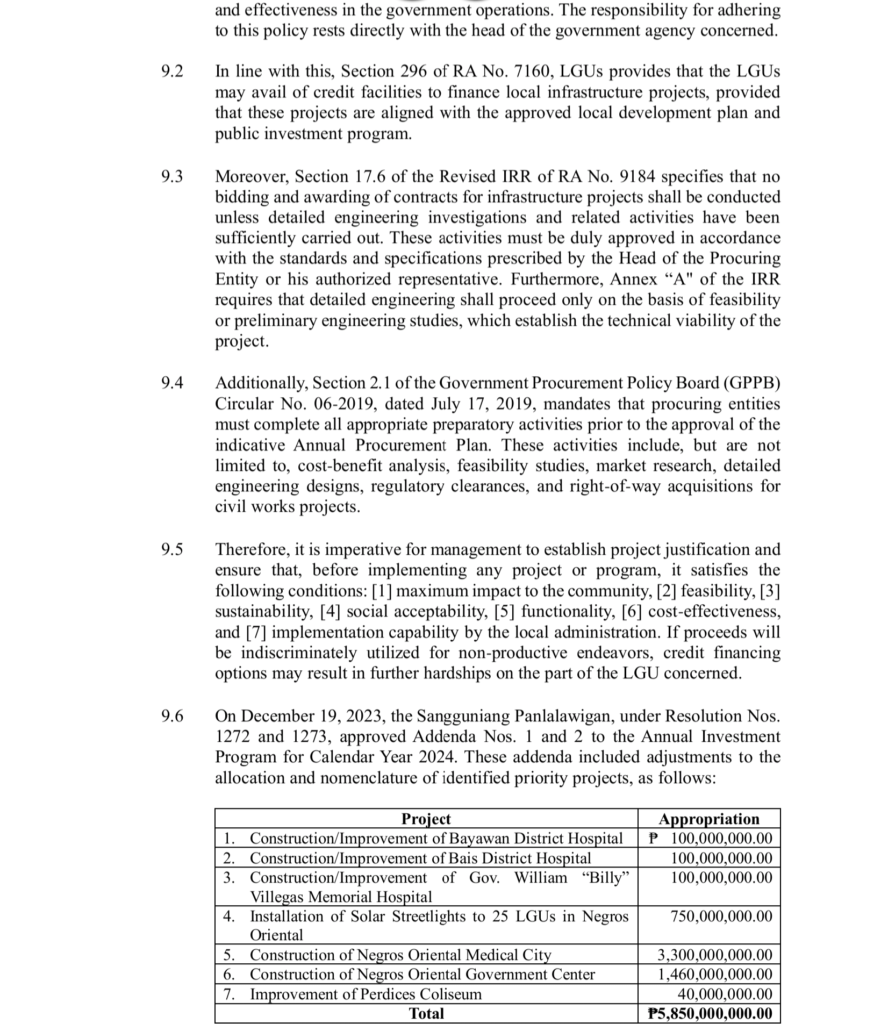
So what, then, was deliberated in the Provincial Board?
If there was no feasibility study, if there was no credible evidence that the loan was viable and sustainable, on what basis was approval granted?
Did the COA report reflect a failure of the legislators?
On a plain and honest reading, yes.
The role of the Provincial Board is not to act as a rubber stamp. It is not to approve by reflex. It is not to rely blindly on the executive.
Its duty is to ask questions. To pause when documents are lacking. To oppose when a loan is dangerous. And to defend the province, not political alliances.
Yet what happened?
There was no opposition. No balance. No sustained questioning.
This is the peril of one-party rule.
When one party decides everything, when dissent disappears, when every proposal passes without resistance, the people are always the ones who lose.
The COA itself warns that this loan will burden future administrations, drain funds meant for public services, and crowd out other urgent needs of the province.
Negros Oriental suffers.
More troubling still is the whisper now being heard: someone benefited from this loan—that is why it passed.
If this is true, it is no longer a mistake. It is a crime.
The people have the right to ask:
Who approved this?
Where is the feasibility study?
Why was there no meaningful debate?
Who benefited?
And who will be held accountable when the debt becomes unbearable in the future?
The COA report is not just a document. It is a mirror reflecting the failure of leadership and legislation.
The problem is not the media.
The problem is not scrutiny.
The problem is a grave decision pushed through silence.
Negros Oriental deserves better.
SEO TAGS (comma-separated):
Negros Oriental COA report, Negros Oriental 5.8 billion loan, COA audit Negros Oriental, Negros Oriental provincial board, Sangguniang Panlalawigan Negros Oriental, Negros Oriental public debt, Negros Oriental governance issues, provincial board accountability Philippines, local government loan Philippines, COA audit findings Philippines, Negros Oriental NTA 20 percent, Negros Oriental infrastructure loans, feasibility study requirement Philippines, cost benefit analysis government projects, RA 7160 Local Government Code, public accountability Negros Oriental, Philippine provincial governance, Negros Oriental leadership accountability, COA loan findings Philippines, government debt transparency Philippines
If you want, I can also format this into: • a Facebook Notes version
• a Google News submission layout
• or a graphic caption set matched to each paragraph
