

By Kenneth LL Tenebro
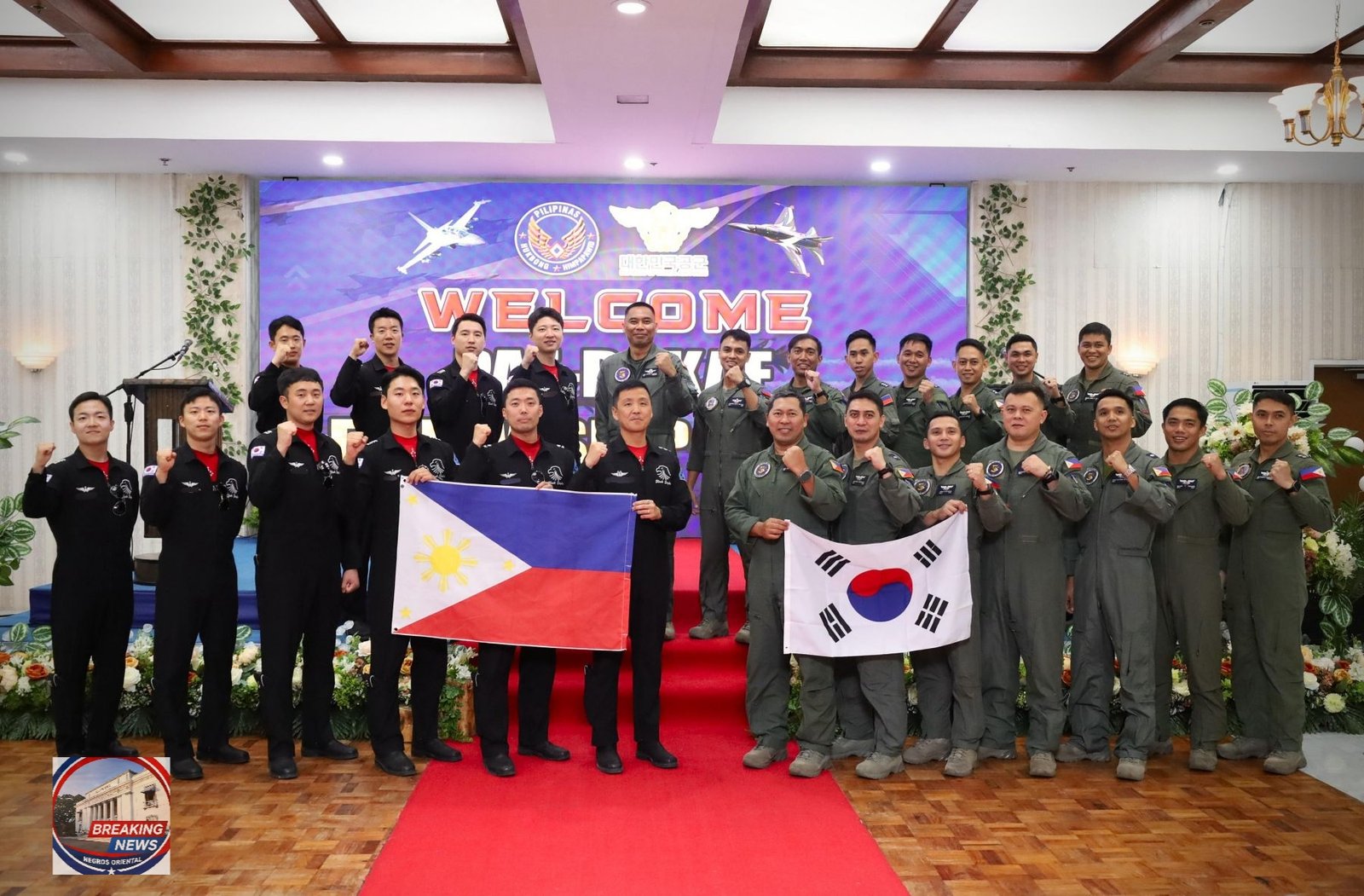
CLARK AIR BASE, Philippines, Feb 24 (Reuters) — The Philippine Air Force (PAF) hosted the Republic of Korea Air Force’s (ROKAF) elite aerobatic squadron, the Black Eagles, during a four-day transit stop at Clark Air Base in Pampanga province, underscoring growing military interoperability and defense ties between the two U.S.-allied Asian nations.
The South Korean contingent arrived on Feb. 20 from Riyadh, Saudi Arabia, where the team had performed at the World Defense Show 2026, and departed on Feb. 24 for its home base in Sacheon. The stopover included refueling, maintenance and crew rest for the squadron’s T-50B supersonic trainer aircraft, along with professional exchanges between Philippine and South Korean pilots and support personnel.
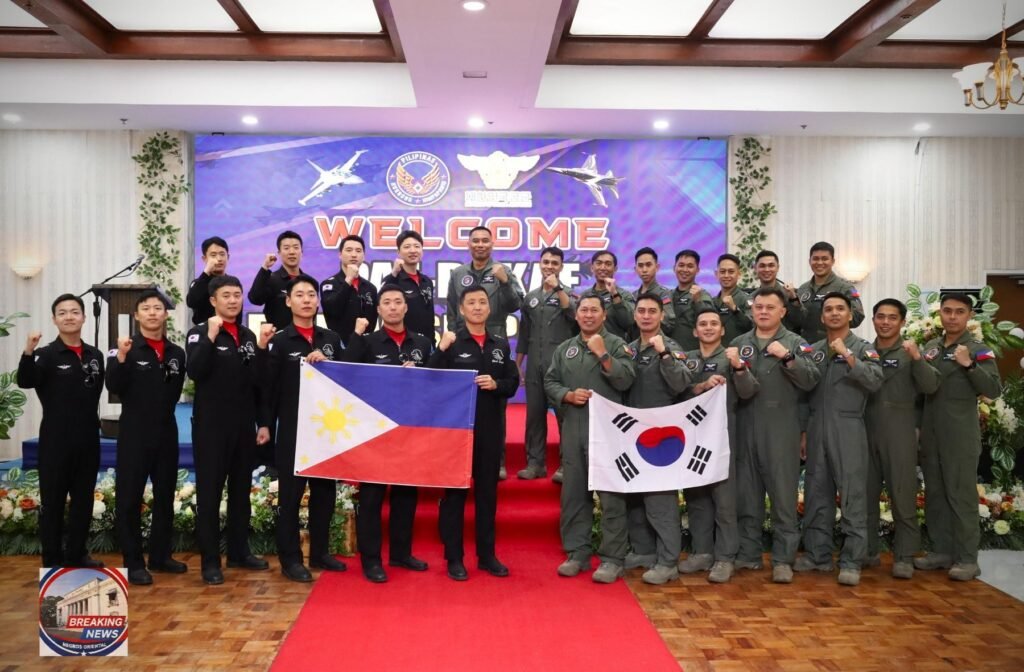
Lieutenant General Arthur M. Cordura, commanding general of the Philippine Air Force, met the visiting delegation led by Col. Nam Sun Noh, commander of the Black Eagles, during their stay at the former U.S. air base, now the Philippines’ primary hub for multinational air operations.
ROKAF officials expressed appreciation for what they described as the Philippine Air Force’s efficient ground handling, logistical support and hospitality throughout the visit, Philippine Air Force officials said.
The engagement included discussions on long-haul and large-force movement, overseas flight operations, deployment planning and flight line coordination, reflecting both air forces’ emphasis on rapid deployment and regional cooperation amid evolving security challenges in Northeast and Southeast Asia.
Clark personnel, in coordination with the Philippine Air Force Air Defense Command, provided refueling, maintenance support, flight line security and other services for the visiting aircraft, demonstrating what Philippine officials described as the service’s operational readiness to support regional partners.
“The seamless facilitation of a complex transit like this shows our readiness to support regional partners,” a Philippine Air Force officer involved in the operation said, declining to be named because he was not authorized to speak publicly. “It’s operational credibility.”
The stopover highlighted the logistical demands of long-range deployment for tactical aircraft, which require multiple transit legs, diplomatic clearances, fuel planning and coordination with host-nation air defense authorities.
South Korea and the Philippines have expanded defense cooperation in recent years, including aircraft procurement and training. Manila operates South Korean-built FA-50 light combat aircraft derived from the same T-50 platform flown by the Black Eagles, supporting interoperability in maintenance and operations.
Military analysts say such compatibility and routine operational contact strengthen alliance networks in the Indo-Pacific, where both countries face security pressures — South Korea from tensions on the Korean Peninsula and the Philippines from maritime disputes and territorial defense challenges.
The Black Eagles, flying South Korea’s domestically produced T-50B jets, are widely regarded as a symbol of the country’s aerospace industry and defense export ambitions. Their participation in international air shows and defense exhibitions supports Seoul’s strategy to promote its defense technology globally.
The Clark stopover, while limited in scale compared with formal exercises, provided both air forces an opportunity to exchange operational experience and reinforce bilateral ties, Philippine officials said.
As the squadron departed Clark on Tuesday in tight formation for the final leg to South Korea, the visit concluded what both sides described as another step in strengthening cooperation, interoperability and shared commitment to regional stability. ©️BNNO
