
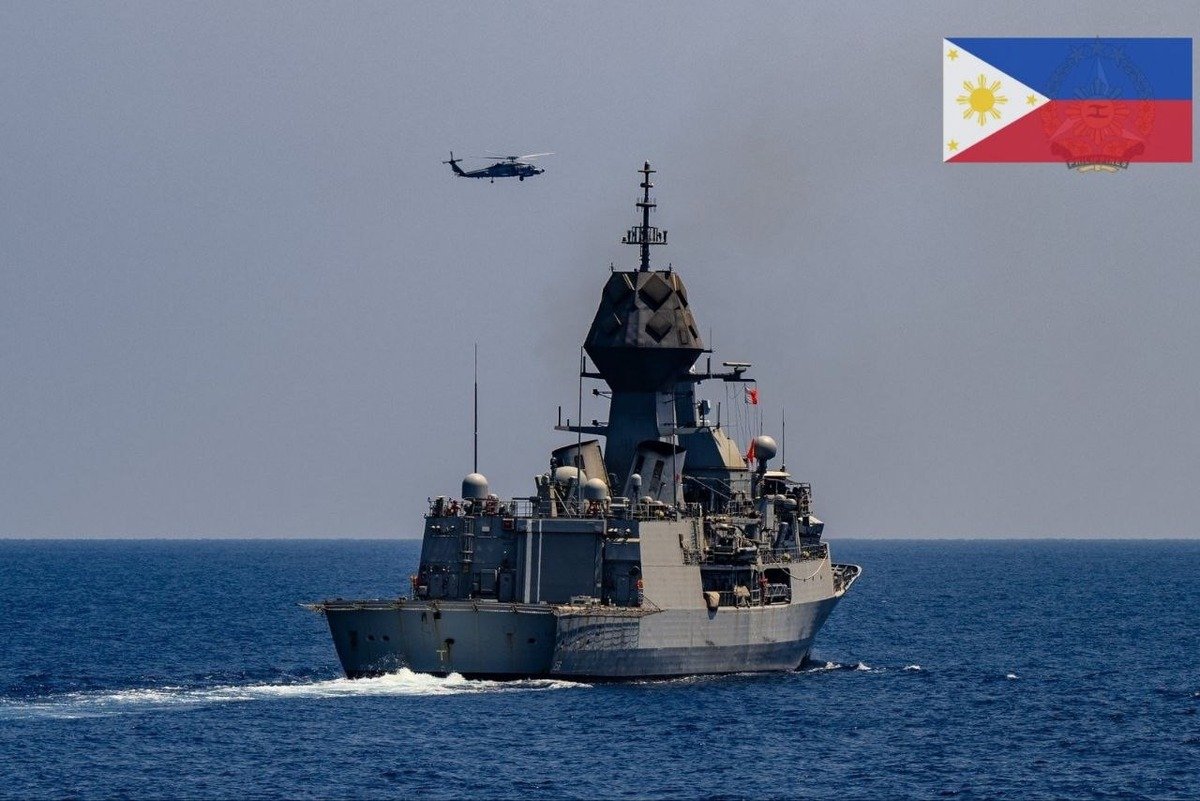
A comprehensive four-day maritime training exercise involving forces from the Philippines, United States, and Australia concluded successfully in the West Philippine Sea, with the Multilateral Maritime Cooperative Activity (MMCA) running from April 9-12, 2026, representing the 16th iteration of this trilateral defense cooperation program.
The latest exercise marked the second MMCA conducted this year, highlighting the intensified pace of military collaboration among the three allied nations in the strategically vital Indo-Pacific region, according to an official statement issued by the Armed Forces of the Philippines from Camp Aguinaldo in Quezon City.
Multi-Domain Training Operations
The comprehensive training program incorporated diverse maritime scenarios designed to strengthen operational coordination and tactical proficiency across all participating forces. Key training components included replenishment at sea approach procedures, vessel rendezvous operations, and advanced communication exercises testing inter-service coordination capabilities.
Stay informed with our free weekly newsletter. No spam, unsubscribe anytime.
Maritime Domain Awareness activities formed a crucial component of the exercise, focusing on enhanced surveillance and monitoring capabilities in contested maritime environments. Participating forces conducted division tactics training and Officer of the Watch maneuvers to improve command decision-making during complex operational scenarios.
The training schedule featured night steaming operations in company formation, defensive screen exercises, and tactical flyby demonstrations. Documentation through photo exercises captured operational procedures, with the entire program culminating in farewell pass ceremonies and the official Finish Exercise declaration on April 12.
Significant Military Asset Participation
The Philippine contingent deployed substantial naval and aviation resources, including the Philippine Navy’s BRP Rajah Sulayman (PS20) and the Philippine Coast Guard vessel BRP Melchora Aquino (MRRV 9702), demonstrating integrated maritime security capabilities.
Philippine Air Force contributions included FA-50 fighter aircraft, A-29B Super Tucano planes, C-208B aircraft, and a Sokol search and rescue helicopter, showcasing multi-domain operational capacity across air and sea platforms.
Australian forces centered their participation around HMAS Toowoomba (FFH156), supported by an embarked MH-60R helicopter and a P-8A Poseidon maritime patrol aircraft for surveillance operations. The United States contributed USS Ashland (LSD-48), which proved instrumental in logistics coordination throughout the exercise.
Military commanders described the combined deployment as demonstrating “coordinated and whole-of-nation and allied approach to maritime security operations,” emphasizing enhanced interoperability achievements among the trilateral alliance.
Breakthrough in Logistics Cooperation
A landmark achievement during this MMCA iteration involved successful transportation of Philippine military engineering assets aboard US Navy vessels, representing significant progress in practical logistics interoperability between allied forces.
The USS Ashland transported four critical Naval Combat Engineering Brigade equipment pieces from Manila Bay to Puerto Princesa City in Palawan, including specialized construction machinery comprising one payloader, one telescopic crane, and two concrete mixers for military infrastructure development projects.
Military leadership characterized this logistics operation as demonstrating “actual conduct of logistics interoperability between the AFP and USINDOPACOM,” moving beyond theoretical training into practical cooperative capabilities.
The equipment delivery to Palawan, positioned strategically along the South China Sea coastline, exemplifies the practical applications and strategic value of enhanced trilateral military cooperation in the region.
Regional Security Implications
The exercise location in the West Philippine Sea—Manila’s designation for waters within its exclusive economic zone in the South China Sea—carries significant strategic implications amid ongoing territorial disputes and freedom of navigation challenges in the region.
The sustained frequency of joint training activities, with two MMCA exercises already completed in 2026, demonstrates unwavering commitment by the three allied nations to maintain operational readiness and military presence in these strategically contested waters.
Defense analysts emphasize that such multilateral exercises serve multiple strategic objectives, including capability enhancement, deterrence signaling, and alliance solidarity demonstration in response to evolving regional security challenges.
Philippine Strategic Defense Commitments
The Armed Forces of the Philippines reaffirmed its dedication to strengthening defense partnerships with nations sharing compatible strategic objectives in the Indo-Pacific region through its official exercise statement.
Philippine military leadership emphasized continued commitment to maritime security protection, national interest defense, and peace and stability contributions across the broader Indo-Pacific theater through sustained multilateral defense cooperation initiatives.
This strategic approach reflects Manila’s preference for alliance-based solutions to regional security challenges rather than unilateral responses to complex maritime disputes and territorial tensions.
Evolution of Trilateral Defense Cooperation
The completion of the 16th MMCA demonstrates the maturation of trilateral defense cooperation, with exercises evolving from basic coordination activities into sophisticated, multi-domain operations integrating air, naval, and logistics components.
The incorporation of Philippine Coast Guard assets alongside traditional military forces illustrates a comprehensive whole-of-government approach to maritime security challenges, expanding beyond conventional military-to-military cooperation frameworks.
Regular MMCA conduct has become fundamental to regional security architecture, with participating nations viewing these exercises as essential for maintaining deterrence capabilities and operational readiness in the dynamic Indo-Pacific security environment.
Trilateral military cooperation extends beyond training exercises to encompass intelligence sharing, equipment standardization initiatives, and joint procurement programs designed to enhance long-term interoperability and alliance effectiveness throughout the strategically crucial Indo-Pacific region.
Photo credit: PO3 Jess Tommy Gonzales PN/PAOAFP, Edward Bungubung
Stay informed — get Negros Oriental news weekly
Free newsletter, no spam. Unsubscribe anytime.

- 01
- 02
- 03
- 04