
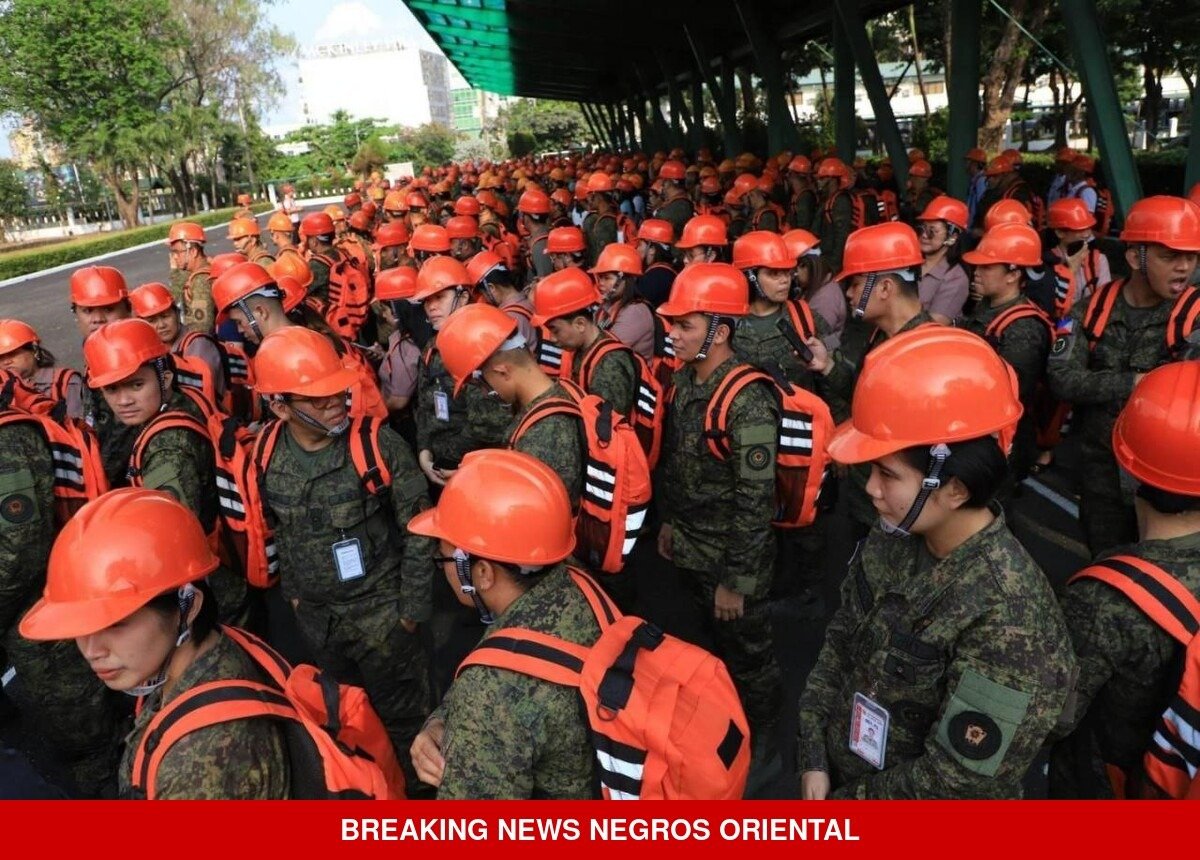
Philippine Army units across the country participated in the National Simultaneous Earthquake Drill (NSED) on March 12, 2026, demonstrating their disaster preparedness capabilities as part of the first quarter’s nationwide emergency simulation exercise.
According to a press release from Colonel Louie G. Dema-ala, Chief Public Affairs of the Philippine Army, the comprehensive drill focused on evacuation protocols and first aid procedures in alignment with the military’s humanitarian assistance and disaster response (HADR) operations.
Comprehensive Emergency Response Simulation
The March 12 exercise served as a critical assessment of the Army’s readiness to respond to natural disasters, with units nationwide participating in coordinated drills from their respective bases and stations. The simulation tested various aspects of emergency response, including evacuation procedures and medical assistance protocols.
“Rescue units and health facilities quickly reacted with precision, recalibrating life-saving efforts when presented with new challenges in the face of disasters,” the Army statement noted, highlighting the adaptive nature of the training exercise.
The drill was conducted simultaneously across all Philippine Army installations, demonstrating the military’s commitment to maintaining consistent emergency response standards nationwide. Units were evaluated on their ability to execute rapid deployment procedures and coordinate with civilian disaster response agencies.
Focus on Mission Readiness and Preparedness
The exercise aligns with the Philippine Army’s strategic goal of becoming a “world-class and mission-ready organization,” according to the official statement. The comprehensive nature of the drill reflects the military’s recognition of its crucial role in disaster response operations throughout the archipelago.
Army medical units and rescue teams were particularly tested during the simulation, with scenarios designed to challenge their ability to provide immediate life-saving interventions under emergency conditions. The drill included realistic scenarios that required units to adapt their response strategies based on evolving emergency situations.
Health facilities within Army installations played a central role in the exercise, demonstrating their capacity to handle mass casualty situations that often arise during major seismic events. Medical personnel practiced triage procedures and emergency treatment protocols essential for disaster response operations.
National Disaster Preparedness Framework
The National Disaster Risk Reduction and Management Council (NDRRMC) coordinates the quarterly earthquake drills as part of the Philippines’ comprehensive disaster preparedness strategy. According to the Army’s announcement, the second quarter NSED for 2026 is scheduled for June 18, 2026.
These regular drills are essential given the Philippines’ location along the Pacific Ring of Fire, where seismic activity poses constant threats to communities nationwide. The country experiences frequent earthquakes due to its position at the convergence of several tectonic plates.
The NDRRMC’s quarterly scheduling ensures that both military and civilian agencies maintain peak readiness throughout the year. Each drill incorporates lessons learned from previous exercises and real-world disaster response operations.
Army’s Role in Disaster Response Operations
The Philippine Army’s participation in the NSED demonstrates the military’s integral role in the nation’s disaster response framework. Army units are often among the first responders during natural calamities, providing crucial support in areas where civilian emergency services may be overwhelmed or inaccessible.
Military assets, including personnel, vehicles, aircraft, and specialized equipment, are routinely deployed during disasters to assist in search and rescue operations, medical evacuations, and the distribution of relief supplies to affected communities.
The Army’s HADR operations extend beyond immediate emergency response to include rehabilitation and reconstruction support in disaster-affected areas. This comprehensive approach ensures that military resources contribute to both immediate life-saving efforts and long-term recovery operations.
Continuous Training and Development
The March 12 drill represents part of the Philippine Army’s ongoing commitment to training and preparedness. Regular exercises ensure that personnel maintain proficiency in emergency response procedures and can effectively coordinate with other agencies during actual disasters.
“The Philippine Army continues with its training and efforts to instill mission readiness among units, empowering each asset of the organization in times of natural disasters,” the official statement emphasized.
This continuous training approach recognizes that disaster response capabilities require regular practice and refinement. Each drill provides opportunities to identify areas for improvement and to incorporate new technologies and procedures into emergency response protocols.
Regional Impact and Preparedness
For Negros Oriental and other provinces across the Philippines, the Army’s participation in national earthquake drills provides additional assurance of coordinated disaster response capabilities. Local Army units stationed throughout the region participate in these exercises, ensuring familiarity with local geography and potential disaster scenarios.
The 3rd Infantry Division, which has jurisdiction over parts of the Visayas region including areas near Negros Oriental, actively participated in the drill, with their Public Affairs Office documenting the exercise through official photography.
Regional coordination between Army units and local government disaster response teams is crucial for effective emergency management, particularly in island provinces where geographic isolation can complicate relief operations.
Looking Ahead to Q2 Drill
With the second quarter earthquake drill scheduled for June 18, 2026, the Philippine Army will continue its preparation and training activities in the coming months. The interval between drills allows units to incorporate lessons learned and to enhance their capabilities based on assessment results from the March exercise.
The regular scheduling of these drills ensures that disaster preparedness remains a priority throughout the year, rather than being addressed only during traditional disaster seasons or following actual emergency events.
Photo credit: Photo courtesy of 1st Infantry Division Public Affairs Office, Sgt Christ Darrel Pangilinan PA and Cpl. Rodgen Quirante, PA/OCPA
Stay informed — get Negros Oriental news weekly
Free newsletter, no spam. Unsubscribe anytime.