
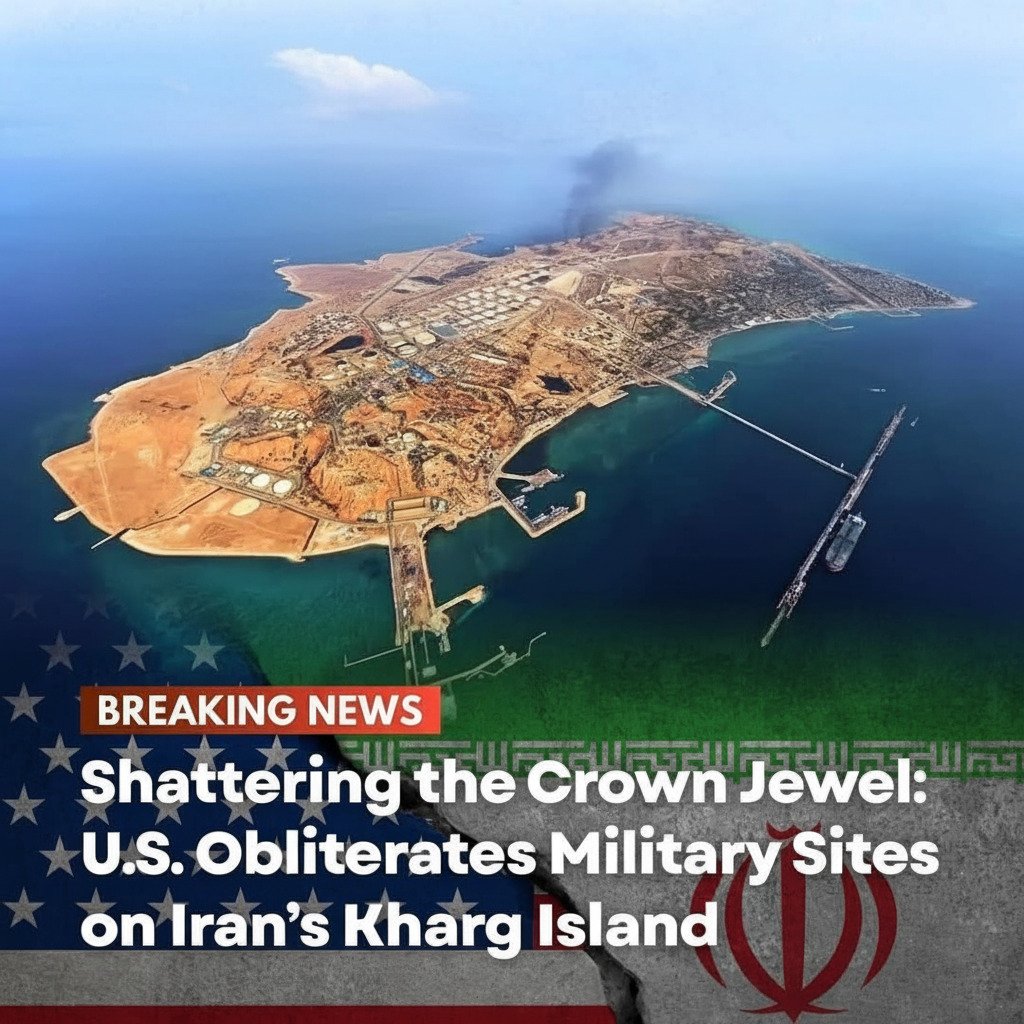
On March 13, 2026, the U.S. Central Command (CENTCOM) launched one of the most powerful bombing raids in Middle Eastern history against Kharg Island in Iran, marking a decisive moment in the ongoing tensions in the region. The strikes aimed to neutralize military assets utilized by the Islamic Revolutionary Guard Corps (IRGC), while remarkably sparing the island’s crucial oil infrastructure.
Details of the Airstrike
The airstrikes on Kharg Island, described by U.S. President Donald Trump as a “total obliteration” of military targets, were executed as a direct response to Iran’s blockade of the Strait of Hormuz. This body of water is vital for international trade, with approximately one-fifth of the world’s oil and natural gas supplies transported through its routes. Kharg Island is particularly significant, serving as the main hub for Iran’s crude oil exports, capturing about 90% of the country’s oil trade.
According to CENTCOM, over 90 military targets were eliminated during the operation, including missile bunkers and naval mine storage facilities. However, the decision was strategically made to leave operational the oil-loading terminals on the island. This calculated choice aims to limit immediate global economic fallout while sending a strong warning to Tehran regarding further aggression.
Context and Background
The conflict escalated significantly on February 28, 2026, when Iran initiated an effective closure of the Strait of Hormuz, threatening free passage and commercial shipping. The ongoing conflict had already resulted in attacks on 18 vessels, including notable strikes on commercial tankers. The U.S. government officials described these recent actions as a significant security threat, necessitating the airstrikes designed to restore navigational safety.
The Precision of the Operation
Footage released by CENTCOM highlighted the precision of the operation, showcasing a significant level of planning and execution. Not only were military facilities targeted to degrade IRGC capabilities, but the airstrike also included a focused effort to inhibit the use of the island’s military airport, thereby disrupting potential drone or missile campaigns against regional interests, particularly desalination plants.
Impact on Global Oil Markets
The airstrikes sparked immediate concern within global oil markets, where prices were already nearing $120 per barrel. Witnessing a swift reaction, some analysts predicted a further rise to $150 per barrel if retaliatory actions from Iran ensue or if hostilities escalate. The delicate balance between military action and economic stability remains a crucial aspect of this unfolding geopolitical crisis.
JPMorgan analysts have indicated that ongoing military engagements could lead prices to fluctuate sharply, characterizing the situation as a “mathematical war zone.” Energy markets are visibly sensitive to news from the region, which poses a real risk to global economies heavily reliant on petroleum derivatives.
Warnings from the U.S. Government
In a statement posted on social media, President Trump mentioned intentional restraint regarding the oil infrastructure, citing “reasons of decency.” However, he warned that should Iran continue to threaten the navigation of vessels through the Strait of Hormuz, the U.S. would reassess its position. This statement underscores the precariousness of the region’s stability and the potential for rapid escalation.
Regional Implications and Safety Concerns
The aftermath of the Kharg Island bombings will likely entail increased security measures for commercial operations in the Persian Gulf. Vessels traversing these waters may soon require armed escorts from the U.S. Navy, a move that stresses the heightened state of alert among maritime trade routes.
In regions like Negros Oriental, where economic ties might depend on the stability of global oil prices, the indirect impact of these strikes could resonate through various sectors, prompting further market volatility. Local businesses and consumers may see rising costs attributed to the fluctuating price of oil.
Official Reactions
The Iranian government has not yet issued a formal response; however, past reactions to U.S. military actions in the region suggest that a robust retaliation could be imminent. The IRGC has previously threatened to retaliate against U.S. interests should military assets be compromised.
Historical Context of the Conflict
The relationship between the United States and Iran has been fraught with tension for decades. The recent conflict escalated with a series of hostile encounters, including attacks on military installations and commercial interests by Iranian forces. Understanding the historical context is essential to grasp the potential trajectories of this conflict.
Looking Ahead: What’s Next?
As we move forward, attention will likely focus on whether Iran will escalate its actions in response to the Kharg Raid. Analysts suggest that the next strategic response could involve either expanding military operations or leveraging its leverage in oil dependency against global markets.
The situation remains fluid, and the region stays on high alert as the U.S. maintains its military posture while monitoring Iranian reactions closely. The international community watches with bated breath, given the potential for broader conflict in an already volatile region.
Photo credit: Photo courtesy of U.S. Central Command
“`
Stay informed — get Negros Oriental news weekly
Free newsletter, no spam. Unsubscribe anytime.