
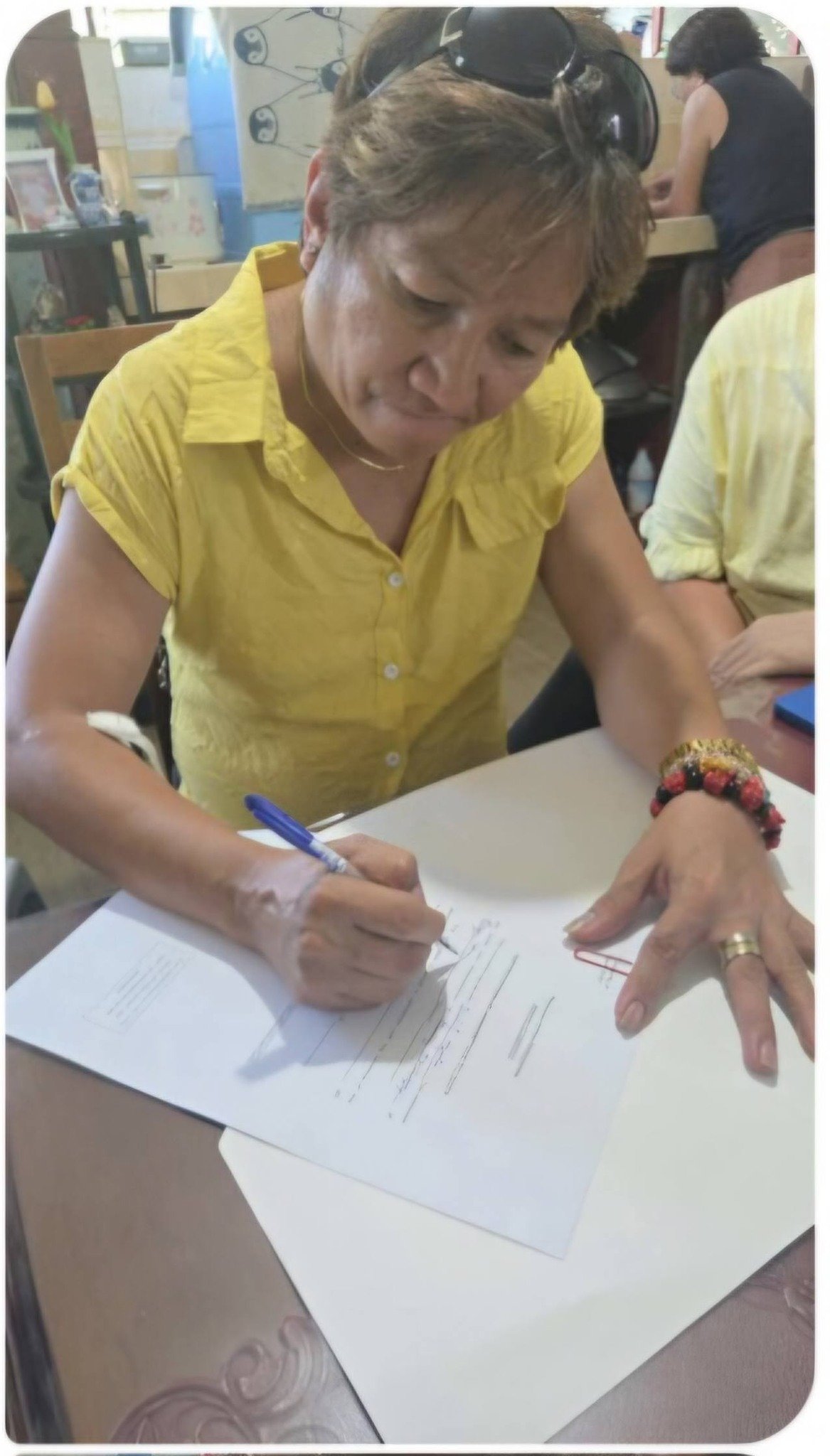
DUMAGUETE CITY, Negros Oriental — Erwin Lozada, the elected Punong Barangay of Barangay Looc, formally notified the Barangay Council on Tuesday, April 7, that he is resuming his post effective immediately, ending a months-long incapacity that began with his detention in September 2025.
In a written Notice of Resumption of Office addressed to the ten members of the Barangay Council, Lozada asserted that his temporary deprivation of liberty did not vacate his elective position. He cited a 2017 legal opinion from the Department of the Interior and Local Government (DILG) as the controlling authority on his situation.
The development marks the end of an eight-month period during which the highest-ranking Sangguniang Barangay member had been exercising the powers of the Punong Barangay under the Local Government Code’s temporary incapacity provisions.
Stay informed with our free weekly newsletter. No spam, unsubscribe anytime.
Criminal Charges Resolved Through Probation
According to the notice, the criminal charges that led to Lozada’s detention were resolved on February 10, 2026, when Regional Trial Court Branch 33 in Dumaguete City granted his Application for Probation. The court ordered his release two days later on February 12, pursuant to the Probation Order.
“The undersigned is presently under probation and is, therefore, not disqualified from holding public office,” Lozada stated in the letter to the Barangay Council.
The specific nature of the criminal charges that led to his detention in September 2025 was not detailed in the notice, but the resolution through probation indicates the charges did not involve disqualification from public office as a principal penalty.
Legal Framework Based on 2017 DILG Opinion
Lozada’s legal position rests entirely on DILG Opinion No. 13, Series of 2017, issued by then-Undersecretary Austere A. Panadero. The opinion addressed a similar case involving a Punong Barangay in Misamis Oriental who faced comparable circumstances.
The DILG opinion ruled that detention of an elective official should not be construed as removal from office, but rather as a temporary incapacity under Section 46(a) of the Local Government Code of 1991. This interpretation treats detention similarly to other temporary incapacities such as leave of absence, travel abroad, and suspension.
Under this framework, the highest-ranking Sangguniang Barangay member automatically exercises the powers of the Punong Barangay only for as long as the temporary incapacity continues. Once the incapacity ends, authority reverts to the elected official by operation of law, without need for reinstatement or reappointment.
The DILG opinion further clarified that the grounds for temporary incapacity listed in Section 46(a) are not exclusive, meaning detention falls within the same legal category as other temporary disabilities that prevent an official from performing duties.
Specific Directives to Council Members
In his formal notice, Lozada issued several specific directives to the ten-member Barangay Council. He instructed them to immediately cease recognizing any unauthorized exercise of the powers of the Punong Barangay by any other individual.
The notice also demanded the turnover of all barangay records, funds, and properties that may have been held or managed during his absence. Lozada further directed council members to refrain from implementing any act premised on what he termed an “unlawful assumption of office.”
Additionally, he called for full cooperation in ensuring the orderly restoration of barangay leadership under his resumed authority as the elected Punong Barangay.
Official Notification to Government Authorities
The letter was furnished to key government officials overseeing local governance in Dumaguete City and Negros Oriental. Recipients included Dumaguete City Mayor Manuel T. Sagarbarria, DILG-CLGOO Head Reynold B. Pasicaran, and DILG Provincial Director Farah Diba Gentuya.
As of posting time, three council members had signed acknowledgment receipts for the notice: Angelita C. Ragay, Eldy R. Catipay, and Rubie Kay Z. Chavez. The acting barangay secretary has also formally received the notice letter, indicating official recognition of Lozada’s communication.
The furnishing of copies to DILG officials at both city and provincial levels suggests Lozada is ensuring his resumption of office follows proper administrative channels and legal protocols.
Supreme Court Precedent on Probation and Public Office
Philippine jurisprudence provides strong legal support for Lozada’s position regarding probation and eligibility for public office. The Supreme Court has consistently held that probation suspends not only the principal penalty of imprisonment but also its accessory penalties, including disqualification from holding public office.
In the landmark case Moreno v. COMELEC (G.R. No. 168550, 2006), the Supreme Court definitively ruled that a probationer is not disqualified from running for or holding elective office during the probation period. This precedent establishes that probation effectively removes the disqualification that would otherwise accompany criminal conviction.
The legal principle underlying this jurisprudence is that probation represents the suspension of penalty rather than its imposition, thereby preserving the probationer’s civil and political rights, including the right to hold elective office.
Implications for Barangay Governance
Coupled with the DILG’s 2017 framework treating detention as temporary rather than permanent incapacity, Lozada’s resumption of office appears to rest on well-established legal ground. The combination of Supreme Court precedent and DILG administrative interpretation provides a clear pathway for his return to active governance.
The transition period following his notice may require careful coordination to ensure continuity of barangay services and programs. The Barangay Council will need to facilitate the orderly transfer of records, ongoing projects, and administrative responsibilities back to Lozada’s office.
For residents of Barangay Looc, the resumption means their elected Punong Barangay is returning to direct leadership after eight months of acting governance. The change may affect ongoing barangay initiatives, budget execution, and community programs that were implemented during the interim period.
Awaiting Official Council Response
The Barangay Council has yet to issue an official statement regarding Lozada’s notice of resumption. With only three of ten members having acknowledged receipt as of Tuesday evening, the council may need additional time to review the legal basis for his return and coordinate an appropriate response.
The council’s next steps will likely involve consultation with legal advisors and DILG officials to ensure compliance with local government procedures. Any transition period will require careful handling to maintain barangay operations and public services without disruption.
Lozada’s return to office represents a significant development in local governance, demonstrating how detention and subsequent probation can be navigated within the existing legal framework for elective officials in the Philippines.
Photo credit: File photo
Stay informed — get Negros Oriental news weekly
Free newsletter, no spam. Unsubscribe anytime.



- 01
- 02
- 03
- 04