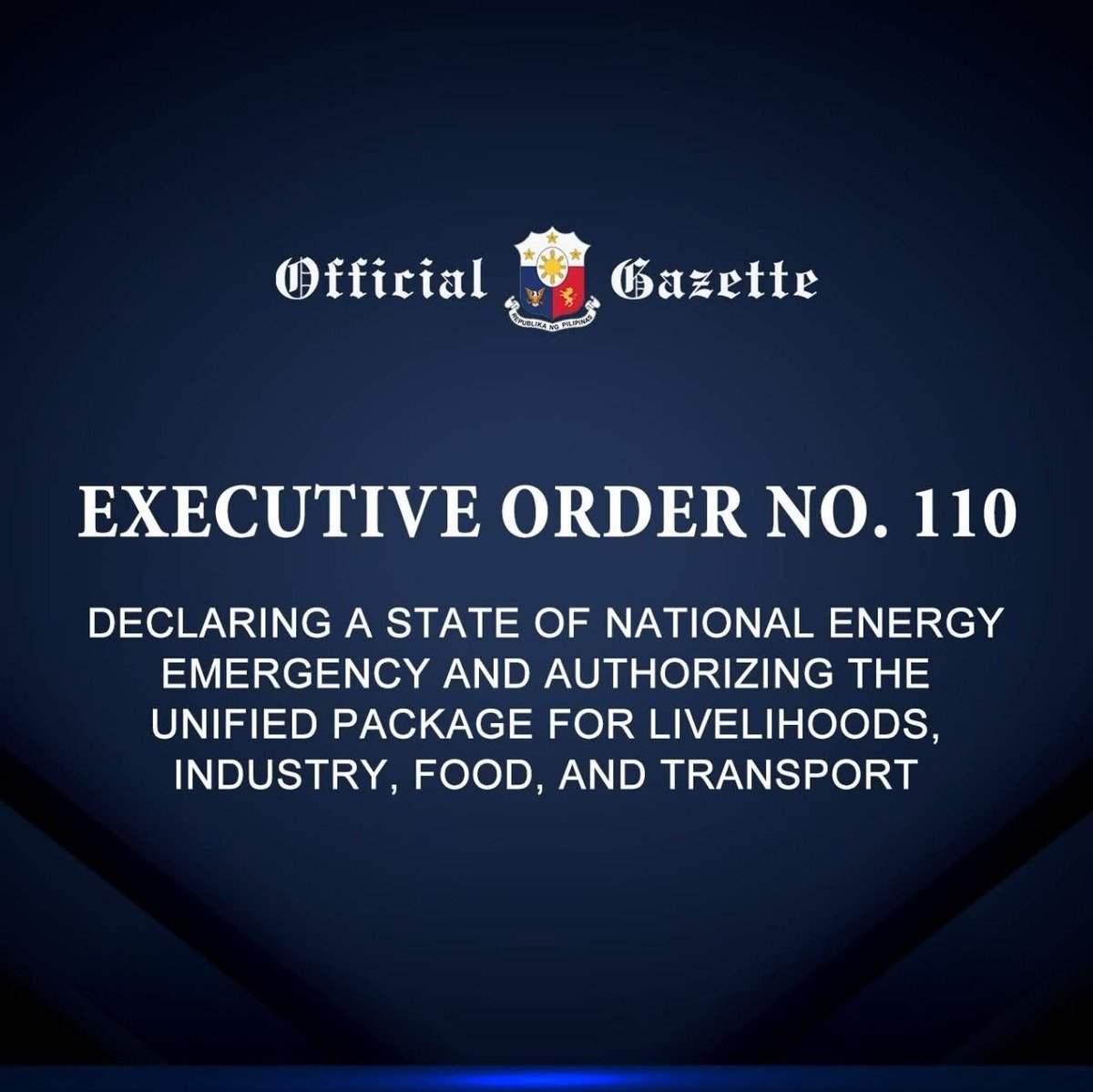
President Ferdinand Marcos Jr. has declared a state of national energy emergency through Executive Order No. 110, mobilizing government resources to address threats to the country’s energy stability caused by ongoing Middle East conflicts and global oil supply disruptions.
The Department of Labor and Employment (DOLE) has simultaneously allocated ₱1.2 billion in standby funds to assist vulnerable workers who may be displaced or financially affected by the energy crisis, signaling the administration’s comprehensive response to the developing situation.
The executive order, issued on March 30, 2026, establishes the Unified Package for Livelihoods, Industry, Food, and Transport (UPLIFT) framework as a whole-of-government response to ensure stable energy supply, maintain economic activity, protect vulnerable sectors, and sustain delivery of essential services.
Stay informed with our free weekly newsletter. No spam, unsubscribe anytime.
👉 TECNO POVA 7 Ultra 5G — ₱4,999 on Shopee — check price here
UPLIFT Committee Formation and Leadership Structure
The President will chair the newly formed UPLIFT Committee, with key cabinet members including the Executive Secretary, Department of Energy (DOE), Department of Transportation (DOTr), Department of Social Welfare and Development (DSWD), Department of Agriculture (DA), Department of Finance (DOF), Department of Economy, Planning and Development (DEPDev), and Department of Budget and Management (DBM).
According to the executive order, the committee will coordinate implementation across all government agencies and ensure efficient delivery of services during the emergency period.
Comprehensive Energy and Supply Chain Measures
The government will optimize fuel and energy use through enhanced conservation measures while ensuring stable fuel supply through the DOE, Philippine National Oil Company (PNOC), and PNOC Exploration Corporation (PNOC-EC). The order authorizes advance procurement payments beyond the standard 15 percent limit when necessary.
Electricity markets, particularly the Wholesale Electricity Spot Market (WESM), will be closely monitored with government intervention authorized if market stability is threatened. These measures aim to prevent supply disruptions that could cascade across critical infrastructure and essential services.
Transport Sector Relief and Public Service Expansion
The framework includes fuel subsidies and fare support for the transport sector, along with expanded public transport services and extended operating hours for Light Rail Transit (LRT) and Metro Rail Transit (MRT) systems. Priority lanes will be implemented through coordination with local government units.
The government is also considering reducing or suspending tolls and fees to ease the financial burden on commuters and transport operators during the emergency period.
DOLE Mobilizes ₱1.2 Billion Worker Protection Fund
DOLE’s ₱1.2 billion allocation will be channeled primarily through the Tulong Panghanapbuhay sa Ating Disadvantaged/Displaced Workers (TUPAD) program and the DOLE Integrated Livelihood Program, both designed to provide emergency employment and livelihood assistance.
“The programs are in place to support vulnerable workers, including those who may be displaced as a consequence of the current energy emergency,” DOLE stated in its announcement.
Initial interventions will prioritize transport workers, who face the most immediate impact from rising fuel prices. The department is coordinating with DOTr, DSWD, Department of the Interior and Local Government, and local government units to implement targeted emergency employment programs.
Overseas Filipino Worker Repatriation and Support
The Department of Migrant Workers (DMW) has reported that 2,910 OFWs affected by the Middle East crisis have been repatriated, with 2,120 transported via five chartered flights. The most recent flight brought home 349 individuals, including 222 OFWs, their dependents, and stranded Filipinos from the United Arab Emirates, who were received at Villamor Air Base in Pasay City.
👉 Fast Charging 20000mAh Power Bank — ₱119 on Lazada — check price here
DOLE is collaborating with DMW and the Overseas Workers Welfare Administration (OWWA) to provide job matching, skills training through the Technical Education and Skills Development Authority (TESDA), and livelihood support for returning workers.
The upcoming “Bayanihan para sa Balikbayang Manggagawa” program will offer comprehensive reintegration services through partnerships with government agencies and private sector organizations.
Agricultural Security and Food Supply Measures
The executive order addresses food security concerns by ensuring adequate supply of agricultural inputs and authorizing government procurement of fertilizers and other essentials when market mechanisms prove insufficient. Assistance programs for farmers and fisherfolk will be activated to maintain agricultural productivity during the crisis.
These measures aim to prevent supply chain disruptions that could lead to food shortages or significant price increases for basic commodities.
Distribution Challenges in Aid Implementation
DSWD Secretary Rex Gatchalian has identified data submission issues from transport network companies (TNCs) as a significant challenge in aid distribution. Speaking at a Manila payout site, he noted that incomplete lists from companies including Grab and Lalamove have delayed assistance to drivers and delivery riders.
The Department of Information and Communications Technology (DICT) issued a show-cause order to Lalamove for failing to submit required driver lists on schedule. Despite these setbacks, Gatchalian assured that special payout schedules are being arranged to ensure all eligible beneficiaries receive assistance.
Long-term Energy Independence Strategy
Beyond immediate crisis response, the executive order outlines strategies to reduce petroleum dependence through renewable energy adoption, electric vehicle promotion, energy-efficient systems implementation, and public awareness campaigns.
The government will accelerate power generation projects and grid connections while fast-tracking permits and approvals for energy infrastructure development. The Government Energy Management Program (GEMP) will enforce stricter energy-saving protocols in government offices.
Economic Monitoring and Market Protection
Government agencies will track the crisis impact on peso value, OFW remittances, inflation rates, and investor behavior. Anti-hoarding and profiteering measures will be enforced to prevent market manipulation during the emergency period.
Local government units are directed to align their funds and resources with national measures, while the private sector is encouraged to promote energy conservation, adopt flexible work arrangements, and assist in logistics and essential services.
The Philippine National Police and other law enforcement agencies will maintain peace and order while protecting communities and critical infrastructure throughout the emergency period.
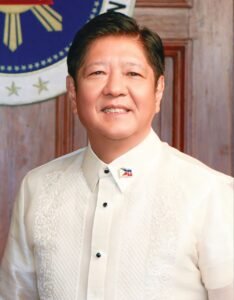
Photo credit: Photo courtesy of Office of the President
👉 Korean Skincare Set 7-in-1 Gift Box — ₱399 on Shopee — check price here
Stay informed — get Negros Oriental news weekly
Free newsletter, no spam. Unsubscribe anytime.

- 01
- 02
- 03
- 04