
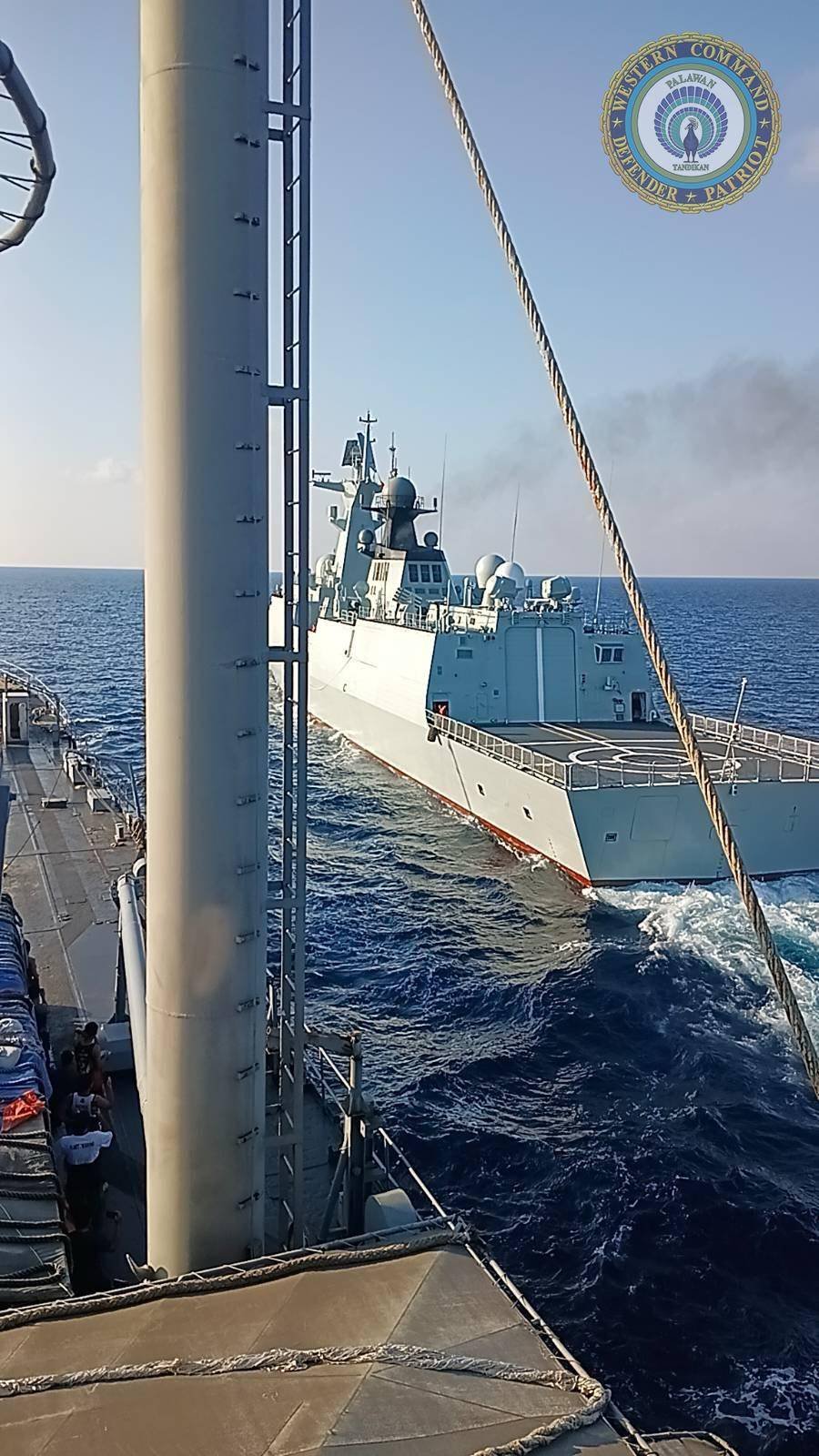
The Philippine Navy successfully avoided a potential maritime disaster on March 25, 2026, when its vessel, BRP Benguet (LS-507), encountered a dangerously maneuvering Chinese warship in the disputed waters near Pag-asa Island. This incident underscores the increasing volatility in one of the world’s most contested maritime regions.
Incident Overview: A Close Call at Sea
While conducting routine operations, the BRP Benguet was approached by the People’s Liberation Army Navy (PLAN) missile frigate identified as hull number 532. Reports from military officials indicate that the Chinese vessel executed a rapid and unsafe maneuver, crossing perilously close to the bow of the BRP Benguet. This necessitated immediate evasive actions by the Philippine Navy crew to avert a collision.
Violation of International Maritime Regulations
According to the Armed Forces of the Philippines’ Western Command (WESCOM), the aggressive maneuver made by the PLAN vessel constitutes a breach of the International Regulations for Preventing Collisions at Sea (COLREGs). These rules are designed to ensure the safety of navigation and the conduct of maritime operations. WESCOM highlighted that such actions by the Chinese vessel are provocatively dangerous and unprofessional.
Stay informed with our free weekly newsletter. No spam, unsubscribe anytime.
“This type of maneuver is unsafe, unprofessional, and a clear violation of international maritime rules,” WESCOM stated. The naval personnel aboard BRP Benguet demonstrated commendable composure and executed “measured and decisive” actions to avert what could have been a serious incident.
The Geopolitical Context: Importance of Pag-asa Island
The incident occurred near Pag-asa Island, also known internationally as Thitu Island, which remains a strategic outpost for the Philippines in the Spratly archipelago. The island, populated by Filipino residents and housed with military personnel, features an airstrip and serves as a vital site for both civilian and military operations.
Geographically, Pag-asa lies within the Philippines’ exclusive economic zone (EEZ), as recognized by international law, but it is also claimed by China under its sweeping “nine-dash line” assertion, which the Permanent Court of Arbitration rejected in a landmark ruling in July 2016. Despite this, China continues to assert its claims, maintaining a heavy naval presence in the region.
Worsening Maritime Tensions: A Pattern of Aggression
The March 25 incident reflects a troubling trend of escalated military encounters between Chinese naval forces and the Philippines’ maritime units. In recent times, Philippine officials have documented numerous instances where Chinese vessels have engaged in provocative actions, including blocking maneuvers and even using water cannons against Philippine resupply missions.
Security analysts have cautioned that these close encounters carry significant risks. A minor miscalculation during such tense exchanges can rapidly escalate into more serious confrontations, further complicating the already strained relations between the two nations.
Legal and Operational Implications
As per COLREGs guidelines, vessels are mandated to take significant early action to avoid potential collisions and maintain safe distances from one another. The actions taken by the PLAN vessel during this encounter—sudden course changes at a dangerously close range—are widely considered violations of these maritime principles.
WESCOM emphasized that the Philippine Navy was conducting its operations lawfully, asserting its right to navigate these contested waters. “The Armed Forces of the Philippines will continue to conduct lawful maritime operations with professionalism and resolve,” the statement read, reiterating its commitment to upholding sovereignty in the region.
China’s Response: Diplomatic Silence
As of the writing of this report, there has been no public commentary from Chinese authorities regarding the March 25 encounter. Historically, China has defended its naval activities in these waters as compliant with its maritime laws, often accusing the Philippines of maintaining a provocative stance.
When confronted with similar incidents, Chinese state media have portrayed their maritime presence as professional and restrained—a characterization frequently disputed by observers and Philippine officials.
Strategic Stakes in the South China Sea
The South China Sea holds immense geopolitical significance, with an estimated $3 trillion in trade traversing its waters annually. Moreover, the region is believed to possess substantial reserves of oil and gas, adding fuel to the ongoing territorial disputes among claimant states, including Vietnam, Malaysia, and Brunei.
The presence of external powers, particularly the United States, conducting freedom of navigation operations, reflects the international community’s commitment to ensuring that these crucial waterways remain open and free from dominance by any one nation.
Looking Ahead: Navigating a Complex Landscape
While the maritime encounter involving BRP Benguet concluded without direct confrontation, it stands as a stark reminder of the precarious nature of engagements in the West Philippine Sea. The Philippine Navy, together with coast guard units, remains vigilant amid rising tensions, advocating for the adherence to international rules and norms to stave off potential conflicts.
Defense officials reaffirm that professionalism and restraint from all naval operators are essential in safeguarding peace and stability in these contested waters. As geopolitical competition heightens in the Indo-Pacific region, incidents like these are anticipated to persist, stressing the importance of disciplined maritime conduct and diplomatic strategies to mitigate rising tensions.
Photo credit: Photo courtesy of AFP
Stay informed — get Negros Oriental news weekly
Free newsletter, no spam. Unsubscribe anytime.



- 01
- 02
- 03
- 04