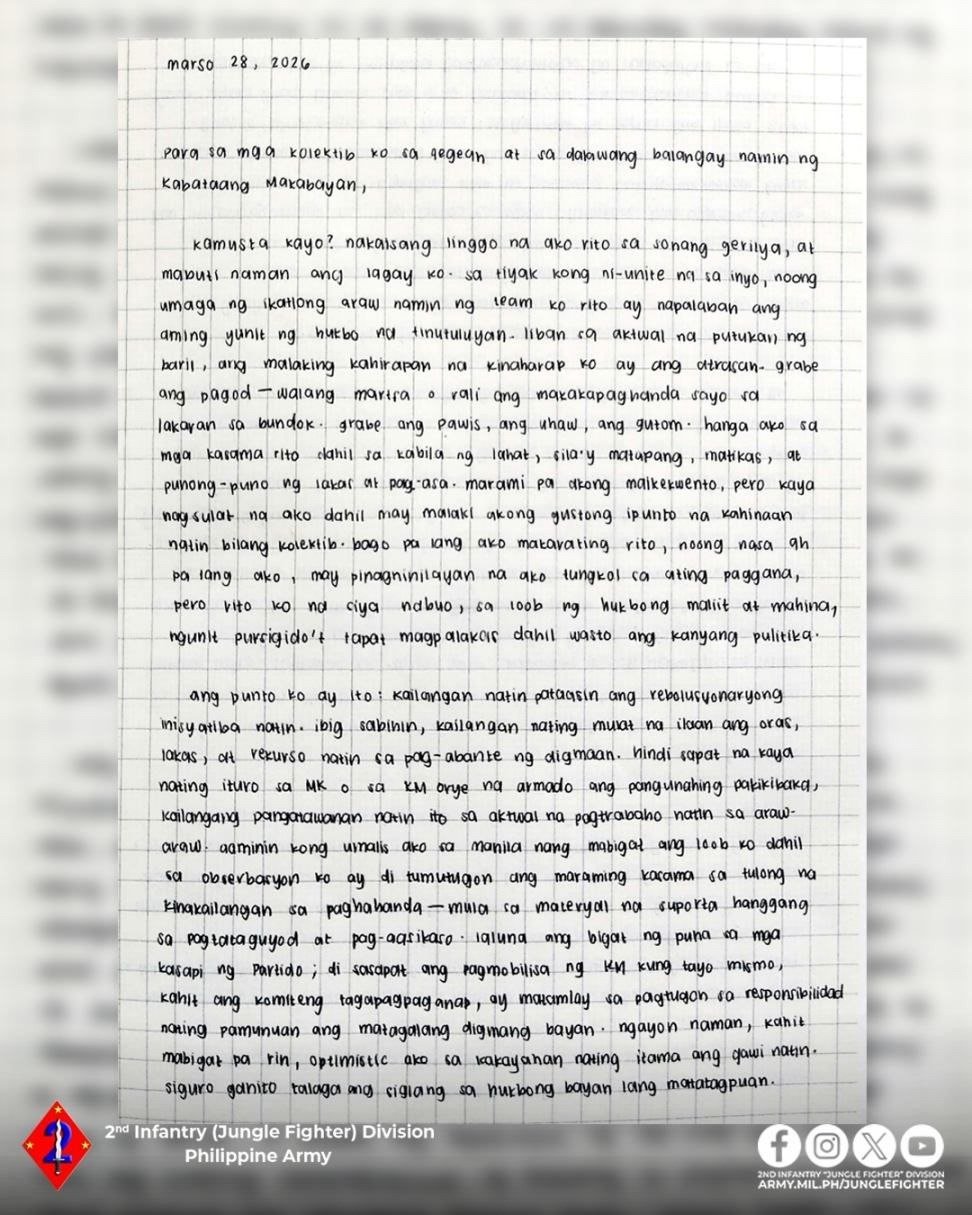
A personal diary confiscated during last month’s armed confrontation in Occidental Mindoro has unveiled the harsh day-to-day existence endured by communist insurgents, providing military officials with rare documentation of New People’s Army recruitment and operational procedures.
The handwritten journal, containing candid observations about guerrilla warfare and mountain survival, was among several items seized by the 2nd Infantry (Jungle Fighter) Division following the March 29 clash at Sitio Salafay, Barangay Monteclaro in San Jose town.
Intimate Portrait of Guerrilla Hardships
Written entries within the recovered Muji notebook paint a vivid picture of physical and psychological challenges confronting new NPA members adapting to wilderness conditions. The anonymous female author documented persistent fatigue, inadequate hygiene facilities, and overwhelming homesickness for urban amenities.
Stay informed with our free weekly newsletter. No spam, unsubscribe anytime.
Personal reflections reveal the stark contrast between recruitment promises and actual mountain existence, with detailed accounts of difficult terrain navigation, primitive living conditions, and constant anxiety about potential military encounters.
The diary author candidly expressed longing for city comforts and documented extended periods without proper washing facilities, highlighting the grueling nature of insurgent life that recruitment campaigns typically downplay or omit entirely.
Tactical Intelligence and Organizational Structure
Beyond personal observations, the journal contains comprehensive documentation of the armed group’s internal hierarchy, operational protocols, and strategic planning processes that military analysts consider highly valuable intelligence.
Detailed tactical annotations describe movement procedures during military operations and specific protocols members must follow when confronted by government forces or facing potential capture by authorities.
One significant instruction directs captured members to deny any involvement with the organization, revealing coordinated efforts to obscure individual participation levels and organizational connections during interrogations.
Strategic Thinking and Internal Criticism
The notebook demonstrates sophisticated political indoctrination among recruits, featuring analytical assessments of group effectiveness and strategic recommendations for operational improvements.
In one notable passage, the author wrote “kailangan natin pataasin ang rebolusyonaryong inisyatiba natin” (we need to raise our revolutionary initiative), indicating critical evaluation of current tactics and desire for enhanced militant activities.
These ideological reflections suggest intensive political education programs while simultaneously revealing internal dissatisfaction and calls for organizational reforms within the insurgent movement.
Camp Documentation and Security Measures
Detailed sketches throughout the journal illustrate temporary encampment layouts, including designated areas for sleeping, cooking, and equipment storage within mobile base structures.
The drawings provide insights into the nomadic operational style employed by NPA units, showing how groups establish organized living spaces during brief stays before relocating to avoid military detection.
Maps and environmental documentation reveal sophisticated understanding of local terrain and strategic positioning for both defensive purposes and quick evacuation procedures when necessary.
March Encounters and Combat Reflections
The journal references the earlier March 24 confrontation in Sitio Danlog, with the author noting “walang martsa o rali na makakapaghanda sayo sa lakaran sa bundok” (no march or rally can prepare you for walking in the mountains).
This observation underscores the inadequate preparation provided to recruits regarding the physical demands and psychological stress associated with guerrilla warfare and mountain survival.
Daily meal documentation and weapons handling experiences reveal the basic survival challenges and military training processes new members undergo during integration into active combat units.
Fatal Confrontation and Evidence Recovery
The deadly encounter that yielded this intelligence treasure trove resulted in Captain Dean Buen Oyando’s death and injuries to two additional soldiers serving under the 2nd Infantry Division.
NPA member Charlize Garzon was apprehended near Captain Oyando’s final position and currently faces murder charges related to the armed confrontation that occurred in the mountainous Occidental Mindoro region.
Military personnel recovered multiple significant items from the battle site, including an M16 rifle, explosive devices, improvised bomb components, and the revealing personal diary that has provided unprecedented insights into insurgent operations.
Military Intelligence Assessment
Colonel Michael Aquino, serving as Chief of the 2nd Division Public Affairs Office, highlighted the exceptional intelligence value contained within the confiscated materials for understanding NPA recruitment integration and operational procedures.
“The entries recovered from the encounter site provide a clearer picture of involvement within the organization,” Aquino explained from Camp Capinpin in Rizal. “The writings describe operational procedures, experiences within the group, and even ideological reflections, which strongly contradict attempts to portray them as just someone merely observing or conducting cultural work.”
According to Aquino, the documentation provides factual evidence countering online narratives attempting to minimize the captured individual’s actual participation level within the armed organization.
Humanitarian Treatment Standards
Despite serious criminal charges facing Garzon and the circumstances surrounding her capture, military officials emphasized their commitment to maintaining proper treatment standards and medical care provision.
“Despite the circumstances of Garzon’s capture and the charges she is facing, our troops ensured that she received first aid and medical attention,” Aquino stated. “This reflects our adherence to the rule of law and our respect for human dignity and the International Humanitarian Law.”
Government forces provided immediate medical assistance to the captured insurgent and ensured continued healthcare access while maintaining custody, demonstrating compliance with international humanitarian standards.
The 2nd Infantry Division reaffirmed its commitment to protecting civilian communities from armed threats while maintaining humane treatment protocols for individuals involved in armed conflicts, regardless of their organizational affiliations or alleged criminal activities.
Stay informed — get Negros Oriental news weekly
Free newsletter, no spam. Unsubscribe anytime.

- 01
- 02
- 03
- 04