
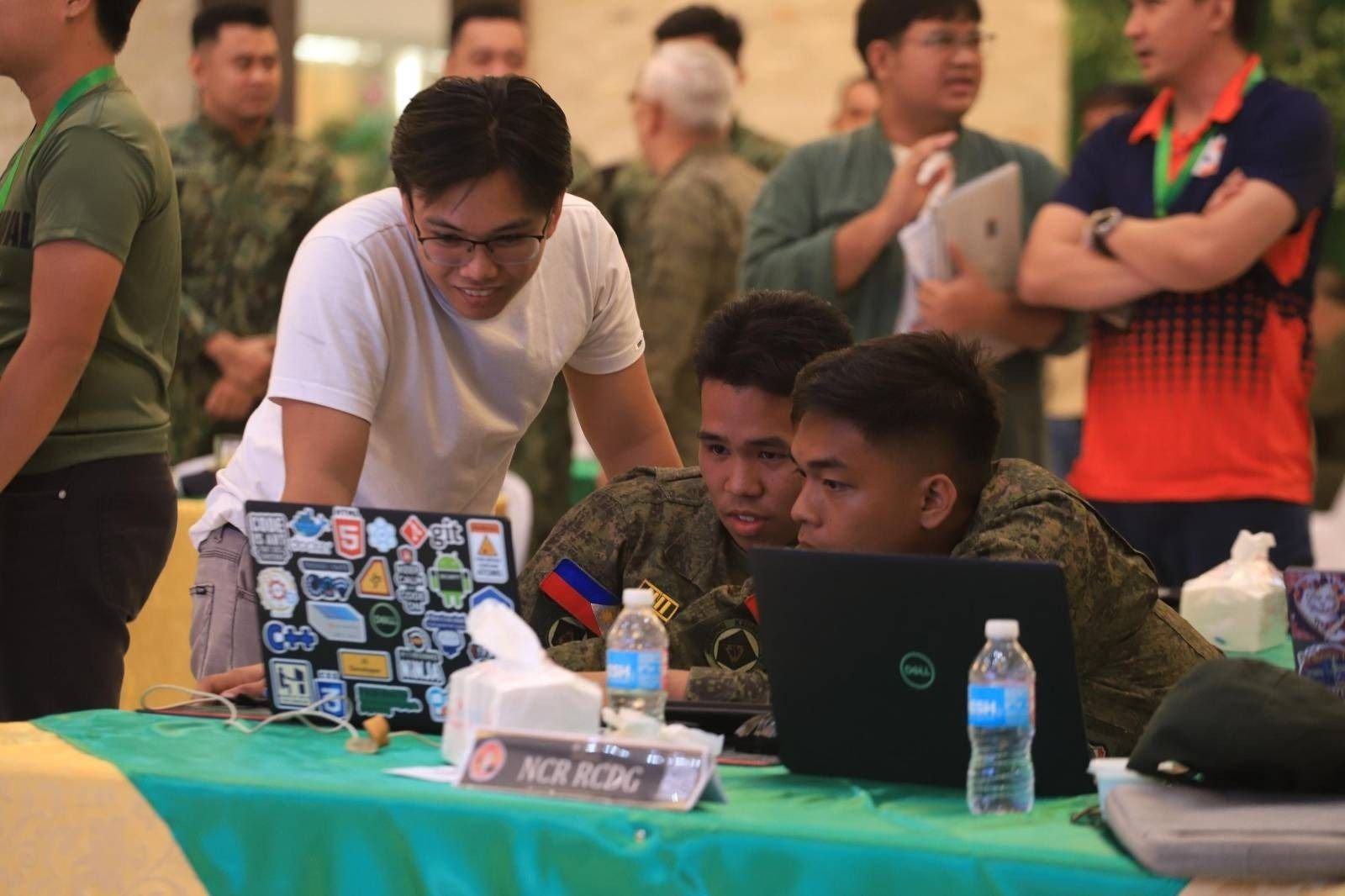
FORT BONIFACIO, Taguig City — Military leaders, government officials and private sector cyber specialists gathered this week at Fort Bonifacio for a large-scale cyber defense exercise designed to test the country’s readiness against rapidly evolving digital threats and to strengthen what officials described as a “whole-of-nation” approach to cybersecurity.
The three-day Philippine Army Multi-Sectoral Cyber Exercise, held from March 4 to March 6, brought together cyber professionals from the armed forces, government agencies and the private sector to simulate coordinated responses to cyber incidents that could threaten national security, economic stability and public trust.
Organized by the Office of the Assistant Chief of Staff for Communications, Electronics and Information Systems (OG6) of the Philippine Army, the exercise reflected the growing recognition that cybersecurity is no longer solely a military concern but a shared national responsibility.
“The cyber domain has become a critical battlefield,” Philippine Army officials said in a statement released Saturday. “Protecting the nation’s information systems requires coordination not only within the military but across government and the private sector.”
The exercise was conducted at Fort Bonifacio, the headquarters of the Philippine Army in Taguig City, where participating teams worked through simulated cyberattack scenarios designed to test communication, coordination and response capabilities across institutions.
Cybersecurity has become a strategic priority for governments worldwide as digital infrastructure increasingly underpins everything from military communications to financial systems, public utilities and government services. In the Philippines, recent years have seen a rise in cyber threats ranging from phishing scams and ransomware attacks to attempts at breaching government databases.
Army officials said the exercise focused on strengthening the country’s preparedness against these emerging threats, particularly attacks targeting critical information infrastructure.
Participants were tasked with responding to a range of simulated cyber incidents including phishing operations designed to steal sensitive credentials, ransomware attacks aimed at crippling digital systems, network intrusions and data breaches involving sensitive information.
Such scenarios, according to military planners, mirror the real-world tactics increasingly used by cybercriminals and hostile actors.
The drills emphasized the need for rapid information sharing between institutions, coordinated technical responses and clear communication protocols when responding to cyber emergencies.
“Cyber threats evolve quickly and can affect multiple sectors simultaneously,” organizers said. “A coordinated response between military units, government agencies and private sector partners is essential.”
The “whole-of-nation” approach promoted during the exercise has become a guiding framework in Philippine national security planning. It emphasizes collaboration among government institutions, law enforcement agencies, industry stakeholders and civil society in confronting both traditional and emerging threats.
In the cyber domain, officials say such cooperation is especially critical because many essential digital systems — including banking networks, telecommunications infrastructure and energy grids — are operated by private companies.
Military planners stressed that while the armed forces play a central role in national defense, protecting cyberspace requires the participation of experts beyond the military.
Private sector cybersecurity specialists participating in the exercise contributed technical expertise and industry perspectives on how attacks unfold in commercial networks and critical infrastructure systems.
Government cyber professionals, meanwhile, focused on policy coordination, crisis response frameworks and safeguarding sensitive public databases.
The exercise also provided an opportunity for participants to examine vulnerabilities within interconnected digital networks and develop strategies for mitigating potential attacks before they escalate.
Cybersecurity analysts note that exercises like this have become increasingly important as cyberattacks grow more sophisticated and frequent.
In Southeast Asia, governments have reported a surge in cyber incidents targeting financial institutions, telecommunications providers and government systems. Many attacks involve phishing campaigns that trick users into revealing login credentials, or ransomware operations that lock organizations out of their own data until payment is made.
Such incidents can cause widespread disruption, compromise sensitive information and undermine public confidence in digital systems.
For the Philippine military, strengthening cyber defense capabilities has become part of broader modernization efforts aimed at adapting to emerging security challenges.
Officials say the Army’s cyber initiatives are designed not only to protect military networks but also to support national resilience by working alongside other sectors.
“The development of expertise in the cyber domain is a critical component of national defense,” the Philippine Army said.
The exercise also served as a training platform for cyber specialists within the Army, allowing them to test operational procedures and collaborate with external partners.
By replicating real-world cyber incidents, planners said the drills help participants better understand how attacks unfold and how institutions can coordinate responses under pressure.
The event concluded with discussions on lessons learned from the simulated incidents and recommendations for strengthening cyber defense strategies across participating organizations.
Army officials said the initiative reflects the institution’s continuing commitment to improving cyber capabilities as digital threats become increasingly complex.
“The Philippine Army remains committed to fostering expertise in the cyber domain,” the statement said, “reinforcing the country’s ability to protect itself against emerging cyber threats and vulnerabilities.”
As the Philippines expands its digital infrastructure and online services, cybersecurity experts warn that protecting these systems will require sustained investment in both technology and human expertise.
Exercises like the one held this week, officials say, represent an important step toward building the partnerships and technical capacity necessary to defend the country’s digital frontiers.
Photo credit: SSg Cesar P. Lopez PA / Office of the Chief of Public Affairs (OCPA)
Tags: Philippine Army, Cybersecurity, Cyber Defense, Philippine Military, National Security
Slug: philippine-army-multi-sectoral-cyber-exercise-2026
Excerpt: The Philippine Army conducted a multi-sectoral cyber exercise in Fort Bonifacio to strengthen whole-of-nation cyber resilience against evolving digital threats.
Stay informed — get Negros Oriental news weekly
Free newsletter, no spam. Unsubscribe anytime.