
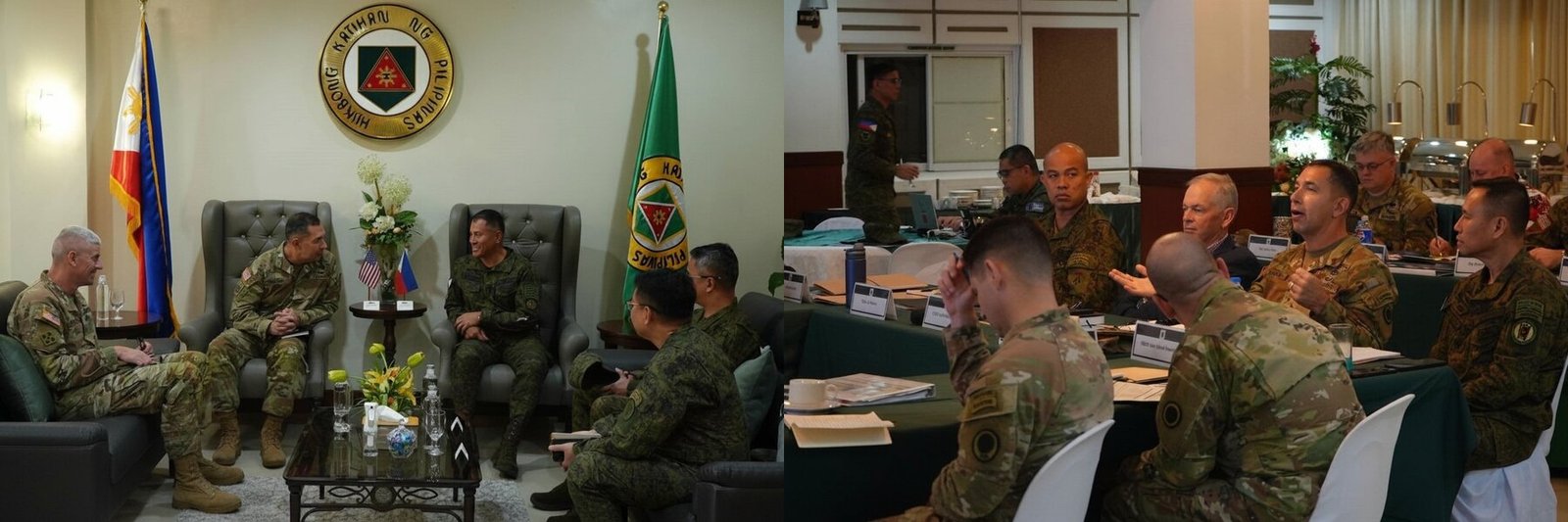
TAGUIG CITY – The Philippine Army and United States Army conducted a joint training exercise focused on developing combined force land component capabilities at Fort Bonifacio on March 12, 2026, as part of ongoing military cooperation between the two allied nations.
According to a press release from Colonel Louie G. Dema-ala, Chief Public Affairs of the Philippine Army, 22 senior officers from both armies participated in the US-Sponsored Combined/Joint Force Land Component Commander Course held at the Headquarters Philippine Army.
The specialized training program was hosted by the US Army War College and aimed at preparing future leaders and commanders to effectively manage Joint Force Land Component operations in various military scenarios.
Strategic Military Cooperation
The joint exercise represents a significant step in strengthening army-to-army cooperation between the Philippines and the United States, building on decades of military partnership and alliance agreements between the two nations.
Senior military officials emphasized that the training aligns with the Philippine Army’s ongoing transition toward External Security Operations, a strategic shift that requires enhanced capabilities and new skill sets among its officer corps.
The program focused on developing advanced command and control competencies necessary for managing complex joint operations involving multiple service branches and international partners.
Philippine Army’s Strategic Transformation
As the Philippine Armed Forces continues its modernization efforts, the military organization has prioritized multilateral cooperation with allied and partner institutions worldwide to acquire cutting-edge military knowledge and operational expertise.
The training initiative reflects the Philippine Army’s commitment to building institutional capacity as it prepares to assume greater responsibilities in external defense operations, moving beyond its traditional focus on internal security challenges.
Military leadership stressed that equipping and training soldiers remains fundamental to the organization’s goal of becoming a more effective force provider capable of meeting 21st-century security challenges.
Focus on Leadership Development
The Combined/Joint Force Land Component Commander Course specifically targets senior officers who are expected to assume leadership roles in complex military operations involving coordination between different service branches and international allies.
Participants received specialized instruction on joint operational planning, multi-domain operations, and interoperability standards that enable seamless cooperation between Philippine and US forces during bilateral exercises or actual operations.
The curriculum covered advanced topics including joint intelligence preparation, logistics coordination, and command relationship structures essential for effective multi-national military cooperation.
Regional Security Context
The joint training takes place amid evolving security dynamics in the Indo-Pacific region, where both the Philippines and United States maintain shared interests in promoting stability and deterring potential threats.
Military analysts note that such cooperative training programs enhance the readiness of allied forces to respond to various contingencies, from humanitarian assistance operations to more complex security challenges.
The exercise demonstrates the continued relevance of the US-Philippines Mutual Defense Treaty and other bilateral defense agreements that facilitate regular military exchanges and capability-building initiatives.
Institutional Capacity Building
Philippine military officials emphasized that the training program aligns with the organization’s core principle that “Our Strength is Our People,” highlighting the importance of human resource development in military modernization efforts.
The initiative represents part of broader efforts by the Philippine Army to enhance its professional military education system through partnerships with established institutions like the US Army War College.
Senior officers participating in the program are expected to apply their newly acquired knowledge in training subordinate units and developing institutional capabilities within the Philippine Army structure.
Ongoing Military Partnership
The March 12 training session builds upon numerous previous cooperative activities between Philippine and US military forces, including regular joint exercises such as Balikatan and Salaknib that have strengthened interoperability over many years.
Military cooperation between the two allies extends beyond tactical training to include professional military education, equipment modernization, and strategic planning coordination.
Defense officials from both nations have consistently emphasized that such partnerships contribute to regional stability while respecting Philippine sovereignty and strategic autonomy in defense matters.
Future Training Initiatives
The successful completion of the Combined/Joint Force Land Component Commander Course is expected to pave the way for additional specialized training programs designed to enhance Philippine Army capabilities in external security operations.
Military leadership indicated that similar cooperative training initiatives will continue as part of the ongoing modernization and capability development efforts within the Armed Forces of the Philippines.
The program reflects broader trends in military professional development that emphasize joint operations, multinational cooperation, and adaptive leadership in complex security environments.
Photo credit: Sgt Christ Darrel Pangilinan PA/OCPA
Stay informed — get Negros Oriental news weekly
Free newsletter, no spam. Unsubscribe anytime.