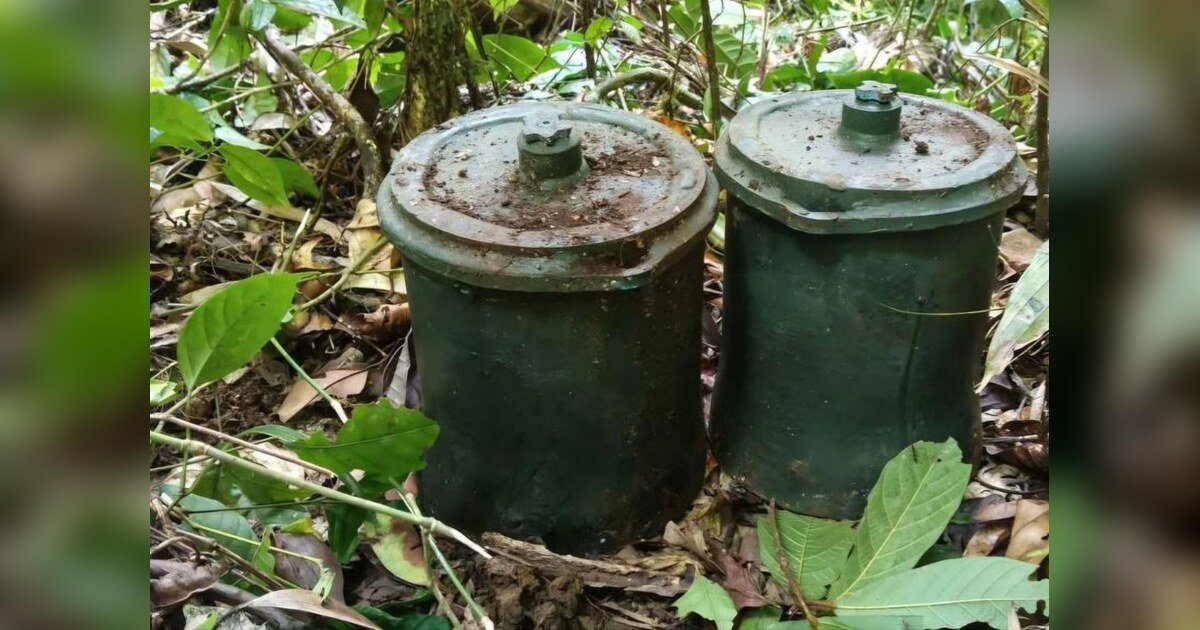
Two prohibited anti-personnel mines were recovered by Philippine Army soldiers during a combat patrol deep in the hinterlands of Northern Samar, the military announced, raising fresh alarm over the continued use of internationally banned ordnance by communist armed groups in the region.
The devices were found on August 13, 2026, in Barangay Sag-od, within the municipality of Las Navas, Northern Samar. According to the Philippine Army, the troops responsible for the discovery belong to the 20th Infantry Battalion (20IB), operating under the 8th Infantry Division.
Patrol Uncovers Banned Devices in Remote Village
The 20IB soldiers were conducting what the Philippine Army described as focused security operations in Barangay Sag-od when they came across the two anti-personnel mines. The military attributed the presence of the weapons to remnants of the Communist Terrorist Group (CTG) believed to be active in the remote hinterland area.
The Philippine Army said the timely recovery of the mines prevented their potential detonation, which could have resulted in casualties among the patrolling troops or unsuspecting civilians living in or passing through the area.
Anti-personnel mines are considered among the most indiscriminate weapons in existence — once placed, they cannot distinguish between a soldier and a farmer, a combatant and a child. Their hazard can persist for years, even decades, long after the conflict that led to their deployment has subsided.
Battalion Commander Commends Soldiers’ Alertness
Lieutenant Colonel Tim Clavel, Commanding Officer of the 20th Infantry Battalion, praised his troops for the successful find. In a statement released by the unit, Lt. Col. Clavel highlighted the importance of vigilance in preventing harm to both military personnel and the civilian population.
“The recovery of these anti-personnel mines underscores the continuing threat posed by unlawful explosive devices to our troops and, more importantly, to innocent civilians. We commend our troops for their vigilance and professionalism, which led to the discovery of these explosives before they could potentially cause harm,” Lt. Col. Clavel said.
The 20IB commander further assured the public that focused security operations in Northern Samar will be sustained. According to Lt. Col. Clavel, the battalion remains committed to detecting and neutralizing explosive threats before they can endanger the communities his unit is tasked to protect.
8th Infantry Division Issues Condemnation from Camp Lukban
In a separate statement issued from Camp Lukban in Catbalogan City, Samar, the 8th Infantry Division (8ID) strongly condemned the possession and threatened deployment of anti-personnel mines by CTG remnants in Eastern Visayas.
“The presence of anti-personnel mines in conflict-affected areas is a serious threat to the safety of the communities. Their indiscriminate nature can endanger anyone who may inadvertently encounter them, including civilians,” the 8th Infantry Division said in its official statement.
The division emphasized that it would remain resolute in upholding International Humanitarian Law (IHL) and supporting national government efforts toward achieving Stable Internal Peace and Security across Eastern Visayas. The 8ID reiterated its mandate to shield communities from the dangers posed by prohibited weapons and other threats associated with CTG remnants still operating in remote areas of the region.
Ottawa Convention Bans These Weapons Outright
The anti-personnel mines recovered in Las Navas fall under the explicit prohibition of the Ottawa Convention — formally titled the Convention on the Prohibition of the Use, Stockpiling, Production and Transfer of Anti-Personnel Mines and on their Destruction. The Philippines is a signatory State Party to this international treaty, which obligates member states to halt all use of such weapons, destroy existing stockpiles, and clear areas where mines have been planted.
According to the Philippine Army, the CTG’s continued deployment of these devices constitutes a direct violation of International Humanitarian Law. Because anti-personnel mines are incapable of distinguishing between armed combatants and non-combatants, their use places farmers, ordinary residents, and security forces at persistent and long-term risk — particularly in hinterland communities where these devices can go undetected for extended periods.
The international community has long regarded anti-personnel mines as a humanitarian crisis weapon precisely because of this characteristic. Their effects are not confined to the immediate conflict — communities can remain at risk for generations if mined areas are not properly cleared and mapped.
Ongoing Threat to Hinterland Communities
The discovery in Barangay Sag-od is part of a broader pattern documented by the Philippine Army in Eastern Visayas, where CTG remnants have continued to rely on improvised and prohibited weapons as security forces intensify operations against them. By targeting remote barangays where military presence has historically been limited, these groups place the most vulnerable rural communities at heightened risk.
Both the 20IB and the 8th Infantry Division have signaled that operations aimed at finding and disabling such devices will continue. The Philippine Army has framed these efforts not only as a counterinsurgency mandate but also as a humanitarian responsibility — ensuring that fields, trails, and forested areas used by ordinary civilians remain free from lethal hidden hazards.
By the Numbers
- 2 — anti-personnel mines recovered during the combat patrol
- 1 — barangay affected: Barangay Sag-od, Las Navas, Northern Samar
- August 13, 2026 — date on which the mines were discovered
Why This Matters
Anti-personnel mines are among the most universally condemned weapons under international law, banned by the Ottawa Convention precisely because they cannot discriminate between soldiers and civilians. Their recovery in Barangay Sag-od, Las Navas confirms that CTG remnants in Eastern Visayas continue to deploy prohibited ordnance, posing a persistent danger to hinterland communities long after individual encounters with security forces. The 8th Infantry Division’s commitment to sustained operations and IHL compliance signals that the military views the removal of such threats as both a security and a humanitarian priority.
Source: Philippine Army / 8th Infantry Division public statements