Island Shipping Corporation has announced a significant increase in passenger fares for the route connecting Tangil, Dumanjug in Cebu to Bulado, Guihulngan City in Negros Oriental, effective March 10, 2026.
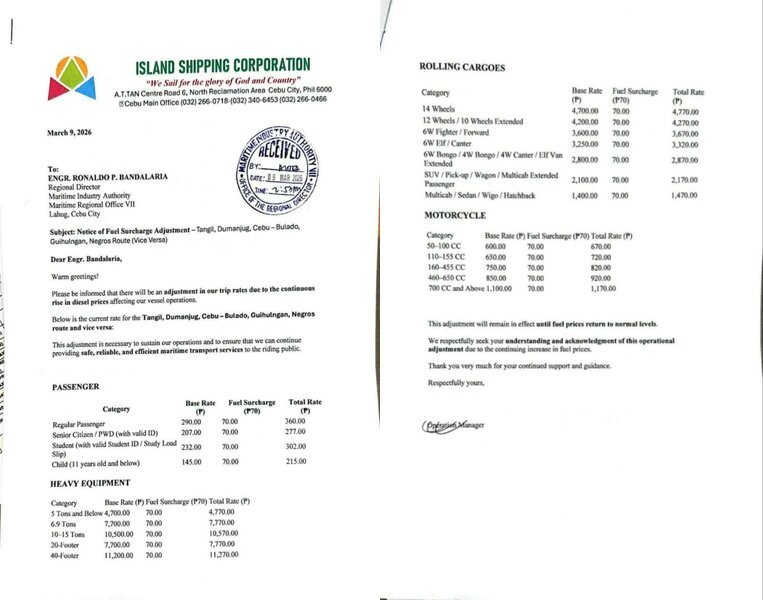
According to announcements posted on the official Facebook pages of both the Guihulngan City Public Information Office and the Public Information Office of Dumanjug three days ago, regular passenger fares will increase from ₱290 to ₱360, representing a 24.1% increase.
The fare adjustments affect all passenger categories on this critical inter-island route that connects the two provinces across the Tañon Strait.
Detailed Fare Structure Changes
The new rate structure shows increases across all passenger categories, according to the official announcements from both local government units.
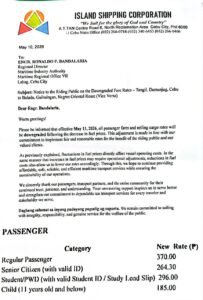
Regular passengers will pay ₱360, up from the previous base rate of ₱290. Senior citizens and persons with disabilities (PWDs) who present valid identification will pay ₱277, increased from ₱207.
Students with valid student IDs or study load documentation will face fares of ₱302, up from ₱232. Children aged 11 years and below will pay ₱215, compared to the previous rate of ₱145.
The increases range from 24.1% for regular passengers to 48.3% for children, with senior citizens and PWDs facing a 33.8% increase, while students will pay 30.2% more than the previous rates.
Route and Service Details
The affected route operates between Tangil Port in Dumanjug, Cebu and Bulado Port in Guihulngan City, Negros Oriental. This service provides a vital transportation link for residents, workers, students, and tourists traveling between the two provinces.
The announcement from the Public Information Office of Dumanjug, written in Cebuano, informed the public that Island Shipping Corporation would implement the fare increase starting March 10, 2026, affecting the bidirectional route between the two ports.
Island Shipping Corporation operates regular scheduled services on this route, serving as one of the primary maritime connections between southern Cebu and northern Negros Oriental.
Public Response and Concerns
The fare increase announcement has generated significant discussion among passengers and regular users of the service, based on comments posted on the official announcements.
Residents have expressed concerns about the substantial increase, particularly questioning whether fares would be reduced if fuel prices decrease, referencing previous experiences during the pandemic when fare reductions were not implemented despite lower fuel costs.
Some passengers have indicated the increases may impact family travel decisions, with one commenter noting that families with multiple children may find vacation travel financially challenging due to the higher costs.
Others have questioned additional fees charged beyond the base fare, including references to environmental fees and other surcharges that add to the total cost of travel.
Economic Impact on Commuters
The fare increases come at a time when many Filipino families are managing tight budgets, with several commenters noting that salaries have not increased proportionally to rising transportation costs.
Regular commuters, including workers who travel between the islands for employment, students attending schools in different provinces, and families maintaining connections across the strait, will face significantly higher transportation expenses.
The route serves communities that rely on affordable inter-island transportation for access to employment opportunities, education, healthcare, and family connections between Cebu and Negros Oriental.
Maritime Transportation Context
Ferry services between Cebu and Negros Oriental represent critical infrastructure for the region’s connectivity and economic development. The Tañon Strait, which separates the two islands, requires reliable maritime transportation to maintain social and economic links between communities.
Island Shipping Corporation is among several operators providing passenger and cargo services across various routes in the central Philippines, serving both scheduled and chartered transportation needs.
The company’s decision to increase fares likely reflects rising operational costs, including fuel, maintenance, crew wages, and regulatory compliance expenses that affect maritime operators throughout the Philippines.
Regulatory Framework
Maritime transportation fares in the Philippines are typically subject to oversight by the Maritime Industry Authority (MARINA), which regulates passenger vessel operations and fare structures to balance operator sustainability with passenger affordability.
Ferry operators must justify fare increases based on documented cost increases and operational requirements, though the specific factors driving Island Shipping Corporation’s fare adjustment have not been detailed in the public announcements.
Regional Transportation Alternatives
Passengers seeking alternatives to the Dumanjug-Guihulngan route may consider other ferry services operating between Cebu and Negros Oriental, though these may involve longer travel times or different departure points.
The availability of competitive services and alternative routing options will likely influence passenger response to the fare increases and may affect Island Shipping Corporation’s ridership levels.
The fare increases take effect March 10, 2026, giving passengers time to plan for the higher costs or explore alternative transportation arrangements.
Local government units in both Dumanjug and Guihulngan have fulfilled their responsibility to inform the public about the changes, allowing residents to make informed decisions about their travel plans.
The impact of these fare increases on passenger volume and regional connectivity will become apparent in the months following implementation, potentially influencing future pricing decisions and service offerings in the inter-island transportation market.
Photo credit: Photo courtesy of Guihulngan City Public Information Page/Facebook