
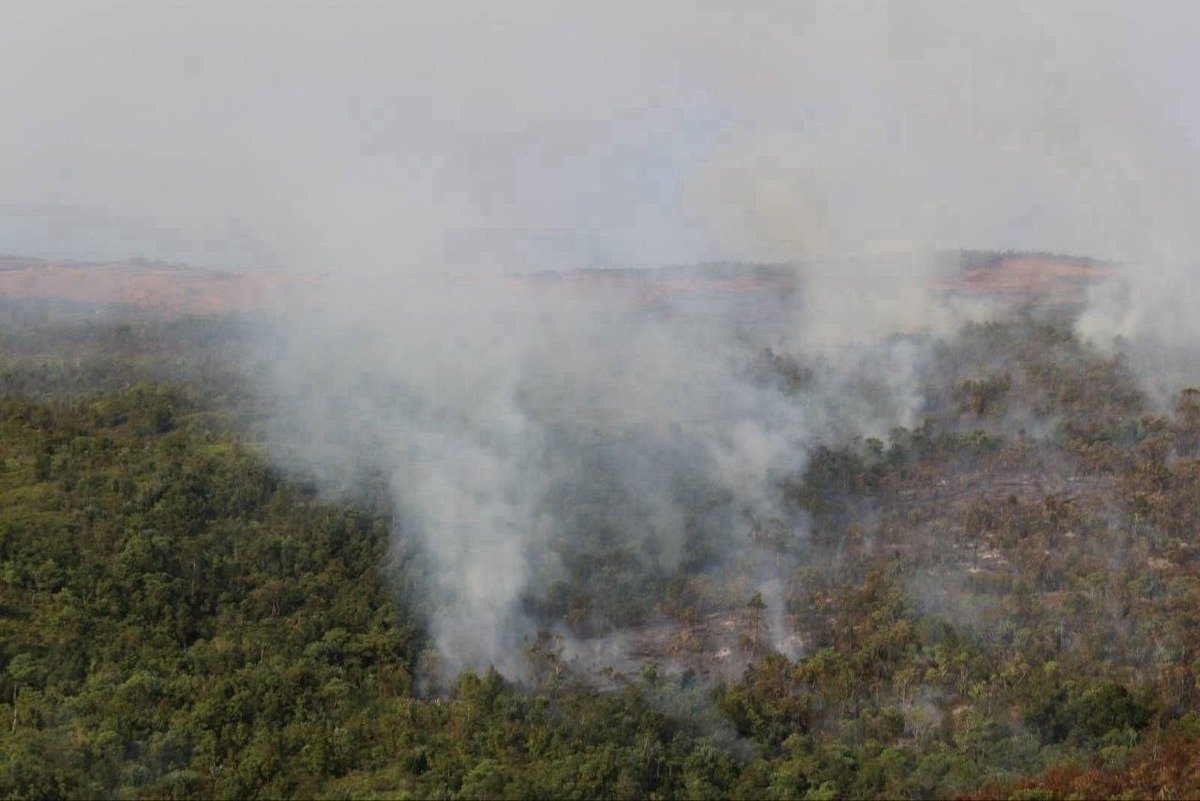
A Philippine Air Force S-70i Black Hawk helicopter has been conducting intensive aerial water-dropping operations since April 19, 2026, targeting grass and forest fires burning across Homonhon Island in Guiuan, Eastern Samar, where rugged topography has hampered conventional ground-based firefighting efforts.
Military aviation support became necessary after the blaze spread through areas inaccessible to traditional firefighting equipment, prompting authorities to request specialized aerial intervention from Tactical Operations Group 8 (TOG 8) operating under the Tactical Operations Wing Central (TOWCEN) command structure.
The helibucket-equipped aircraft has completed nine water-dropping sorties as of the most recent Air Force Public Affairs Office statement released April 20, 2026, delivering precision strikes against flames in locations beyond the operational reach of ground personnel working the remote island terrain.
Coordinated Agency Response Tackles Island Blaze
Regional Disaster Risk Reduction and Management Council (RDRRMC) VIII has orchestrated a comprehensive multi-agency response involving Office of Civil Defense (OCD) VIII, Bureau of Fire Protection (BFP) Eastern Samar, and local government units working alongside military assets to address the escalating fire situation.
Colonel Ma Christina O Basco PAF (GSC), serving as Chief of the Air Force Public Affairs Office, authorized public statements detailing the coordinated suppression operations. The collaborative framework represents standard Philippine protocol for managing environmental emergencies requiring both civilian and military resources.
Integration between military aviation capabilities and civilian disaster response agencies reflects established procedures for addressing natural disasters across the archipelago’s remote locations where geographic isolation compounds emergency response challenges.
Persistent Flames Resist Suppression Attempts
Current military reports indicate the fire remains active despite sustained aerial and ground operations, with responders maintaining continuous suppression activities across multiple fronts on Homonhon Island. Officials have not yet declared “fire out” status, suggesting the blaze continues presenting challenges for containment efforts.
The helicopter’s precision water delivery system targets specific zones where ground teams cannot operate effectively, allowing firefighters to address areas that would otherwise burn unchecked. Each sortie requires the aircraft to collect water from accessible sources before delivering targeted drops over critical fire locations.
Sustained military involvement demonstrates the severity of conditions facing the island community, with government agencies committing specialized resources to protect both residents and natural forest areas from continued fire damage.
Terrain Complications Drive Aerial Strategy
Homonhon Island’s challenging geography has necessitated the helicopter-based approach, as ground crews encounter significant obstacles accessing fire-affected zones through the island’s difficult terrain. The aerial water-dropping strategy provides the primary means of reaching otherwise inaccessible burning areas.
Nine completed sorties represent sustained flight operations under demanding conditions that require specialized pilot training and aircraft performance capabilities. The S-70i Black Hawk platform offers the versatility needed for adapting to firefighting missions while maintaining operational effectiveness in challenging weather and terrain conditions.
Ground-based firefighting teams continue operating in accessible areas while coordinating with aerial operations to maximize suppression effectiveness across the island’s affected regions.
Military Aviation Assets Support Civilian Emergencies
The S-70i Black Hawk helicopter demonstrates the PAF’s adaptable aircraft capabilities, regularly modified for search and rescue, medical evacuation, and disaster response missions beyond traditional military operations. Helibucket system integration transforms the platform into an effective firefighting tool capable of substantial water payload delivery.
Philippine military aviation increasingly supports civilian disaster response across the archipelago, where island geography and infrastructure limitations often restrict conventional emergency response effectiveness. The flexible deployment of military assets enables rapid response to remote locations with limited civilian resources.
Each water-dropping mission involves complex coordination between aircraft operations, ground team positioning, and resource management to ensure maximum suppression impact while maintaining responder safety throughout the operation.
Regional Emergency Management Challenges
Eastern Samar’s remote island locations present ongoing challenges for emergency response infrastructure, with limited access routes and equipment deployment options complicating disaster management efforts. Homonhon Island’s grass and forest areas become particularly vulnerable during dry seasonal conditions that promote rapid fire spread.
RDRRMC VIII coordinates emergency response across the Eastern Visayas region encompassing multiple provinces and numerous islands with varying infrastructure development levels and accessibility challenges. The regional approach ensures resource allocation matches local government capacity and geographic constraints.
Guiuan local government units have provided essential coordination support for provincial and national agency operations, ensuring community safety measures and logistical support for ongoing firefighting activities across the affected island areas.
Public Service Mission Continues
Air Force officials emphasized that ongoing operations demonstrate the PAF’s “unwavering dedication to public service—standing ready to respond, adapt, and deliver when and where it matters most,” reflecting expanded military roles in civilian emergency management throughout the Philippines.
Military personnel and equipment regularly assist civilian authorities during typhoons, natural disasters, and other emergencies requiring rapid deployment of specialized capabilities to remote locations. This operational flexibility allows quick response to situations where civilian resources prove insufficient for effective emergency management.
The Eastern Samar firefighting mission exemplifies domestic military operations that have gained increased importance, balancing traditional security functions with disaster response and humanitarian assistance responsibilities serving Philippine communities.
Suppression operations continue with maintained coordination between responding agencies to optimize resource utilization and ensure responder safety while protecting Homonhon Island communities from ongoing fire threats.
Related stories