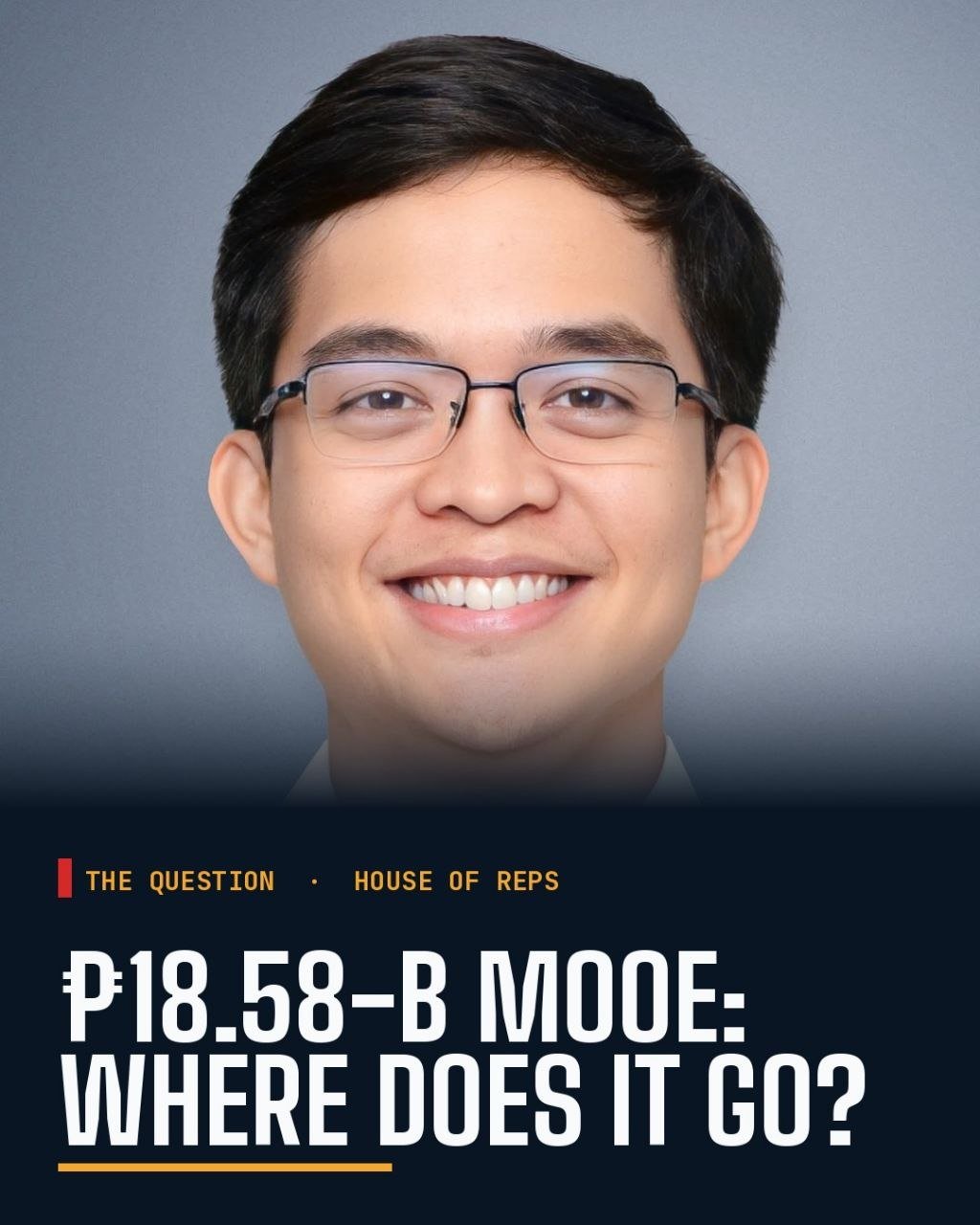
Batangas First District Representative Leandro Legarda Leviste has taken a formal step to channel roughly ₱12 million in unspent congressional office funds toward Filipinos displaced or injured by recent earthquakes and typhoons, while simultaneously pressing House leadership to account for a sharp increase in the chamber’s overall maintenance budget that now stands at ₱18.58 billion for 2026.
In a letter addressed to Maria Nenita M. Casem, technical staff chief of the House Committee on Accounts, and dated June 10, 2026, Leviste formally requested that Maintenance and Other Operating Expenses (MOOE) funds accumulated for his office “since the start of the 20th Congress” — estimated at close to ₱1 million per month — be redirected to calamity victims rather than collected by his office. Leviste disclosed in the letter that he had not encashed any of the cheques issued to him, allowing them to accumulate over the months since July 2025.
Lawmaker Pushes for Institution-Wide Commitment, Not Just Individual Generosity
Leviste’s appeal went beyond the question of his own uncollected funds. In the same June 10 letter, he urged the House as an institution to commit a more meaningful share of its total operating budget to disaster assistance — arguing that relying solely on individual members who voluntarily redirect their own allocations was insufficient given the scale of need.
“I also respectfully propose that the House allocate a more substantial portion of its MOOE budget for disaster victims, beyond the contributions of individual members,” Leviste wrote, according to the letter he later made public. He added that he was open to whatever mechanism the Committee on Accounts might suggest, so long as the outcome maximized relief for affected Filipinos.
In a Facebook post published on the same day, the first-term lawmaker said he visited the House that morning specifically to confront the committee about the allocation of the chamber’s ₱18.58-billion MOOE for 2026. He calculated that figure as roughly ₱58.42 million per lawmaker — money he argued should be flowing toward relief goods and disaster assistance rather than being absorbed by internal operating processes with limited transparency.
The “Liquidation by Certification” Controversy
Central to Leviste’s ongoing scrutiny is a disbursement process he has consistently described as “liquidation by certification” — a mechanism he says allows public funds to be spent and accounted for without the presentation of official receipts. According to Leviste, no one within the chamber has been able to give him a satisfactory explanation of where the bulk of the MOOE money ultimately goes.
Leviste has claimed that a large portion of these funds is distributed to lawmakers through the certification process, and that some of his colleagues have privately characterized these disbursements as a form of financial “bonus.” He acknowledged in his public statement that fellow legislators pushed back on this characterization, with some telling him they use the funds to provide direct assistance in their home districts.
“But if there are no receipts, how can we be sure this money really reaches the public?” Leviste asked, in Filipino, in his Facebook statement. He added: “My apologies to my colleagues, but I cannot bear not to question where receipt-less funds go, especially now that we see how many of our countrymen are in need.”
His concrete recommendation was to redirect what he described as legislative “bonuses” — covering both representatives and senators — toward calamity victims, proposing that ₱2 billion be reallocated beginning in June 2026.
Senior House Members Reject the “Bonus” Label
Leviste’s characterization of the disbursements as bonuses has drawn consistent pushback from senior House figures, a pattern that began when he first publicized the issue in late 2025 by posting images of cheques issued to his office on social media and labelling similar payments a “Christmas bonus.”
Palawan Representative Jose Alvarez, a senior member of the House appropriations panel, said at the time that the cheques were standard, lawful disbursements for district office operations and rejected the suggestion that anything irregular had occurred. Lanao del Sur Representative Ziaur-Rahman Adiong called the “Christmas bonus” framing unfair and inaccurate, maintaining that the funds were routine MOOE for official office use rather than additional personal compensation. Bicol Saro party-list Representative Terry Ridon clarified that the only December payments lawmakers receive are the standard 13th-month pay and mid-year pay applicable to all government employees under existing law — not discretionary bonuses.
As of the date of the original report, none of those House figures had issued new public statements specifically addressing Leviste’s June 10 letter or the renewed proposal for a broader MOOE reallocation.
House Maintenance Budget Rose by Nearly ₱8 Billion
The June 10 letter is the most recent development in what has become a sustained campaign by Leviste targeting the House’s maintenance and operating expenditures. According to Leviste, the chamber’s MOOE allocation rose from ₱10.75 billion to ₱18.58 billion — an increase of approximately ₱7.83 billion — and he said he had formally asked the Committee on Accounts for a detailed breakdown of that jump without receiving any response.
Leviste has argued that a disproportionate share of that expanded budget is being liquidated through the certification process, which he contends creates conditions for public funds to be distributed or absorbed without adequate documentation or accountability.
The Committee on Accounts had not issued any public response to the June 10 letter as of June 13, 2026, according to available reports. Leviste’s office did not confirm whether a private reply had been received from the committee.
Who Is Leandro Leviste?
Leandro Legarda Leviste, 33, is the son of Senator Loren Legarda and the founder of Solar Philippines, a domestic renewable energy company. He captured the Batangas first district seat in the 2025 elections with a vote total described as a record for that constituency. Since joining the 20th Congress, Leviste has said he declines both his salary and his MOOE allocation, citing his objections to the House’s handling of public funds.
He has relied heavily on social media — and Facebook in particular — to publicize his accountability positions, a strategy that has earned him considerable public attention while generating friction with more senior colleagues. His late-2025 posts showing cheques from the House prompted sharp rebukes at the time, but Leviste continued to press the same line of questions well into the first half of 2026.
Relief Needs Remain High as Disasters Mount
Leviste’s renewed appeal comes at a time when government disaster relief operations are under sustained pressure. The Philippines has recently dealt with the aftermath of a major earthquake and several typhoons, driving up demand for aid, relief goods, and rehabilitation support across multiple regions.
While Leviste’s letter did not designate specific disaster events as the target of the proposed reallocation, his Facebook post called for funds to be directed at those “battered by recent disasters.” He expressed hope that the House would act at scale — not merely through the individual goodwill of members willing to forego their own allocations — but through a collective institutional commitment backed by a formal mechanism.
As of June 13, 2026, the House Committee on Accounts had not publicly acknowledged the June 10 letter, and no House leadership figure had issued a formal response to the broader reallocation proposal, according to available reports.
Source: Originally reported by Rappler
Related stories