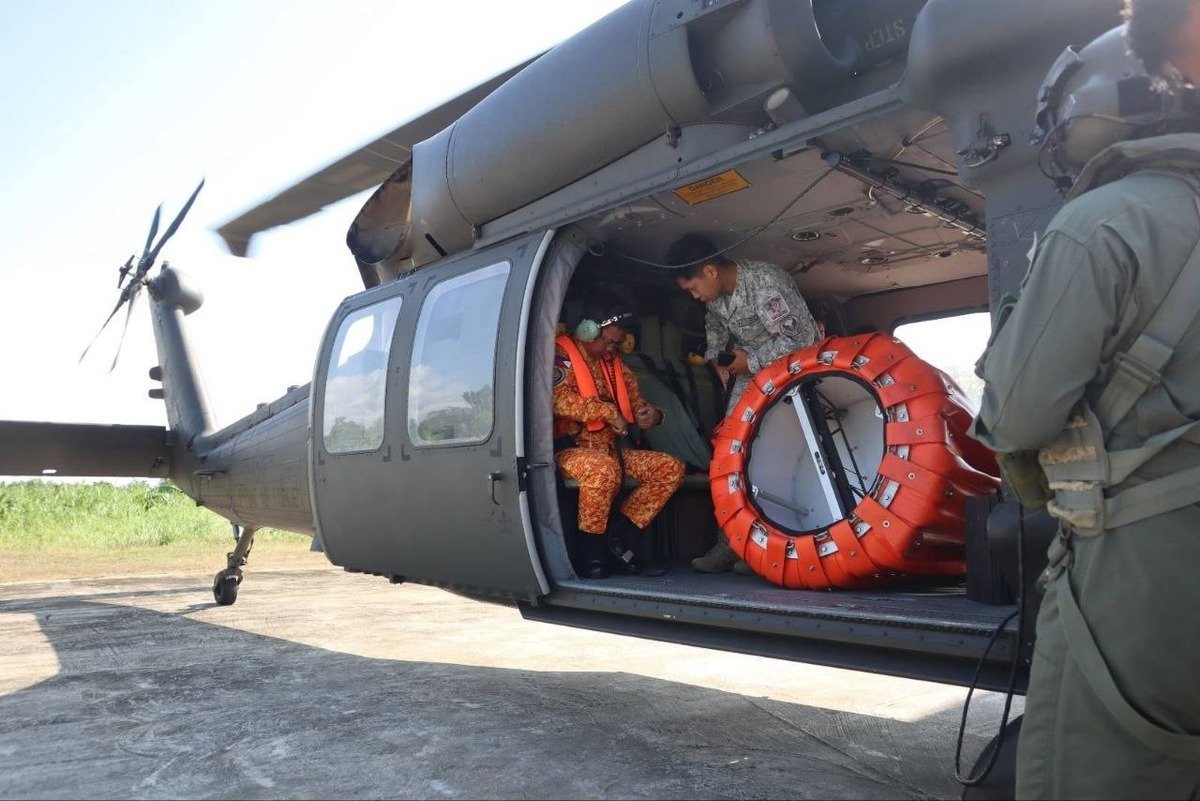
Military aviation units launched an extensive helicopter-based firefighting campaign on April 22, 2026, executing ten specialized missions to suppress a spreading grass fire on Homonhon Island, situated in Guiuan, Eastern Samar.
The comprehensive aerial assault involved coordinated efforts between the Philippine Air Force’s 205th Tactical Helicopter Wing and Tactical Operations Group 8, working alongside Bureau of Fire Protection personnel in what officials described as a multi-layered suppression strategy.
Col. Ma Christina O. Basco, Chief of the Air Force Public Affairs Office, confirmed that the helicopter missions utilized advanced heli-bucket techniques following detailed reconnaissance flights that mapped the fire’s progression and identified priority suppression zones.
Precision Water Drop Operations Target Critical Fire Zones
The ten helicopter missions employed strategic water delivery systems designed to complement existing ground firefighting operations already established across the affected island terrain.
Aviation crews conducted multiple flights between designated water collection areas and active fire zones, with each mission targeting specific locations where flames threatened to expand beyond current containment lines.
Operations originated from Col Jesus Villamor Air Base in Pasay City, requiring extended flight times to reach the remote island location while maintaining sufficient fuel reserves for effective fire suppression activities.
Preliminary aerial surveys provided detailed intelligence on fire behavior patterns, enabling tactical commanders to develop focused strategies that maximized water drop effectiveness while ensuring crew safety in challenging smoke conditions.
Historical Island Location Elevates Response Urgency
The targeted island carries significant historical importance as the recorded initial landing point for Portuguese explorer Ferdinand Magellan’s arrival in the Philippines on March 16, 1521, elevating the priority status of fire suppression operations.
Positioned off Guiuan’s coastline in Eastern Samar, the island’s isolated geography creates substantial obstacles for conventional ground-based firefighting equipment deployment, making aerial intervention crucial for effective fire management.
Continuous monitoring of atmospheric conditions and wind velocity patterns ensured optimal timing for helicopter operations while maintaining safe flying parameters for aviation personnel operating in smoke-impaired visibility zones.
The remote terrain characteristics required specialized tactical planning to coordinate water drops with surface firefighting teams without creating operational conflicts between different response units.
Integrated Command Structure Enables Coordinated Response
The collaborative operations between Air Force aviation assets and Bureau of Fire Protection specialists exemplified established emergency response protocols for large-scale fire incidents requiring combined aerial and surface intervention capabilities.
Real-time communication networks connected helicopter crews with ground-based incident commanders, facilitating immediate tactical adjustments based on evolving fire conditions and suppression effectiveness assessments.
Bureau of Fire Protection personnel contributed specialized knowledge of fire behavior analysis and suppression methodology, while military aviators provided precision flying expertise and specialized equipment operation skills.
Ground firefighting teams coordinated surface operations to complement helicopter water drops, ensuring maximum suppression impact while maintaining safety protocols for all response personnel.
Aviation Assets Showcase Emergency Response Capabilities
The deployment demonstrated the Philippine Air Force’s rapid mobilization capacity for civilian emergency support through specialized military aviation resources and trained operational crews.
Helicopter pilots received comprehensive briefings on fire suppression protocols and safety procedures specific to operating aircraft in smoke-compromised environments with reduced visibility conditions.
Maintenance personnel worked continuously throughout the operation day to ensure aircraft readiness between missions, conducting essential inspections and refueling procedures to minimize operational interruptions during critical suppression periods.
The sustained ten-mission operation required careful resource management including fuel allocation, crew rotation scheduling, and equipment maintenance coordination to maintain continuous aerial support capability.
Community Safety Drives Coordinated Mission Planning
Colonel Basco emphasized the Philippine Air Force’s dedication to providing rapid air support while prioritizing the protection and safety of Homonhon Island’s affected communities throughout the emergency response operations.
The integrated response approach reflects established military policy emphasizing civilian emergency assistance and disaster response as fundamental missions alongside traditional defense operations.
Local population safety protocols were implemented during aerial operations, with established communication channels ensuring resident awareness of water drop timing and designated safe zones during active helicopter missions.
Coordination between air and ground response teams highlighted the critical importance of unified command structures when addressing fire emergencies threatening both environmental resources and civilian settlements.
Continued Monitoring and Future Response Planning
Fire suppression effectiveness continues under evaluation through scheduled reconnaissance missions to assess the ten-helicopter campaign’s impact and identify potential requirements for additional aerial intervention operations.
The April 22 helicopter missions constitute elements of a comprehensive firefighting strategy that may expand to include further aerial operations based on containment progress achieved by coordinated air-ground suppression efforts.
Meteorological analysis and atmospheric pattern monitoring remain essential components for optimizing future aerial operation timing should additional helicopter missions prove necessary for complete fire containment.
The joint PAF-BFP collaboration establishes a proven framework for coordinated emergency response operations, highlighting the effectiveness of integrating military aviation capabilities with civilian firefighting expertise in remote and challenging operational environments.
Photo credit: Photo courtesy of Philippine Air Force Public Affairs Office
Related stories