
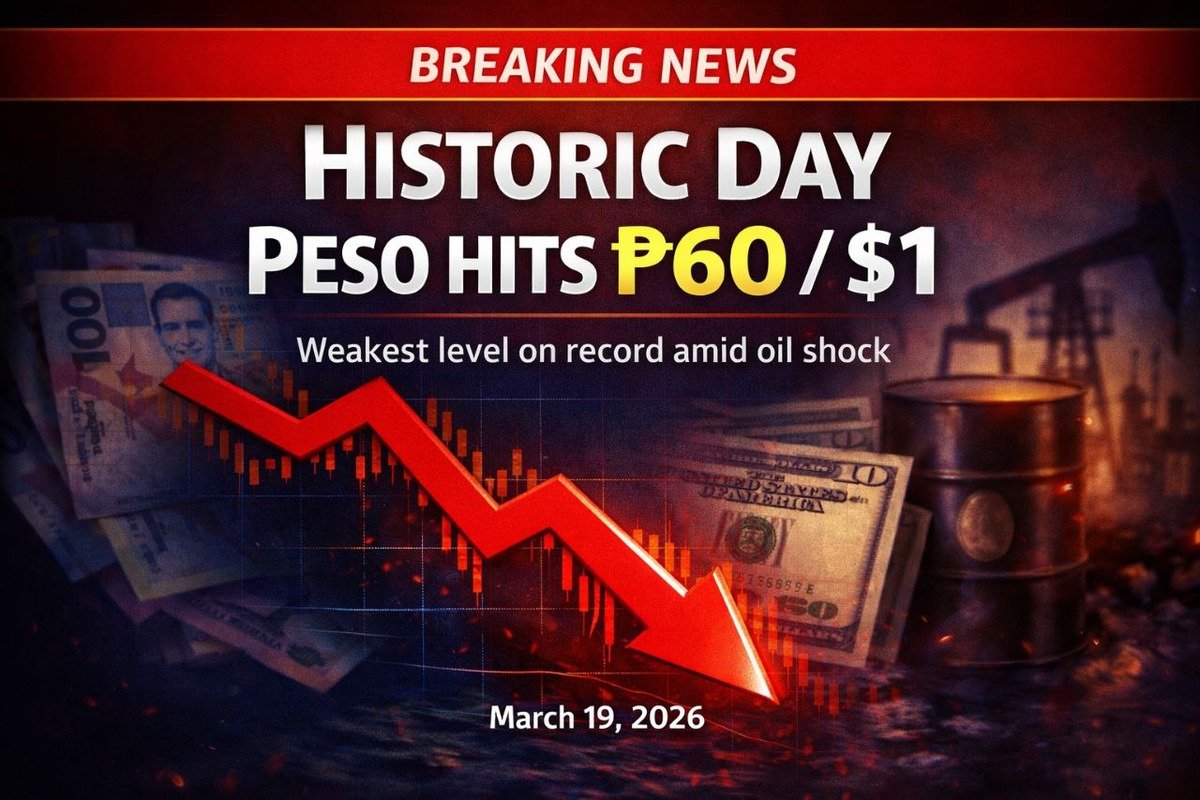
The Philippine peso fell to a distressing threshold on Thursday, closing at 60.1 to the U.S. dollar amid surging oil prices and fears of escalating conflict in the Middle East. This marks a significant decline, as the currency opened at 59.9, before witnessing a sharp drop that included an intraday low of 60.4, which had never before been recorded in trading. The peso’s plummet, losing 58 centavos from the previous day’s close of 59.52, has raised alarms for an economy heavily reliant on imports.
Context and Background
This latest dip in the peso comes amidst rising tensions following an attack on an Iranian gas field, igniting concerns over the vulnerability of energy infrastructures in the Gulf region. In response, Brent crude oil prices spiked approximately 5 percent, surpassing $108 a barrel. Consequently, this led not only to an increase in the peso-dollar exchange rate but also raised overall anxiety in financial markets already on edge due to geopolitical instability.
Details and Specifics
The depreciation of the peso can be chiefly attributed to movements in the energy market. Economists pointed out that the peso’s value decline reflects market concerns over prolonged crises rather than merely current oil prices. A noteworthy aspect of this situation is that the Philippines, being an import-dependent economy, feels the effects of rising oil prices almost instantly. Increases in crude prices directly affect transportation costs, electricity rates, and consumer prices, triggering potential inflationary pressures.
“If the conflict worsens, we could see the peso remaining above the 60-to-1 level,” an analyst remarked, emphasizing the seriousness of the situation.
Compounding the currency’s weakness, the recent decisions from the U.S. Federal Reserve to maintain current interest rates have fortified the dollar, allowing it to gain ground against various currencies, including the peso.
Impact and Implications
The depreciation of the peso poses several risks for the Philippine economy, including the potential for inflation to rise above 7 percent if oil prices continue to increase. This situation generates a difficult policy challenge for the government, which must balance the impact of currency depreciation and inflation without depleting the country’s foreign reserves. A weaker peso escalates the local-cost service of debts that are dollar-denominated while simultaneously raising import costs, further straining household budgets and business operations.
Consumer behavior may shift dramatically if inflation rises sharply as predicted, with many Filipinos already adjusting their spending habits in response to rising fuel prices. Essential commodities, heavily dependent on transport and logistics, face significant cost escalations that can burden the average household.
Official Response or Statements
The Department of Economy, Planning, and Development has been proactive in assessing the repercussions of the currency depreciation. Officials are reportedly considering relief measures aimed directly at consumers, such as potentially suspending excise taxes on fuel. Estimates suggest that such a move could reduce gasoline prices by about P10 per liter and diesel prices by around P6 per liter. While this won’t completely counteract the global oil price shock, it may offer some relief to consumers grappling with elevated transport costs.
The Bangko Sentral ng Pilipinas (BSP) has tried to ease market anxieties, indicating that they are monitoring trends but will not commit to an aggressive defense of any specific exchange rate. In a statement, they emphasized that their approach is not about targeting an exact figure but about ensuring market volatility is controlled and orderly conditions prevail in foreign exchange trading.
Background/History
The peso crossing 60 to the dollar is a significant psychological milestone in the Philippines. For many Filipinos, this threshold brings back memories of past economic crises where devaluation prompted strained household budgets and rising debts. President Ferdinand Marcos Jr. has expressed concerns over the implications of the peso falling to this level, noting that it could materially impact the country’s fiscal management and further complicate economic recovery efforts.
Historical trends indicate that the peso has been under pressure for a prolonged period, influenced by both global and domestic factors. The economic ramifications of external shocks, particularly from volatile oil markets, have repeatedly demonstrated how vulnerable the Filipino economy becomes in times of geopolitical uncertainty.
What’s Next / Looking Forward
The future trajectory of the peso largely hinges on developments in the Gulf region and global economic conditions, particularly surrounding oil prices and U.S. interest rates. Analysts suggest that a continued rise in oil prices due to geopolitical struggles could further erode the peso’s value, potentially leading to a cycle of inflation that would necessitate government intervention.
As the government evaluates measures to mitigate the impact of rising fuel prices and average inflation, consumer sentiment will be crucial. The next steps will likely ripple through the economy, indicating whether the peso’s crossing of this threshold was a fleeting moment or the start of more profound economic challenges.
In summary, the peso’s fall past 60 is much more than just a statistic; it reflects the intricate threads linking global events to local economies. With prices rising, inflation risks increasing, and potential government responses on the horizon, the Philippine economy finds itself at a critical juncture that necessitates careful and strategic navigation ahead.
Photo credit: Photo from GMA News