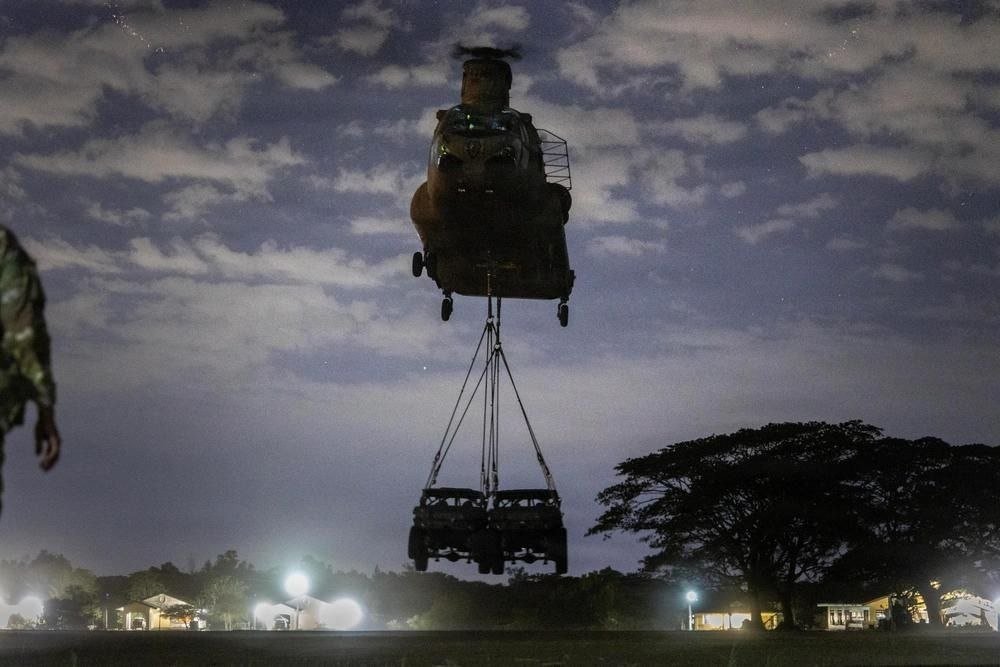
A multinational force drawn from four Indo-Pacific nations has assembled at Fort Magsaysay in Nueva Ecija for a 13-day series of intensive joint drills, marking one of the most expansive combined ground force exercises the Philippine Army has hosted in recent years. The training runs from May 8 to May 20, 2026, and involves soldiers from the Philippine Army, US Army Pacific, the Australian Army, and the Japan Ground Self-Defense Force.
What Is Being Conducted — and Where
The drills form part of the Joint Pacific Multinational Readiness Center-Exportable — commonly referred to as JPMRC-X — which operates under Phase 2 of Exercise Salaknib 2026. According to a statement issued by Colonel Louie G. Dema-ala, Chief of Public Affairs of the Philippine Army, participating troops are undergoing what the statement described as “tough, realistic training conducted across diverse and challenging terrain.”
Fort Magsaysay, situated in Nueva Ecija province and recognized as the largest military reservation in the Philippines, provides the expansive and varied landscape necessary to replicate realistic battlefield conditions. Its infrastructure supports a wide range of training activities, from maneuver operations to simulated urban warfare and command post exercises, making it the preferred venue for exercises of this scale.
Understanding the JPMRC-X Framework
The JPMRC-X concept was developed by US Army Pacific specifically to bring the training standards of its Hawaii-based Joint Pacific Multinational Readiness Center to partner nations across the Indo-Pacific theater. Rather than requiring all partner forces to travel to Hawaii, the exportable model allows the framework — including evaluation standards, scenario design, and training methodology — to be deployed directly to host-nation installations.
As part of Exercise Salaknib’s Phase 2, the JPMRC-X is focused on multi-domain operations, a contemporary warfighting doctrine that integrates military capabilities across the land, air, maritime, space, and cyberspace domains. The Philippine Army, in its official release attributed to Colonel Dema-ala from Fort Bonifacio in Taguig City, stated that the exercise is designed to strengthen “the collective capabilities of participating forces” and improve their ability to “work seamlessly together in various scenarios.”
Multi-domain operations training of this nature places particular emphasis on cross-national coordination — requiring troops to synchronize communications, command structures, and tactical procedures despite differences in language, doctrine, and military culture. These are competencies that defense planners consider indispensable in any realistic coalition warfare environment.
Exercise Salaknib: Growing in Scale and Ambition
Exercise Salaknib has been a flagship land warfare exercise in the Philippine Army’s annual training calendar for several years. The Philippine Army has described it as a large-scale platform aimed at reinforcing the country’s land defense posture and preparing its forces to respond effectively to evolving security threats across the region.
In recent editions, Salaknib has expanded considerably in scope, incorporating multinational participation and multi-phase structures that test increasingly complex combined-arms scenarios. The integration of the JPMRC-X format under Phase 2 of the 2026 edition represents a significant step forward in the exercise’s ambition to fully embed allied and partner forces into its training architecture.
Salaknib is one of several bilateral and multilateral exercises that the Armed Forces of the Philippines conducts annually alongside partner nations, reinforcing defense linkages that form a central pillar of the country’s regional security strategy.
Australia and Japan: Deepening Ground-Level Engagement
The involvement of the Australian Army and the Japan Ground Self-Defense Force in Salaknib 2026 is a notable feature of this year’s exercise. Both nations have been steadily expanding their defense relationships with the Philippines — through more frequent joint exercises, increased port visits, and a growing number of bilateral defense agreements — reflecting broader strategic alignment between Manila, Canberra, and Tokyo.
Their participation in a US Army Pacific-facilitated, Philippine-hosted exercise alongside all four partner armies signals a deepening of what has been described in regional defense discussions as an emerging multilateral security architecture in the Indo-Pacific. While no analysts were cited in the Philippine Army’s official release, the exercise itself is seen as a concrete expression of that architecture taking practical form at the ground forces level.
US Army Pacific’s Central Organizing Role
US Army Pacific (USARPAC) serves as the principal organizer of the JPMRC-X training framework and provides the standards against which participating units are evaluated. The US-Philippine defense relationship, formally grounded in the Mutual Defense Treaty and further reinforced by the Enhanced Defense Cooperation Agreement (EDCA), has seen a sustained increase in joint training activity in recent years, with land force exercises such as Salaknib growing in both scale and complexity.
According to the Philippine Army’s public affairs release, USARPAC’s role in Salaknib 2026 continues a pattern of expanding American ground force engagement with Philippine military counterparts, with successive iterations of the exercise adding new dimensions — and now, new partner nations — to the training program.
Philippine Army Leadership Acknowledges Troop Commitment
The Philippine Army’s Public Affairs Office, through the statement attributed to Colonel Dema-ala, expressed commendation for all troops participating in the exercise. Leadership acknowledged the soldiers’ commitment to improving their collective readiness and their willingness to engage in demanding, realistic training conditions across a sustained two-week period.
While no individual Philippine Army commanding general was directly quoted in the released statement, the commendation was conveyed on behalf of the broader Philippine Army leadership, underscoring the institutional importance assigned to combined-arms training with allied and partner nations as part of the Army’s overall readiness posture for 2026.
Timeline and What Comes Next
With the JPMRC-X phase of Exercise Salaknib scheduled to conclude on May 20, 2026, all four participating armies are expected to complete the full cycle of multi-domain training scenarios before the exercise wraps up at Fort Magsaysay. As of the time of publication, the Philippine Army had not released a detailed post-exercise schedule, nor had it announced whether a formal closing ceremony or public after-action review would be held at the conclusion of the drills.
Official photographs and documentation from the exercise have been released through the US Defense Visual Information Distribution Service (DVIDS), and the Philippine Army’s Public Affairs Office indicated that further updates may be released through official channels as the exercise progresses through its remaining days.
The exercise reflects a broader momentum in regional defense cooperation — one that brings together ground forces from Southeast Asia, Oceania, Northeast Asia, and North America on a shared training ground, working toward the kind of interoperability that coalition defense in the Indo-Pacific increasingly demands.
Originally reported by: Philippine Army Public Affairs Office / wire reports