Soldiers under Joint Task Force (JTF) Agila expanded their humanitarian assistance and disaster response (HADR) footprint on Saturday, June 13, 2026, mobilizing across earthquake-affected communities in both Sarangani Province and Davao Occidental in a coordinated push to deliver relief goods, hot meals, and clean water to families still reeling from recent seismic damage.
The 10th Infantry (Agila) Division’s Public Affairs Office, based at Camp General Manuel T. Yan Sr. in Mawab, Davao de Oro, announced the intensified operations, describing them as a significant step-up in the military’s humanitarian presence across the two affected provinces.
Over 2,500 Food Provisions Processed at DSWD Warehouse in Malita
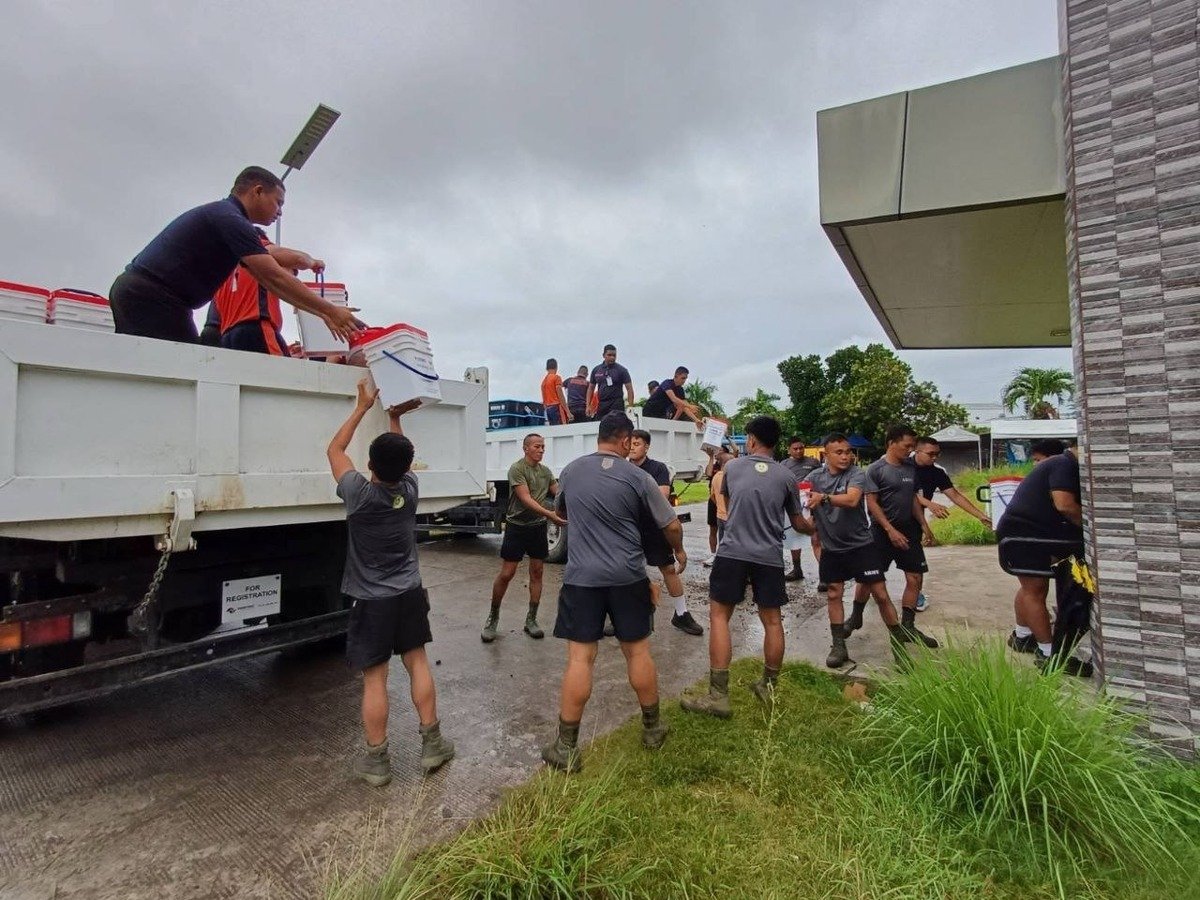
In Davao Occidental, JTF Agila personnel lent critical manpower to the unloading of relief supplies at the Department of Social Welfare and Development (DSWD) warehouse in Malita, the province’s capital municipality. According to the 10th Infantry Division’s public affairs release, the operation involved handling 1,000 food packs and 1,584 ready-to-eat food boxes — totaling 2,584 food provisions — intended for communities most severely affected by the earthquake.
Malita functions as a central logistics hub for relief distribution flowing into Davao Occidental’s interior communities. The DSWD said the unloading effort required coordinated teamwork among army personnel, DSWD warehouse staff, and civilian volunteers to ensure goods were properly received, documented, and staged for subsequent distribution to affected households.
The scale of the logistics effort at the Malita warehouse reflects the broader supply chain challenges common to post-disaster relief — where speed and accuracy in processing incoming goods are essential to preventing delays in assistance reaching displaced or isolated families.
Soldiers Haul, Repack, and Distribute Goods Across Sarangani
Across Sarangani Province, JTF Agila troops took on multiple roles throughout the relief supply chain, handling everything from hauling and repacking of relief items to their physical transport and final distribution to affected residents. Relief goods distributed in the province included food packs, sacks of rice, and potable water, according to the Division’s public affairs release.
Military personnel worked in close coordination with local government responders and partner agencies throughout the process, maintaining order and operational efficiency to ensure that assistance arrived in a safe and organized manner. The Armed Forces of the Philippines (AFP) has increasingly integrated this kind of hands-on humanitarian logistics into its operational doctrine — a shift that positions military assets and manpower as force multipliers within the civilian-led relief architecture during large-scale disaster events.
The ability of army units to augment civilian responders in physically demanding logistics tasks has proven particularly valuable in communities that are remote or difficult to access in the immediate aftermath of an earthquake, where road damage and displacement can complicate standard distribution methods.
Mobile Kitchen and Water Purification System Activated in Glan
One of the most operationally notable deployments on June 13 was the activation of the Philippine Army’s Mobile Kitchen and Water Purification System in Glan, a municipality in the southernmost portion of Sarangani Province. The unit provided directly cooked hot meals and treated drinking water to earthquake-affected families in the area.
The Mobile Kitchen component allows army field units to prepare and serve freshly cooked meals under field conditions — a significant supplement to pre-packaged relief goods that may not always meet the immediate nutritional or comfort needs of displaced families. The Water Purification System, meanwhile, addresses one of the most urgent post-disaster concerns: the disruption or contamination of local water supply infrastructure following seismic events.
According to the 10th Infantry Division’s public affairs release, the mobile kitchen and water purification capabilities served as a “critical lifeline” for affected communities in Glan. The deployment there reflects the military’s assessment of the municipality’s acute humanitarian situation, given Glan’s geographic vulnerability to the cascading effects of earthquakes, including infrastructure damage, displacement, and service interruptions.
The continuation of this deployment was flagged by the task force as a priority in the days ahead, given the sustained food and water security needs of Glan residents still in the recovery phase.
Whole-of-Government Framework Drives the Multi-Agency Response
The relief operations carried out by JTF Agila form part of a broader multi-agency response coordinated under the Philippines’ disaster risk reduction and management framework. According to the 10th Infantry Division’s public affairs release, the agencies and institutions involved in the June 13 operations include the AFP, the DSWD, local government units across the affected areas, the Philippine National Police (PNP), the Bureau of Fire Protection (BFP), local disaster response offices, and civilian volunteers.
This whole-of-government approach assigns distinct but complementary roles to each participating institution. The DSWD, as the lead agency for social protection, oversees the management and distribution of relief commodities, while the AFP and PNP provide logistical capacity, security presence, and personnel augmentation. Local government units serve a critical function in identifying the most severely affected barangays, liaising with community-level officials, and supporting the last-mile delivery of assistance to isolated or displaced households.
The Bureau of Fire Protection and civilian volunteer groups also contribute manpower and local knowledge during repacking and distribution operations, reinforcing the community-based dimension of the response framework.
Division Commander Commends Troops and Partner Institutions
Major General Alvin Luzon, Commander of the 10th Infantry (Agila) Division and head of Joint Task Force Agila, formally recognized the efforts of soldiers and partner agencies operating in the field as of June 13. In a statement released by the Division Public Affairs Office, Maj. Gen. Luzon expressed his appreciation for the dedication of personnel working under difficult post-disaster conditions.
“In times of adversity, our soldiers stand ready not only to protect our communities but also to help them recover. Together with our partners, JTF Agila remains committed to bringing timely assistance, hope, and reassurance to every affected family,” Maj. Gen. Luzon said.
The general’s remarks highlight the evolving operational identity of the 10th Infantry Division — an identity that now encompasses active civilian support and community recovery work alongside its core national security mandate. The Division, which serves as the primary ground force for the Eastern Mindanao Command’s area of responsibility, has historically been among the AFP formations most frequently called upon for HADR operations, given Mindanao’s exposure to both natural disasters and other security challenges.
JTF Agila Commits to Sustained Presence Through Recovery Phase
As of June 13, 2026, JTF Agila confirmed that relief operations across both Sarangani Province and Davao Occidental remain active and ongoing. The task force stated through its public affairs release that troops will maintain their deployment in affected communities for as long as humanitarian needs continue, positioning the military as a stabilizing and support element throughout the recovery period.
Priority areas for continued deployment include Glan, where the Mobile Kitchen and Water Purification System remains operational, and communities in Davao Occidental still awaiting the downstream distribution of the relief goods processed at the DSWD warehouse in Malita. Broader recovery efforts, according to the Division’s release, are expected to involve sustained coordination among all participating agencies as affected communities begin the longer process of rebuilding and rehabilitation.
JTF Agila’s operations underscore the AFP’s expanding role in disaster response — one where soldiers serve not only as security providers but as active participants in the delivery of urgent humanitarian assistance to vulnerable communities in the aftermath of natural disasters.
Originally reported by: wire reports