Days after a powerful 7.8-magnitude earthquake severed access routes and left thousands of families without basic necessities, combined units of the Philippine Army, Philippine Air Force (PAF), and Philippine Coast Guard (PCG) successfully pushed emergency relief into the most isolated communities of Sarangani Province and Davao Occidental on Sunday, June 14, 2026. The massive seismic event and its series of strong aftershocks had effectively cut off several municipalities from standard relief delivery channels, prompting an urgent multi-agency humanitarian response.
Relief Reaches Isolated Towns in Two Hard-Hit Provinces
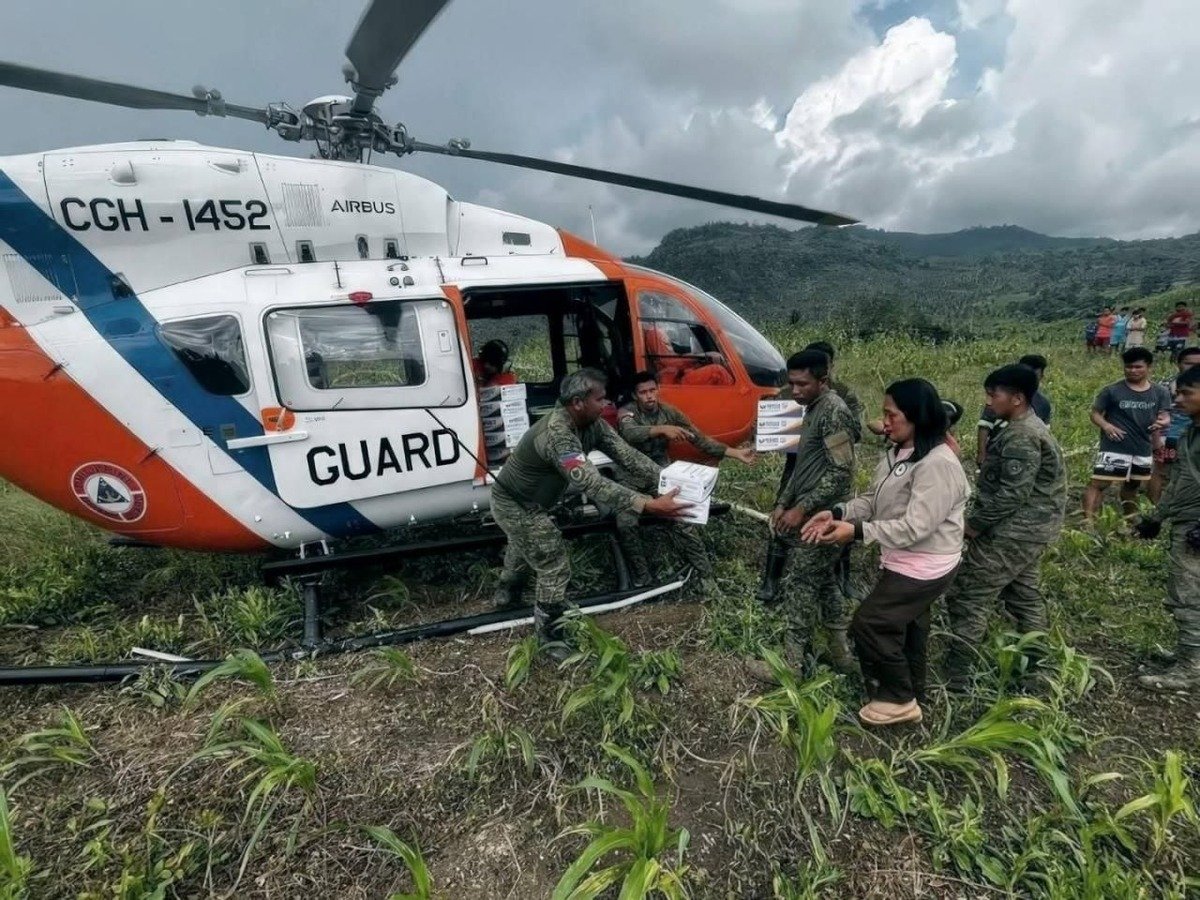
The joint relief operation was coordinated out of Fort Bonifacio in Taguig City, with ground teams and air and maritime assets converging on the municipalities of Jose Abad Santos in Davao Occidental and Glan in Sarangani Province — two of the locations most severely impacted by the disaster. Emergency food packs, potable water, and medical supplies were among the primary items distributed to families who had been stranded since the earthquake struck.
In a statement issued by Colonel Louie G. Dema-ala, Chief Public Affairs of the Philippine Army, relief teams confirmed they had successfully penetrated hard-to-reach communities in both provinces. Colonel Dema-ala noted that the coordination among the Army, PAF, and PCG was essential in ensuring that critical goods reached areas where landslides, damaged roads, and collapsed bridges had made conventional ground transport impractical or entirely impossible.
The deployment follows the military’s established Humanitarian Assistance and Disaster Response (HADR) framework, which assigns defined roles to each branch of the armed forces during large-scale disaster situations. Under this framework, Army units supplied ground manpower and logistical coordination, while PAF aircraft and PCG maritime vessels enabled responders to access communities that ground teams alone could not reach in a timely manner.
Mobile Water Filtration Unit Sent to Maasim
One of the most critical challenges following the earthquake has been the near-total collapse of water supply infrastructure in affected communities. Thousands of residents in the quake zone were left without access to safe drinking water — a situation that poses severe public health risks in the immediate aftermath of any major seismic event.
To address this, the Philippine Army, working alongside the Bureau of Fire Protection (BFP), deployed a mobile water filtration system to the municipality of Maasim in Sarangani Province. The system works by treating available water sources on-site and converting them into potable water fit for drinking and basic sanitation purposes, serving as a critical interim solution while assessments are conducted on damaged water infrastructure.
The urgency of clean water access in post-disaster settings cannot be overstated. Health authorities have consistently warned that contaminated water sources in the wake of disasters can rapidly trigger outbreaks of waterborne illnesses such as cholera, typhoid fever, and severe gastroenteritis — diseases that can overwhelm an already taxed health system operating under emergency conditions.
Search and Rescue Teams Active in Landslide-Prone Areas
Concurrent with the humanitarian relief operations, Search, Rescue, and Retrieval (SRR) missions remain ongoing across the affected provinces. According to Colonel Dema-ala’s official statement, Army SRR teams are currently focused on locating missing individuals in zones identified as high-risk for landslides — terrain where unstable soil conditions and earthquake-induced damage create dangerous conditions for both trapped survivors and the rescue personnel attempting to reach them.
Earthquake-triggered landslides are a well-documented secondary hazard in the mountainous and hilly terrain of Mindanao. When strong seismic activity destabilizes slopes already susceptible to erosion, entire communities can become buried or completely isolated within minutes. The combination of steep geography and widespread structural damage following a magnitude 7.8 event makes these zones among the most dangerous and operationally challenging environments for rescuers.
As of the release of the Philippine Army’s official statement on June 14, 2026, the exact number of missing persons being searched for had not been publicly disclosed. However, the Army confirmed that SRR operations remain a fully active and ongoing component of the broader disaster response effort in both provinces.
Coordination with Civilian Agencies and Local Governments
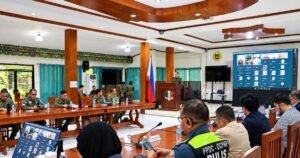
The Philippine Army’s HADR teams are not operating in isolation. According to Colonel Dema-ala, military units are working in close coordination with national government agencies and local government units (LGUs) across both Sarangani Province and Davao Occidental. This inter-agency collaboration is designed to maximize the efficiency of relief distribution and ensure that aid reaches the highest possible number of affected households.
Large-scale HADR operations of this nature typically involve civilian counterpart agencies including the National Disaster Risk Reduction and Management Council (NDRRMC) and the Department of Social Welfare and Development (DSWD), alongside provincial and municipal DRRMC offices. These civilian bodies play a complementary role to military operations on the ground, helping to identify beneficiaries, manage distribution logistics, and provide local context that national responders may lack.
LGU involvement is particularly valuable in ensuring that relief resources are allocated accurately. Local officials possess firsthand knowledge of community locations, terrain conditions, and the specific needs of their constituents — information that significantly improves the speed and precision of disaster response operations, particularly in areas where communications infrastructure may be damaged or intermittent.
Scope of Damage from the 7.8-Magnitude Earthquake
Earthquakes registering 7.8 in magnitude are classified as major seismic events with the capacity to cause extensive structural destruction across broad geographic areas, trigger secondary hazards such as landslides and tsunamis, and generate mass displacement of affected populations. The earthquake that struck Sarangani Province and Davao Occidental was powerful enough to warrant an immediate, large-scale response from multiple branches of the national government’s defense and emergency apparatus.
The municipalities of Jose Abad Santos in Davao Occidental, and Glan and Maasim in Sarangani Province, were specifically identified in the Philippine Army’s official communications as focal points for relief delivery. Photographs documenting the ongoing operations were sourced from Philippine Army Major Units actively deployed in the field, providing visual evidence of the response effort on the ground.
Army Commits to Sustained Operations Until Recovery Transition
In his official statement, Colonel Dema-ala reaffirmed the Philippine Army’s commitment to maintaining its full HADR posture in the earthquake-affected zones for as long as operational conditions require. The Army’s public affairs office released the statement under the institution’s official communications framework, accompanied by the service’s standing motto — “Serving the People, Securing the Land” — underscoring the military’s dual mandate of national defense and community service during times of national crisis.
As of June 14, 2026, all HADR operations in Sarangani and Davao Occidental remain fully active. The Philippine Army indicated that teams will continue delivering supplies to isolated communities, pressing forward with SRR missions in landslide-affected zones, and sustaining the mobile water filtration system in Maasim until conditions permit a gradual shift toward longer-term recovery and rehabilitation support. No specific casualty figures, detailed aftershock data, or projected timelines for the conclusion of operations were included in the Army’s statement as of that date.
Originally reported by: Philippine Army Public Affairs Office / wire reports