
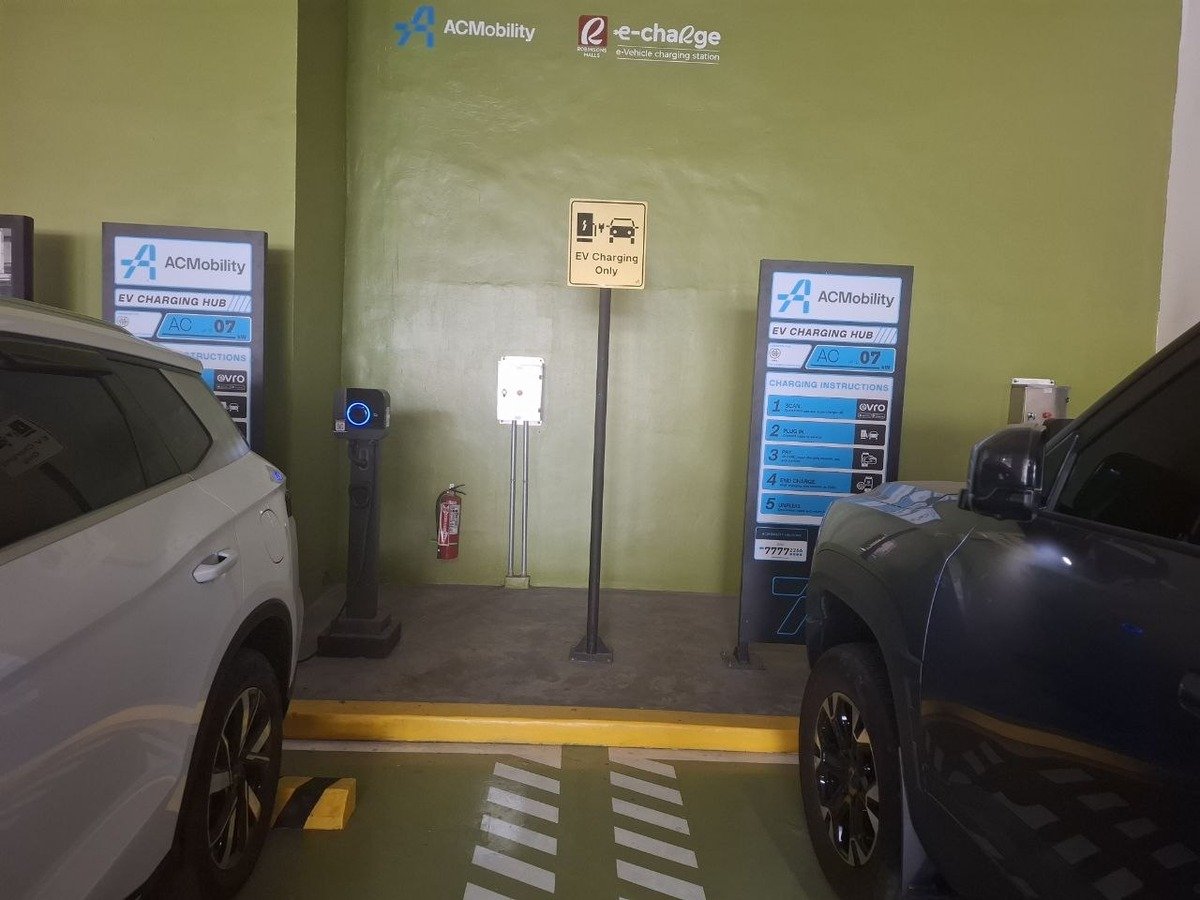
DUMAGUETE CITY, Negros Oriental — A new provincial ordinance seeks to establish a 10% electric vehicle conversion target for government fleets, doubling the national requirement, even as current provincial compliance with existing mandates stands at zero percent and charging infrastructure remains severely limited across the province.
Dubbed “The Negros Oriental Electric Fleet and Charging Infrastructure Ordinance of 2026,” the proposed measure mandates that the provincial government achieve at least 10% electric vehicle conversion of its covered motor fleet according to timelines that will be established through implementing regulations.
National Law Sets Five Percent Baseline Requirement
The provincial initiative builds upon Republic Act No. 11697, known as the Electric Vehicle Industry Development Act (EVIDA), which became law on April 15, 2022 and became effective on May 11, 2022. The law’s Implementing Rules and Regulations were issued on September 6, 2022.
EVIDA’s Section 16 mandates that Local Government Units, National Government Agencies, and Government-Owned and Controlled Corporations — together with industrial and commercial enterprises, public transport operators, cargo logistics companies, utilities, and similar fleet operators — must convert at least five percent of their owned or leased vehicle fleets to electric vehicles.
The Comprehensive Roadmap for the Electric Vehicle Industry (CREVI) establishes a timeline for gradually increasing this percentage until covered entities operate fully electric fleets.
Scope Covers Personnel Transport Vehicles Only
The proposed ordinance applies exclusively to vehicles designated for personnel transportation, encompassing official cars, service vehicles, vans, buses, ambulances, and comparable road vehicles used for transporting persons or emergency response operations.
Heavy machinery and construction equipment including bulldozers, backhoes, graders, excavators, compactors, cranes, loaders, and similar equipment used primarily for construction, earthmoving, or infrastructure projects will be exempt from the ordinance’s requirements.
Implementation will follow a phased approach, giving priority to vehicles scheduled for replacement, units with high daily or annual fuel consumption, vehicles assigned to regular urban routes, and those deemed suitable for electric vehicle operation based on technical and operational criteria.
This graduated implementation strategy recognizes the practical obstacles local government units face in achieving electric vehicle transition goals while maintaining essential public services and emergency response functions.
Charging Infrastructure Severely Limited Across Province
Current electric vehicle charging infrastructure across Negros Oriental includes only four publicly-accessible stations serving the entire provincial territory — one located in Tayasan, one in Bacong, and two in Dumaguete City. All existing stations accommodate four-wheeled electric vehicles exclusively.
This minimal infrastructure contrasts sharply with growing private sector adoption, particularly Chinese manufacturer BYD, which has emerged among the fastest-expanding EV brands locally. BYD vehicles currently showcased in Dumaguete include the Shark 6 DMO pickup truck and the Sealion 5 DM-i SUV.
Charging network applications reveal that the closest high-capacity stations for certain EV models are located over 80 kilometers away — in Kabankalan, San Carlos City, nearby Dipolog City, and Dumanjug, Cebu — highlighting the significant gap between vehicle availability and supporting infrastructure.
Department of Energy Targets 2.4 Million EVs by 2028
The Department of Energy (DOE) has established nationwide deployment targets of 2,454,200 EVs between 2023 and 2028, spanning cars, tricycles, motorcycles, and buses, complemented by 65,000 EV charging stations.
In March 2023, the DOE moved to increase the original 5% EV deployment target to 10%. The Philippine Energy Plan’s Clean Energy Scenario establishes a longer-term objective of converting at least fifty percent of all fleets by 2040.
These aggressive national targets demonstrate the government’s dedication to reducing imported fossil fuel dependence and achieving climate change mitigation objectives under international commitments.
Motorcycle Culture Presents Unique Policy Challenge
A significant consideration stems from the fact that most Negros Oriental motorists rely on two-wheeled motorcycles for transportation, while only a small population segment can afford four-wheel electric vehicle prices.
As the ongoing oil crisis continues driving fuel costs higher, questions remain about whether local motorists will shift to electric motorcycles — and whether local legislation will evolve to address the needs of those unable to purchase four-wheeled EVs — as the proposed ordinance proceeds through committee review.
The province’s motorcycle-dominated transportation environment creates distinct electric vehicle adoption challenges that may necessitate specialized policy solutions beyond the current four-wheel emphasis.
Local Governments Seek Implementation Guidance
Stakeholder consultations conducted since the EVIDA IRR became effective have consistently highlighted a persistent concern from local government units: ongoing uncertainty regarding which specific vehicles will qualify toward their required 5% EV allocation — an uncertainty the proposed Negros Oriental ordinance seeks to address locally through defined coverage and exclusions.
The provincial measure represents an effort to deliver clearer direction for government fleet administrators while establishing a more ambitious goal that could establish Negros Oriental as a regional pioneer in electric vehicle implementation.
The ordinance is currently under committee examination, with implementation schedules and detailed technical specifications anticipated in upcoming implementing rules and regulations.
Photo credit: Photo courtesy of Kenneth/Telegram