For the first time in the history of both nations’ ground forces, soldiers from the Philippine Army and Japan Ground Self-Defense Force (JGSDF) fired weapons side by side in a coordinated live-fire exercise held at Colonel Ernesto Rabina Air Base in Santa Juliana, Capas, Tarlac on May 1 and 2, 2026 — a milestone event conducted under the banner of Exercise Salaknib.
The landmark drill marked a defining moment in Philippine-Japan defense relations, underscoring a deepening bilateral security partnership that has steadily grown in scope and significance across the Asia-Pacific region. The exercise was organized through the Philippine Army’s Armor “Pambato” Division and drew senior military observers from both countries as well as allied forces.
Troops and Equipment Deployed
Philippine Army participation was substantial, with more than 200 soldiers from the 1st Tank Battalion taking part in the exercises. The Philippine contingent deployed four Sabrah Light Tanks — modern armored assets that represent a meaningful advancement in the country’s ground combat capabilities — across the lahar fields of the Tarlac military installation.
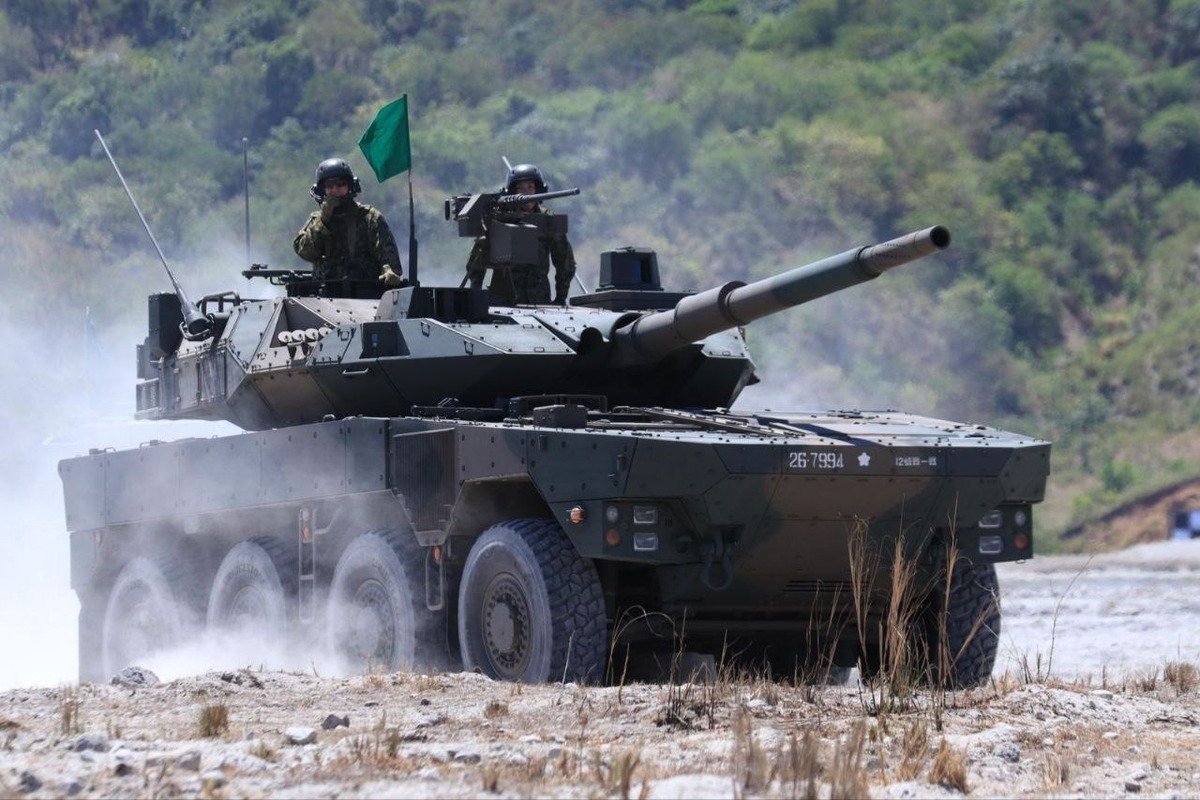
On the Japanese side, approximately 40 troops from the JGSDF Recon Combat Battalion, 12th Brigade arrived with four Maneuver Combat Vehicles. These soldiers engaged in both days of activity: a Subject Matter Expert Exchange on May 1 and the main Live Fire Exercise on May 2.
Colonel Louie G. Dema-ala, Chief Public Affairs of the Philippine Army, confirmed the details of the exercise in an official statement, providing figures on troop strength and equipment involvement.
Exercise Format and Tactical Design
The two-day event was carefully structured to test interoperability between the two armies at both the technical and tactical levels. The Subject Matter Expert Exchange on the first day gave technical specialists from each side the opportunity to compare notes on equipment maintenance, tactical deployment methods, and standard operating procedures — building a shared knowledge base ahead of the following day’s live-fire activities.
The actual live-fire component on May 2 followed a three-phase tactical scenario: identifying and locating enemy positions, fixing those positions with precision, and then eliminating designated targets through coordinated fire support. Philippine Sabrah Light Tanks and Japanese Maneuver Combat Vehicles operated together in tactical formations across the volcanic terrain of the lahar fields, testing the ability of both forces to communicate and maneuver jointly under simulated combat conditions.
Extensive safety protocols were integrated throughout the exercise. Troops from both armies underwent thorough rehearsals covering weapon malfunction procedures, misfire handling, and corrective actions to ensure that mission continuity was maintained without compromising operational safety during live-fire operations.
Senior Officials Observe the Drills
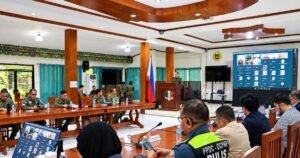
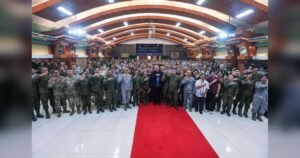
The historic nature of the exercise attracted high-ranking observers from multiple countries. Philippine Army Vice Commander Major General Efren F. Morados was present at the drills, accompanied by Armor Division Commander Brigadier General Ronel R. Manalo.
From the Japanese side, JGSDF 12th Brigade Deputy Brigade Commander Colonel Yoshifumi Ogura personally witnessed the joint operations. Representing the broader regional alliance framework, US Army Pacific Commander Major General James Bartholomees also attended as an observer — a signal of Washington’s interest in expanding multilateral security cooperation in the Asia-Pacific.
Also present was Undersecretary Antonio Habulan, Executive Director of the Presidential Commission on Visiting Forces (PCVF), whose attendance underscored the diplomatic weight behind the military activity and its foundation in existing visiting forces agreements between Manila and Tokyo.
Exercise Salaknib and the Broader Security Context
Exercise Salaknib 2026 is not conducted in isolation. It forms a key component of the Philippine Army’s strategic transition toward External Security Operations — a shift in focus that involves building combined operational capacity with the US Army Pacific and other partner armies in the region. The Salaknib Phase is scheduled to run from May through June 2026, following the conclusion of Exercise Balikatan on May 8.
The timing of this joint Philippine-Japan drill is particularly notable given Japan’s evolving defense posture. Under recent changes to Japanese security policy, the JGSDF has taken on a more active role in bilateral and multilateral military engagements. For the Philippines, broadening defense partnerships beyond its traditional alliances has become an increasingly important strategic priority amid shifting regional dynamics.
Military analysts see exercises like Salaknib as building blocks in a wider regional security architecture — one that brings together like-minded nations with shared interests in stability and rule-based order in the Asia-Pacific.
Interoperability as a Strategic Goal
One of the core achievements highlighted from the exercise was the successful integration of communication systems and targeting protocols from two militaries that operate different equipment and doctrines. Observers noted that both forces were able to coordinate effectively across these differences — a capability that would be essential in any future real-world joint security operation.
The Sabrah Light Tanks, relatively new additions to the Philippine Army’s arsenal, proved capable of operating alongside the JGSDF’s Maneuver Combat Vehicles in coordinated tactical formations. This equipment-level compatibility, combined with the shared knowledge gained through the Subject Matter Expert Exchange, strengthens the practical foundation for future joint missions.
Building Toward Future Exercises
With the first combined live-fire drill now complete, both the Philippine Army and the JGSDF are expected to conduct formal assessments of lessons learned from the joint training. These evaluations will likely inform planning for future iterations of Exercise Salaknib and could lead to more complex, large-scale joint training scenarios in coming years.
The remaining weeks of Exercise Salaknib 2026, which extends through June, are expected to include additional training components with allied and partner forces. Military planners from Manila and Tokyo are anticipated to use this period to further develop the coordination frameworks established during the historic May 1-2 drills.
According to the Philippine Army’s official statement, the exercise advances both the armed forces’ capability development objectives and the country’s international defense partnerships — two priorities the military considers essential for meeting evolving security challenges across the Asia-Pacific region.
Photo credit: OG7, Armor Division