American and Filipino military forces showcased advanced artillery coordination capabilities during a significant bilateral training exercise conducted at Fort Magsaysay in Nueva Ecija on April 20, 2026, marking a key milestone in the Salaknib Phase 1 military operations.
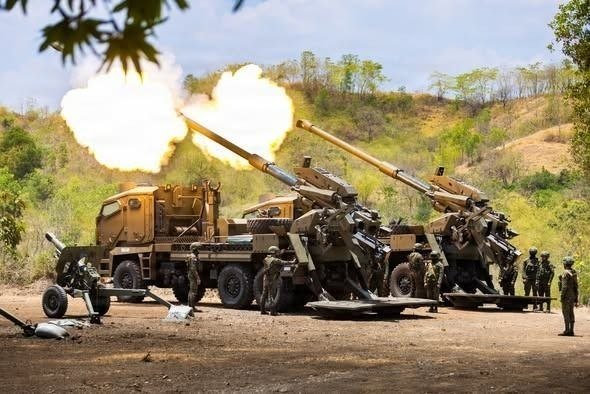
The live-fire demonstration brought together the U.S. Army Pacific’s 25th Infantry Division and the Philippine Army’s Artillery Regiment in what military commanders described as an exceptional display of allied firepower coordination. The exercise featured integrated operations between American M119A3 howitzers and the Philippine military’s ATMOS 155mm self-propelled artillery platforms.
Colonel Louie G. Dema-ala, serving as Chief Public Affairs for the Philippine Army, reported that the training exercise achieved remarkable levels of firepower interoperability between the two allied military organizations. The demonstration served as a practical implementation of Exercise Salaknib’s “Strike” Pillar, emphasizing the capability for coordinated cross-firing between different national artillery systems.
Extensive Multi-Domain Training Framework
The broader Salaknib Phase 1 program incorporated 37 distinct Foundational Training Activities spanning the complete spectrum of Army combat functions. These comprehensive training elements addressed essential military competencies including protective operations, fire coordination systems, logistical sustainment, information operations, civilian-military cooperation, tactical movement and positioning, command structure protocols, and intelligence collection procedures.
Military planners designed each training component to reinforce operational compatibility between American and Filipino military units while addressing contemporary regional security concerns. The artillery demonstration constituted one element within this larger strategic training framework, testing practical coordination procedures essential for joint defensive operations requiring combined response capabilities.
The expansive scope of these training activities reflects the Philippine military’s dedication to improving combat readiness across varied operational scenarios. Officials stressed that real-world coordination protocols were thoroughly evaluated to ensure effectiveness during actual defense situations demanding integrated force responses.
Coastal Defense Strategy Implementation
The artillery exercise concentrated on operational scenarios involving coastal and maritime terrain defense, acknowledging the increasing strategic significance of littoral defense capabilities in contemporary military planning. Both artillery systems demonstrated effective supporting fire capabilities for units operating in coastal environments.
The tactical mobility characteristics of the M119A3 platform, combined with the rapid deployment advantages of the ATMOS self-propelled system, provided military commanders with adaptable firepower solutions suitable for diverse operational requirements. This combination offers both air-transportable lightweight artillery support and heavy mobile fire support capabilities.
Communication protocols between different artillery platforms underwent rigorous testing during cross-firing exercises, ensuring safe and effective mixed battery operations. These coordination capabilities prove essential for scenarios requiring combined forces to execute coordinated fire support missions across different weapon systems.
Transition to Extended Phase 2 Operations
Upon completion of current Phase 1 activities, Exercise Salaknib will advance to Phase 2, incorporating the extensive 25-day Joint Pacific Multinational Readiness Center (JPMRC) Exercise Philippines. This prolonged training period will emphasize large-scale combat operations built around the comprehensive “See, Sense and Strike” strategic methodology.
Phase 2 activities are programmed to commence following the conclusion of the 41st Balikatan exercise series on May 8, 2026. This scheduling enables smooth transition between major bilateral training programs while sustaining operational training momentum between allied forces.
The subsequent phase will incorporate extensive Operational Maneuver training involving Combined Armed Forces operations focused on securing strategic terrain throughout North Luzon. These large-scale operations will evaluate the combined ability to prevent opposing forces from concentrating troops or conducting resupply missions in disputed territories.
Strengthening Military Partnership Through Practical Training
The annual Salaknib exercise program represents a sustained commitment to developing enhanced combined operational capabilities between American and Philippine Army forces. This training directly advances broader alliance goals while addressing specific regional security requirements and challenges.
Senior military officials from both countries have highlighted how these collaborative exercises strengthen the U.S.-Philippine military partnership through concrete demonstration of shared operational competencies. The training builds essential trust and operational familiarity between military units that may be required to coordinate operations during crisis scenarios.
These exercises also demonstrate both nations’ ongoing commitment to preserving a free and open Indo-Pacific region. This overarching strategic goal influences much of the tactical-level training conducted throughout Salaknib operations and planning.
Artillery Platform Integration Achievements
The effective coordination of diverse artillery systems represents significant progress in military interoperability development. The American M119A3 howitzer, configured as a towed 105mm artillery system, operated in seamless coordination with the Philippine Army’s advanced ATMOS 155mm self-propelled artillery guns.
This operational combination provides field commanders with both lightweight, air-portable firepower options and heavy, mobile artillery capabilities. The tactical adaptability achieved through simultaneous operation of both systems significantly enhances overall combat effectiveness and battlefield flexibility.
Advanced communication systems successfully coordinated fire missions across different artillery platforms while maintaining strict safety protocols and maximizing firepower effectiveness. These proven capabilities will serve as foundation elements for future collaborative military operations.
Indo-Pacific Security Context
The strategic timing and comprehensive scope of Salaknib 2026 operations reflect current regional security developments throughout the Indo-Pacific theater. The concentrated emphasis on maritime terrain defense and large-scale combat operations directly addresses contemporary strategic challenges facing both allied nations.
Military strategic analysts observe that these exercises demonstrate both countries’ commitment to maintaining defensive capabilities sufficient for effective regional deterrence. The public and transparent nature of this training communicates clear messages regarding alliance strength and operational preparedness to regional observers.
The successful integration of sophisticated artillery systems also highlights ongoing technological cooperation between the two military organizations. Such collaborative efforts extend beyond individual training exercises to encompass broader defense modernization and capability development initiatives.
Related stories