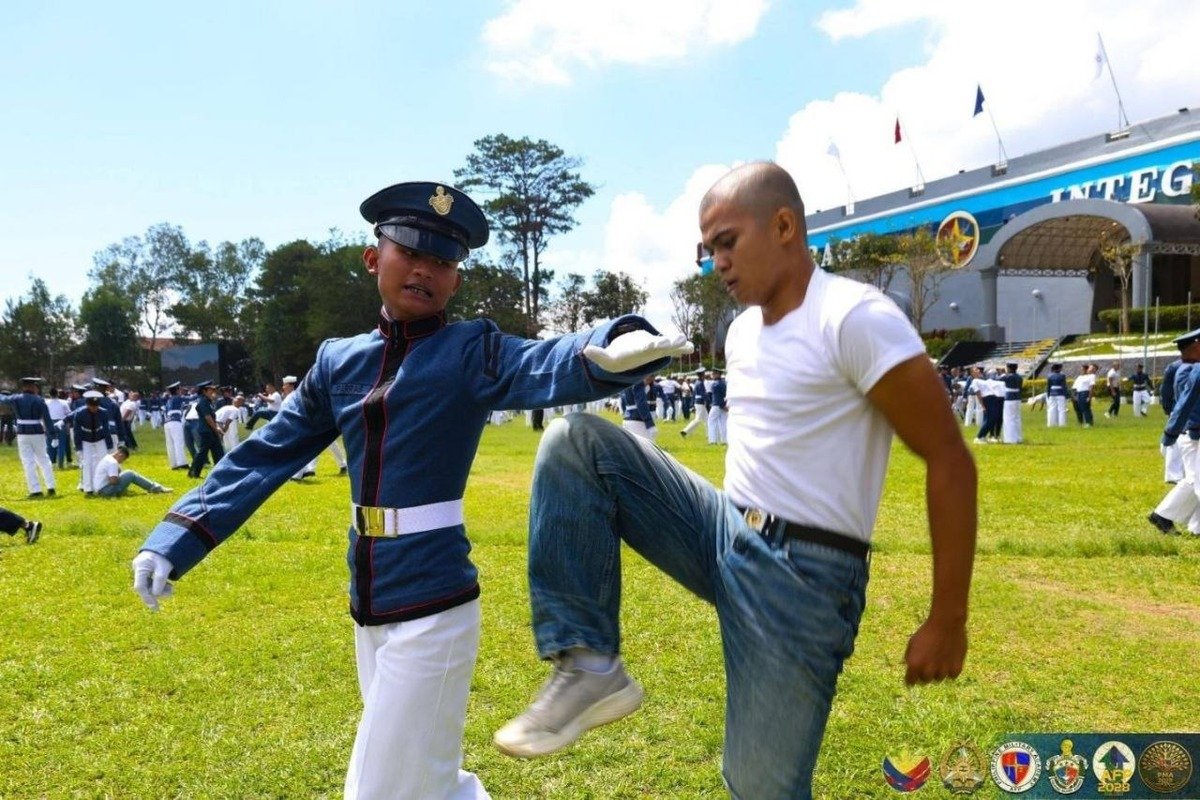
From a nationwide pool of more than 33,000 hopefuls, only 367 young Filipinos earned the right to stand at Borromeo Field on Saturday, May 23, 2026 — the day the Philippine Military Academy (PMA) formally inducted the men and women of PMA Class 2030 into the Cadet Corps Armed Forces of the Philippines. The Oath Taking Ceremony and Reception Rites, held at Fort General Gregorio H. Del Pilar in Baguio City, marked the official end of their civilian lives and the beginning of a rigorous four-year military and academic formation.
The incoming class is composed of 290 male cadets and 77 female cadets, drawn from regions across the Philippine archipelago. Their induction represents the culmination of a lengthy and demanding selection process that the Academy describes as among the most selective in its history.
An Extraordinarily Competitive Path to the Corps
According to the PMA, the road to Class 2030 began with 33,640 applicants who sought entry into the Academy. Of those, 24,630 qualified to sit for the PMA Entrance Examination 2025. The examination itself proved a significant barrier — only 1,436 candidates passed and advanced to the subsequent multi-stage screening phases. From that group, the final 367 were selected to form the new class.
The numbers underscore just how narrow the path truly is: fewer than two percent of all original applicants ultimately received an appointment to the Academy. The figures were confirmed in a statement released by the Office of the Chief Public Affairs (OCPA) of the PMA on the day of the ceremony.
In terms of geographic distribution, the Cordillera Administrative Region sent the largest contingent, accounting for 12 percent of the incoming class. Both the National Capital Region (NCR) and Region IV-A (Calabarzon) each contributed 11 percent of the total, reflecting the broad regional diversity represented within Class 2030.
Upperclassmen of Class 2028 Formally Receive the New Cadets
Following longstanding PMA tradition, the reception of the new cadets was led by Second Class Cadet Squad Leaders from the PMA “SIKLAB KASILAG” Class of 2028. The Reception Rites serve a symbolic and practical function — transferring responsibility for the formation of the incoming cadets to their upperclassmen, who assume the dual role of mentors and disciplinarians during the early and most demanding phase of cadet life.
The ceremony at Borromeo Field marked the first time the members of Class 2030 participated in an official function as members of the Cadet Corps, setting the tone for the years of structured training and academic study that now await them inside Fort Del Pilar.
Commandant Frames the Day as a Turning Point, Not a Ceremony
The Commandant of Cadets, speaking during the formal program, was direct in his message to the incoming class. He framed the Reception Rites not as a celebration but as a threshold — a line the new cadets had just crossed between two fundamentally different ways of life.
“The Reception Rites marks a life-changing milestone — it marks the official beginning of your military career. This is not merely a ceremonial event, rather, it signifies your transition from a carefree civilian life into the disciplined, demanding, and regimented life of a cadet,” the Commandant said in remarks delivered before the assembled cadets, officers, and families.
The statement, as released by the OCPA, did not include the Commandant’s name, but the remarks were described as the opening address of the formal ceremony. The deliberate framing of the day as a point of no return is consistent with how the PMA has traditionally oriented each new class at the outset of their formation.
Superintendent Lays Out a Vision Built for the 21st Century
PMA Superintendent Vice Admiral Caesar Bernard N. Valencia PN addressed the families of the incoming cadets, outlining the Academy’s modernized approach to military education and its ambitions for the officers it intends to produce.
“The academy is aggressively undertaking initiatives to enhance our academic and military curriculum, elevating it to be at par with the highest international standards. Your children will be trained not just in the classic arts of war, but in critical and systems thinking, cybersecurity, international defense, and strategic leadership,” Vice Admiral Valencia said. “We will always endeavor to provide them with the best education and training the nation can offer, ensuring that when they graduate, they are fully equipped to protect our nation in the 21st century.”
Vice Admiral Valencia’s remarks signal an institution in active transition — one that recognizes the security challenges facing the AFP extend well beyond the battlefield into the domains of cyberspace, geopolitics, and systems-level strategic competition. His emphasis on international standards reflects the PMA’s intent to benchmark its programs against leading military academies abroad.
Class 2030 to Pursue Modernized Security Studies Degree
The academic program that awaits the new cadets is the enhanced Bachelor of Science in Management major in Security Studies — the same curriculum framework introduced for PMA Classes 2028 and 2029. According to the Academy, the program was specifically designed to equip future AFP officers with competencies relevant to modern warfare, territorial defense, and the evolving operational environment in which Philippine military forces operate.
The curriculum integrates cybersecurity training, international defense studies, strategic leadership development, and critical thinking alongside conventional military formation. The PMA has positioned this academic model as a deliberate departure from purely traditional military instruction, recognizing that the officers of tomorrow will need to navigate threats that are increasingly technical, transnational, and non-conventional in nature.
77 Female Cadets Continue the Academy’s Growing Inclusion Record
Among the notable features of Class 2030’s composition is the inclusion of 77 female cadets, representing approximately 21 percent of the total class. The PMA has admitted women since 1993, following a landmark Supreme Court ruling that opened the Academy’s gates to female applicants. Since then, each successive class has drawn attention to the proportion of women within its ranks as a broader indicator of the institution’s cultural evolution.
The PMA did not release formal historical comparisons in its announcement, but the 77-cadet figure continues a steady trend of increasing female presence within the Cadet Corps and at the Academy’s leadership pipeline more broadly.
PMA Reaffirms Its Mandate to Shape Officers Ready for Service
In its official release, the PMA — through the Office of the Chief Public Affairs — reaffirmed its core institutional mandate: to develop leaders of character who are operationally prepared upon graduation. The Academy stated that the young men and women of Class 2030 “have answered the call to serve,” and pledged to ensure they are “trained to become leaders of character and operationally ready officers prepared for the demands of military service.”
The release was authorized by LCDR Jesse Nestor B. Saludo PN of the PMA’s Office of the Chief Public Affairs and was issued on May 23, 2026, coinciding with the day of the induction ceremonies.
Barring attrition, the 367 cadets of Class 2030 are expected to graduate in 2030, at which point they will be commissioned as officers of the Armed Forces of the Philippines across the Philippine Army, Philippine Navy, Philippine Air Force, and affiliated branches of the armed services. Their four-year journey inside Fort Del Pilar began with the oath they raised their right hands to swear on Saturday morning at Borromeo Field.
Source: Office of the Chief Public Affairs (OCPA), Philippine Military Academy