
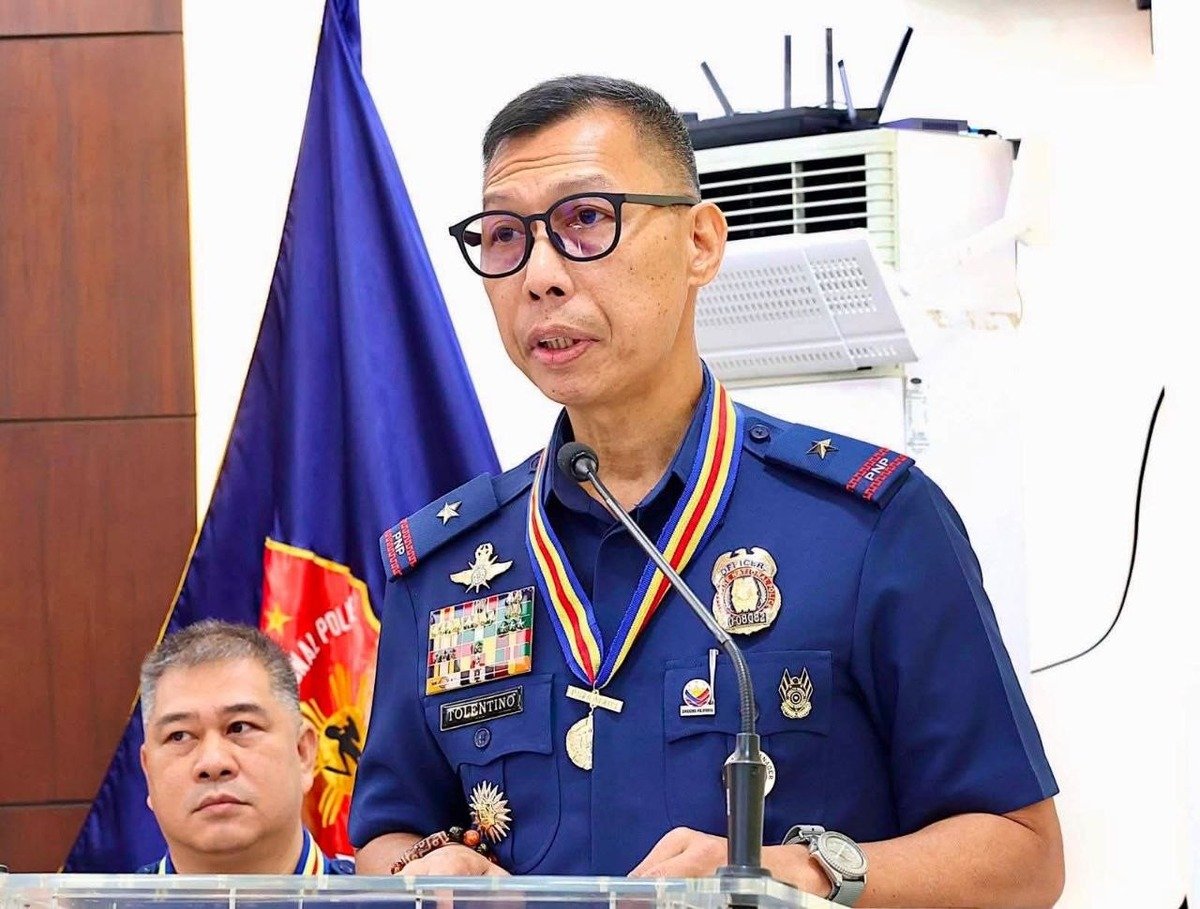
Police Brigadier General Crisaleo Tolentino, a Negros Oriental native whose law enforcement career was built largely within the province, has assumed leadership of the Philippine National Police Maritime Group as its new Officer-in-Charge. The formal installation took place through a Turnover of Office Ceremony held on May 28, 2026, at the PNP Officers’ Star Lounge, Camp Crame, Quezon City — marking a notable achievement for an officer who rose through the ranks in one of Visayas’ most prominent provinces.
A Career Rooted in Negros Oriental
PBGen Tolentino’s professional journey is deeply intertwined with Negros Oriental. Among his most significant provincial assignments was his role as chief of the Dumaguete City Police Office (DCPO), where he oversaw law enforcement operations in the capital city of Negros Oriental. The posting placed him at the forefront of public safety management in one of the Visayas region’s key urban centers.
Beyond Dumaguete, Tolentino also served as head of the Negros Oriental Regional Police Provincial Office (NORPPO), a command that gave him comprehensive oversight of police operations throughout the entire province. Together, these postings established the groundwork for his eventual rise to national-level command positions within the PNP hierarchy.
On a personal level, the Tolentino name carries weight in both law enforcement and local politics in the province. PBGen Tolentino is the brother of Atty. Karissa Faye Tolentino-Maxino, who has served as both vice mayor and city councilor of Dumaguete City, making the family a recognized presence across multiple facets of provincial public life.
Ceremony at Camp Crame Formalizes Leadership Transfer
The May 28, 2026, ceremony at the PNP Officers’ Star Lounge was presided over by PNP Chief Police General Jose Melencio C. Nartatez Jr., who witnessed the handover of command from outgoing Director PBGen Lou F. Evangelista to incoming OIC PBGen Tolentino. In keeping with PNP institutional tradition, such turnover ceremonies serve as the official mechanism for transferring command authority, reinforcing organizational continuity and command stability.
According to the PNP Public Information Office (PNP-PIO), the event underscored the Maritime Group’s dedication to safeguarding Philippine territorial waters and strengthening the country’s maritime security posture. The PNP-PIO statement described the transition as oriented toward delivering what the organization calls “efficient, responsive, and mission-oriented police service for the Filipino people.”
Tolentino’s designation carries the title of Officer-in-Charge rather than full director, which, in standard PNP practice, means he performs the complete functions of the directorial role while a formal appointment proceeds through the organization’s official personnel confirmation channels.
PNP Maritime Group: Mandate and Strategic Role
The PNP Maritime Group is one of the national operational support units of the Philippine National Police. Its mandate covers law enforcement and the maintenance of peace and order across Philippine waters — encompassing inland rivers and lakes, major waterways, and the country’s vast archipelagic sea lanes spanning more than 7,600 islands.
The unit plays a frontline role in interdicting criminal activity at sea, including smuggling operations, illegal fishing, and human trafficking networks that exploit maritime routes. It also carries out search and rescue operations and provides disaster response support in marine environments.
Working in coordination with the Philippine Coast Guard and the Armed Forces of the Philippines, the Maritime Group participates in joint operations designed to secure the country’s sea borders and protect its exclusive economic zone from unlawful incursions and exploitation.
With PBGen Tolentino now at the helm, the Maritime Group’s operational direction is expected to build on the foundations set by outgoing Director PBGen Evangelista, while incorporating the new OIC’s own strategic priorities — priorities shaped by years of field command experience, including his formative assignments across Negros Oriental.
From Provincial Police Chief to National Maritime Commander
Tolentino’s trajectory — from city police chief to provincial commander to national maritime OIC — reflects a career arc that began in the provinces and steadily expanded to the national stage. His rise is particularly significant given that his most formative command experiences were drawn from Negros Oriental, a province that has not historically been among the most prominent launching pads for national PNP leadership.
The PNP-PIO statement connected the leadership transition to the organization’s overarching reform agenda, encapsulated in the campaign framework “Bagong PNP para sa Bagong Pilipinas: Serbisyong Mabilis, Tapat, at Nararamdaman” — a governance alignment with the Marcos administration’s broader reform priorities for public institutions.
PNP Chief Earns High Marks in National Governance Survey
The Maritime Group’s leadership transition coincides with a period of elevated public confidence in the PNP’s national command. PNP Chief PGen Jose Melencio C. Nartatez Jr. was ranked among the country’s highest-rated government officials in the “Boses ng Bayan” Index of Governance (IOG) survey, conducted by RPMD Foundation Inc. from April 1 to 8, 2026, covering 5,000 respondents from across the Philippines.
According to the PNP-PIO, PGen Nartatez posted an overall Index of Governance score of 78.8 percent, supported by a 78.5 percent trust rating and a 79.1 percent performance rating — figures that placed him among the most favorably regarded officials captured by the survey.
In remarks released through the PNP-PIO following the survey’s publication, Nartatez attributed the recognition not to individual leadership but to the collective dedication of uniformed personnel serving communities nationwide.
“We are grateful for the trust and confidence of our fellow Filipinos. This recognition is not for one person alone but for the men and women of the PNP who work tirelessly every day to keep our communities safe. Malaking inspirasyon ito para lalo pa naming pagbutihin ang aming serbisyo,” Nartatez said, as quoted in the PNP-PIO statement.
The PNP chief also stressed the importance of sustained community engagement and operational transparency, adding: “Patuloy nating palalakasin ang ating ugnayan sa mga komunidad at sisiguraduhin natin na ang bawat aksyon ng PNP ay nakatuon sa kapakanan ng mamamayan. Public trust is our most valuable asset, and we will continue working hard to deserve it,” according to the same PNP-PIO statement.
PNP Reform Programs Continue Amid Leadership Changes
The RPMD Foundation Inc. survey results, as cited by the PNP-PIO, reflect what the organization characterizes as growing and sustained public confidence in PNP’s ongoing reform initiatives and service delivery improvements. The PNP has maintained a series of programs under its Focused Agenda — covering enhanced operational efficiency, strengthened community partnerships, and more responsive policing at every level of its command structure.
These institutional reforms are framed as part of a long-term effort to position the PNP as a professionalized, integrity-driven organization committed to people-centered law enforcement. The Maritime Group, under its new OIC, is expected to align its operations with these reform principles while addressing the specific and complex challenges of maritime law enforcement across one of Southeast Asia’s most extensive archipelagic environments.
PBGen Tolentino’s appointment as OIC of the PNP Maritime Group stands as a milestone not only in his personal career but also as a point of pride for Negros Oriental, as the province sees one of its own ascend to command one of the PNP’s critical national operational units.
Source: Breaking News Negros Oriental (breakingnewsnegrosoriental.com); original reporting informed by PNP Public Information Office statements and RPMD Foundation Inc. survey data.