For five days in late May 2026, warships, coast guard vessels, fighter jets, and helicopters from the Philippines and the United States operated side by side in the contested waters around Bajo de Masinloc — a shoal in the West Philippine Sea that sits at the center of longstanding territorial disputes between Manila and Beijing.
The joint exercise, formally designated as the 3rd PH-US Bilateral Maritime Cooperative Activity (MCA) of 2026, ran from May 26 to 30, 2026, and was conducted by the Armed Forces of the Philippines (AFP) and the Philippine Coast Guard (PCG) together with the United States Indo-Pacific Command (USINDOPACOM).
What Assets Both Sides Brought to the Exercise
According to a statement issued by Col. Xerxes A. Trinidad, Chief of the AFP Public Affairs Office, on May 31, 2026, the Philippine side deployed a substantial mix of naval and air capabilities for the bilateral activity. The centerpiece of the Philippine naval contribution was the BRP Antonio Luna (FFG-15), a newly commissioned guided-missile frigate that represents one of the most capable surface combatants in the Philippine fleet. Accompanying the frigate were an AW109 helicopter, FA-50 light combat aircraft, and a Sokol aircraft.
The Philippine Coast Guard, meanwhile, contributed the BRP Melchora Aquino (MRRV-9702), a large multi-role response vessel. Its inclusion underscored Manila’s deliberate strategy of deploying a whole-of-government maritime presence — combining both military and civilian agencies — in the waters it claims as part of its Exclusive Economic Zone (EEZ).
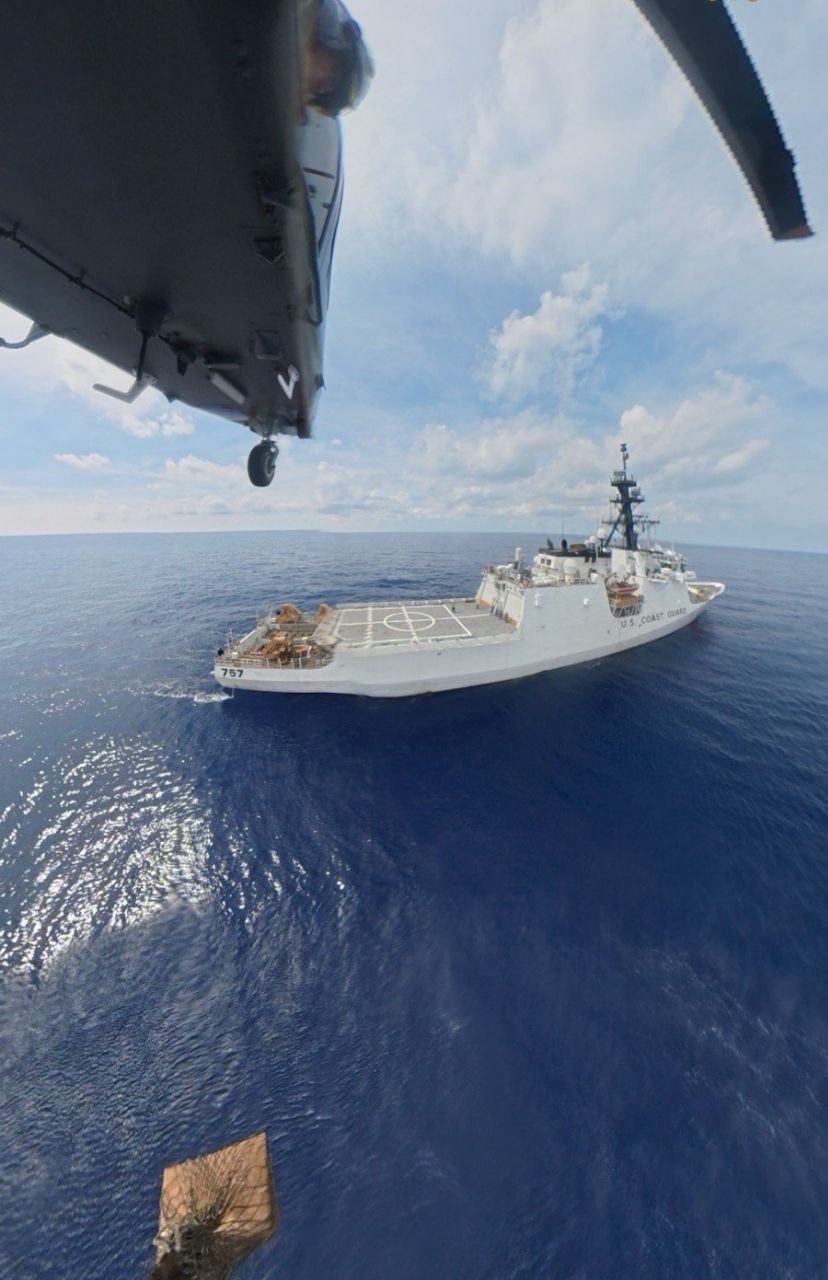
The United States fielded the USCGC Midgett (WMSL-757), a Legend-class national security cutter operated by the US Coast Guard, along with an MH-65 helicopter, according to the AFP Public Affairs Office.
A Wide Range of Drills Over Five Days
The exercises were structured to cover multiple dimensions of maritime operations. The AFP statement identified Search and Rescue (SAR) operations as one of the primary drills, training combined crews to respond to distress situations across multi-vessel environments in open water.
Visit, Board, Search and Seizure (VBSS) drills were also conducted — exercises in which specially trained boarding teams practice intercepting and inspecting vessels suspected of violating maritime law. These drills were complemented by Maritime Law Enforcement Training, which reinforced the legal frameworks that govern naval and coast guard operations within EEZs under international law.
Air-to-ship integration formed another critical element of the five-day program. Rotary Wing Deck Landing Qualifications (DLQ) tested the ability of helicopter crews to execute safe landings on vessel decks under simulated operational conditions. Vertical Replenishment (VERTREP) exercises were carried out as well, involving the aerial transfer of cargo and supplies between ships using helicopters — a logistical capability that enhances interoperability between allied forces during extended maritime operations.
Rounding out the schedule were Communication Exercises (COMMEX), focused on building reliable, standardized communication protocols between Philippine and US units operating across air, surface, and sea domains simultaneously, according to the AFP Public Affairs Office.
The Third Joint MCA in 2026 Alone
The completion of this exercise marks the third Bilateral Maritime Cooperative Activity between the AFP and USINDOPACOM within the single calendar year of 2026 — a pace that reflects the deepening operational relationship between Manila and Washington under the framework of the Mutual Defense Treaty and the Enhanced Defense Cooperation Agreement (EDCA).
In his official statement, Col. Trinidad described the activity as a concrete expression of the two nations’ defense partnership. “The successful conduct of the recent MCA reflects the enduring commitment of the Philippines and the United States to deepen defense cooperation, strengthen maritime domain awareness, and uphold a rules-based international order,” the AFP Public Affairs Office statement read.
Photography of the exercise was handled by the North Luzon Naval Command, which holds operational jurisdiction over maritime approaches to the northern and western Philippine seaboard — including the disputed reaches of the West Philippine Sea.
Why Bajo de Masinloc Was Chosen as the Exercise Site
The selection of Bajo de Masinloc — also referred to as Panatag Shoal — as the venue for the bilateral activity carries considerable strategic weight. The shoal lies roughly 230 kilometers west of Zambales province on the island of Luzon, placing it well within the Philippines’ 200-nautical-mile Exclusive Economic Zone as defined under the United Nations Convention on the Law of the Sea (UNCLOS).
An international arbitral tribunal constituted under UNCLOS ruled in favor of the Philippines in 2016 in its case against China, affirming Filipino sovereign rights in the area. China, which asserts sweeping claims over most of the South China Sea based on its nine-dash line doctrine, has refused to recognize the ruling and continues to maintain a presence in the vicinity.
By choosing this specific location for a high-profile joint exercise, the AFP signaled a deliberate emphasis on freedom of navigation and the assertion of Philippine sovereign rights in contested maritime space — consistent with the AFP’s publicly stated policy positions regarding the West Philippine Sea.
The Coast Guard’s Expanding Role in Defense Exercises
The presence of the PCG alongside AFP naval and air assets is part of a broader and continuing evolution in how Manila approaches bilateral maritime exercises. In recent years, the PCG has been progressively integrated into joint drills, reflecting a strategic posture that pairs civilian maritime law enforcement with military force — allowing the Philippines to assert its sovereign rights in disputed waters without relying exclusively on armed naval assets.
The pairing of the BRP Melchora Aquino with the USCGC Midgett — both large, capable coast guard vessels from their respective nations — created an opportunity for Philippine and American coast guard counterparts to train together on law enforcement protocols and rescue procedures specific to civilian maritime jurisdiction, according to the AFP statement.
Rules-Based Order Cited as the Exercise’s Guiding Framework
Throughout its official communications on the activity, the AFP Public Affairs Office consistently situated the bilateral exercise within the broader framework of a rules-based international order — language that both Manila and Washington have repeatedly employed to signal shared opposition to unilateral actions that challenge internationally recognized maritime boundaries.
Col. Trinidad’s statement made no direct reference to specific incidents or confrontations in the West Philippine Sea but highlighted “maritime domain awareness” as a central objective of the exercise. The AFP described this as the effective understanding of all activity within the maritime environment that could bear on security, safety, economic interests, or environmental protection — a capability that exercises of this kind are explicitly designed to build.
With two earlier MCAs already completed in 2026 before this third iteration, the rhythm of joint maritime drills between the AFP and USINDOPACOM this year points to a sustained, deliberate effort by both governments to maintain operational readiness and preserve an active allied presence in the West Philippine Sea. As of May 31, 2026, no announcement had been made by the AFP regarding the scheduling of the next bilateral maritime cooperative activity.
Photo courtesy of the North Luzon Naval Command / AFP Public Affairs Office.
Originally reported by: AFP Public Affairs Office / North Luzon Naval Command
Related stories