Weather conditions across the Philippines present a tale of two patterns today, with the southern island of Mindanao bracing for widespread rainfall while the majority of Luzon and Visayas regions enjoy generally favorable skies, the Philippine Atmospheric, Geophysical and Astronomical Services Administration (PAGASA) reported.
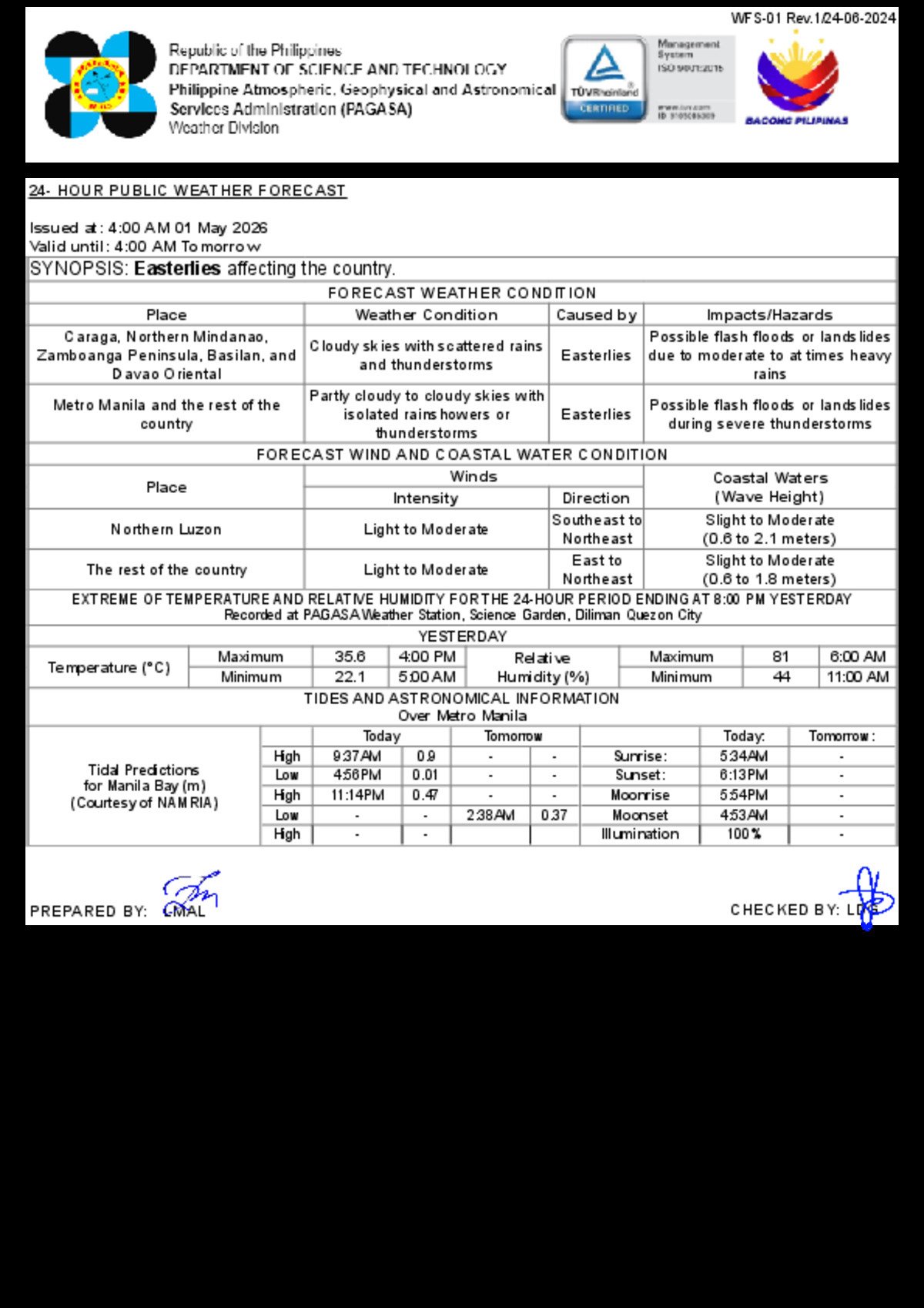
In its 24-hour public weather forecast released at 4:00 AM on May 1, 2026, the national weather service attributes the current atmospheric conditions to easterlies affecting the entire archipelago, creating contrasting weather scenarios between the northern and southern regions of the country.
Southern Regions Face Active Weather Systems
Multiple areas across Mindanao will experience significant weather disturbances throughout the day, with PAGASA issuing forecasts for cloudy skies accompanied by scattered rains and thunderstorms. The affected regions include Caraga, Northern Mindanao, Zamboanga Peninsula, Basilan, and Davao Oriental.
Weather officials warn that these easterly-influenced systems may produce moderate to occasionally heavy precipitation, raising concerns about potential flash flooding and landslide risks in vulnerable locations. Authorities advise residents to remain vigilant and avoid areas susceptible to water accumulation, especially during periods of concentrated rainfall.
The Caraga administrative region, which includes the provinces of Agusan del Norte, Agusan del Sur, Surigao del Norte, Surigao del Sur, and Dinagat Islands, faces the most persistent overcast conditions and precipitation activity. Northern Mindanao areas, spanning Bukidnon, Camiguin, Lanao del Norte, Misamis Occidental, and Misamis Oriental, will likely see repeated rain events throughout the forecast period.
Residents across Zamboanga Peninsula provinces—Zamboanga del Norte, Zamboanga del Sur, and Zamboanga Sibugay—along with the island province of Basilan, should consider indoor alternatives for planned activities and verify adequate drainage systems around residential and commercial properties.
Northern and Central Philippines Enjoy Calmer Conditions
Weather prospects appear considerably brighter across Luzon and Visayas islands, where PAGASA anticipates partly cloudy to cloudy skies with isolated rainshowers or thunderstorms. Metro Manila exemplifies the favorable conditions expected throughout these northern and central regions.
The meteorological term “isolated” suggests any precipitation will remain brief, geographically limited, and typically occur during afternoon or evening hours—patterns consistent with standard easterly weather influence. Manila metropolitan area residents can anticipate pleasant daytime conditions featuring comfortable moisture levels and adequate sunlight between cloud formations.
From the elevated Cordillera territories in northern Luzon extending southward to the Bicol Peninsula, atmospheric conditions should support most outdoor pursuits and activities. Major Visayas urban centers, including Cebu, Iloilo, Bacolod, and Tacloban, can expect similarly manageable weather with minimal disruption from transient shower activity.
Despite the generally optimistic outlook for these regions, PAGASA maintains that severe thunderstorm development remains within the realm of possibility. When such systems materialize, they may trigger flash flooding or landslides, particularly in elevated terrain or flood-susceptible areas. Citizens should stay weather-conscious and seek appropriate shelter during intense convective activity.
Marine and Coastal Forecasts
Sea conditions around the Philippine islands support normal maritime operations today, with PAGASA projecting light to moderate wind speeds across all coastal areas. These conditions create generally secure environments for commercial fishing, cargo transport, and recreational watercraft activities.
Wind direction patterns vary by geographic location, with northern Luzon experiencing southeast to northeast flows while remaining areas encounter east to northeast patterns. These easterly circulations typically promote atmospheric stability and align with the broader weather system currently influencing the region.
Sea state conditions remain within safe operational parameters, featuring slight to moderate wave activity throughout Philippine waters. Northern Luzon coastal areas will see wave heights between 0.6 and 2.1 meters, while other regions experience 0.6 to 1.8-meter swells—ranges that accommodate most marine activities without significant restriction.
Operators of smaller vessels should continue monitoring local maritime conditions, particularly in zones experiencing thunderstorm activity, as sudden wind intensification and rough seas may develop during convective weather episodes.
Temperature Patterns and Atmospheric Data
Temperature monitoring from PAGASA’s Science Garden facility in Diliman, Quezon City, recorded yesterday’s peak reading of 35.6°C at 4:00 PM, with overnight lows dropping to 22.1°C at 5:00 AM. Atmospheric moisture levels fluctuated between 81% at the highest point and a more comfortable 44% at the daily minimum.
These thermal readings demonstrate typical easterly weather characteristics, featuring warm afternoon periods followed by pleasant evening cooling. Most Philippine locations can expect comparable temperature profiles today, although areas under extensive cloud cover and active precipitation may register slightly reduced maximum temperatures.
Public Safety and Preparedness Guidelines
The current weather forecast emphasizes the critical importance of disaster preparedness, especially for communities in flood and landslide-vulnerable zones. Residents throughout affected Mindanao territories should minimize non-essential travel during heavy rainfall events and stay updated on local water level monitoring.
Areas adjacent to rivers, streams, and mountainous terrain require elevated awareness of evolving weather patterns. Even regions anticipating predominantly fair conditions must maintain readiness for severe thunderstorm possibilities.
Agricultural workers and farming communities should evaluate outdoor work scheduling in precipitation-affected areas, while construction and development projects may require temporary weather-related adjustments in zones expecting substantial rainfall.
This forecast remains effective until 4:00 AM tomorrow, May 2, 2026. Weather patterns may shift rapidly during active easterly periods, making regular forecast monitoring essential for public safety and activity planning.
Citizens may access current weather updates and official warnings through PAGASA’s website at pagasa.dost.gov.ph.