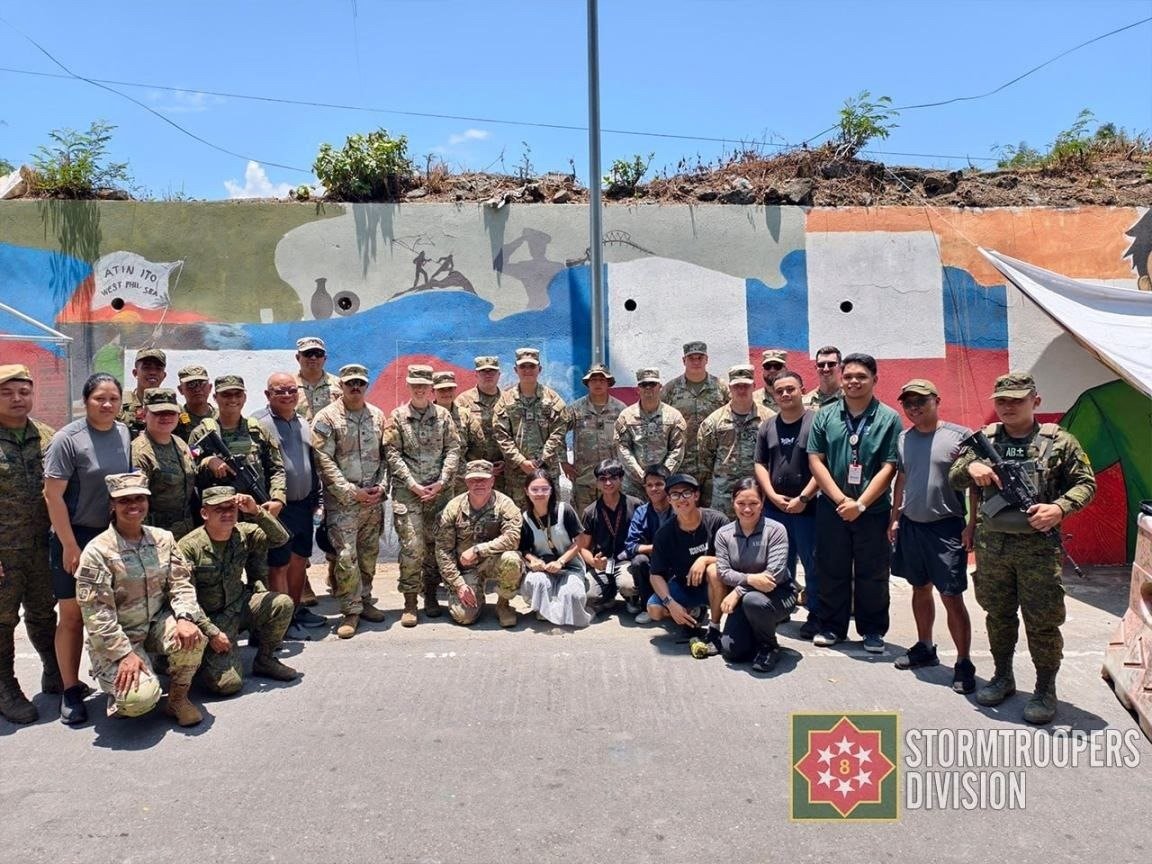
TACLOBAN CITY, Leyte – A collaborative art initiative brought together military personnel from the Philippines and United States with local community members on April 24, 2026, representing the expanded second phase of a grassroots development program that merges defense cooperation with civilian engagement.
The community-centered activity formed part of Exercise Balikatan 41-2026, with Task Group Tacloban from the 8th Infantry Division, Philippine Army, coordinating alongside visiting US Army personnel for the joint mural creation effort, the Division Public Affairs Office reported.
Expanding Community Engagement Model
This latest phase builds upon an earlier community mural initiative completed on March 29, with the current project incorporating American military participants as part of the ongoing bilateral exercise framework. Captain Christopher B. Tataro, Division Public Affairs Office Chief, highlighted how the program demonstrates evolution from traditional military training toward community-focused activities.
The artistic collaboration involved direct participation from various local organizations, including community volunteers, the Tacloban City Police Office, and Amare et Caritas, creating a multi-sector partnership that extends beyond conventional military-civilian relationships.
Local residents and youth participants worked directly alongside uniformed personnel from both nations, transforming public spaces while building bridges between military institutions and civilian communities. The hands-on approach reflects what organizers describe as shared dedication to grassroots development initiatives.
Bilateral Exercise Integration
Exercise Balikatan 41-2026 represents four decades of continued military partnership between Philippine and American armed forces, with “Balikatan” translating to “shoulder-to-shoulder” cooperation. The current iteration demonstrates expanded scope beyond traditional security training to encompass social development programming.
The inclusion of community art projects within the exercise structure indicates evolved approaches to international military cooperation, emphasizing civilian benefit alongside defense objectives. This year’s activities have incorporated various development initiatives across multiple participating locations.
According to military coordinators, the collaborative murals symbolize “unity, peace, and collective community aspirations,” extending partnership goals beyond conventional defense cooperation toward broader social impact objectives.
Strategic Community Development Approach
The 8th Infantry Division positions the mural initiative within broader “positive activism” strategies designed to strengthen peace-oriented communities while countering potential extremist influence. The program emphasizes local empowerment through constructive engagement opportunities.
Military strategists view community art projects as serving multiple operational purposes: creating visible cooperation symbols between armed forces and civilian populations, fostering positive interaction opportunities, and demonstrating institutional commitment to community welfare beyond security missions.
Youth engagement represents a key component of the strategy, with young volunteers taking active roles in both completed project phases. This demographic focus reflects recognition of younger generations’ importance in building sustainable military-community relationships.
Eastern Visayas Operations Context
The “Stormtroopers Division” 8th Infantry maintains operational oversight across the Eastern Visayas region, increasingly integrating community development components into standard operational procedures. Military leadership recognizes connections between local development progress and overall regional stability.
Operating from Camp Vicente Lukban in Catbalogan City, Samar, the division manages security responsibilities across multiple provinces while implementing expanded community outreach programming. The mural project exemplifies comprehensive approaches linking immediate community needs with long-term strategic objectives.
Division officials emphasized goals of fostering “cooperation, resilience, and shared responsibility for peaceful and progressive Eastern Visayas,” indicating strategic planning that extends beyond immediate security considerations toward sustainable regional development.
Multi-Stakeholder Coordination
Project implementation involved extensive coordination with local partners including Amare et Caritas and municipal police authorities, ensuring community voices shaped artistic vision and execution processes. This collaborative planning reflects military acknowledgment of civilian leadership importance in development initiatives.
The permanent transformation of public spaces through collaborative mural art creates lasting visual representations of military-community cooperation while establishing venues for continued community interaction. Planners view these installations as long-term relationship-building investments.
Community feedback regarding the joint military-civilian art initiative has been overwhelmingly positive, with residents expressing appreciation for collaborative methodologies and opportunities to work directly with both Philippine and American service members.
Program Sustainability and Future Expansion
Division leadership has committed to maintaining similar programming beyond the current Exercise Balikatan timeframe, demonstrating institutional support for ongoing community engagement activities. Officials stressed that community development remains central to regional operational priorities.
Additional communities within Task Group Tacloban’s operational area have expressed interest in hosting similar projects, with future expansion dependent on available resources and local participation levels. The success of completed phases has generated substantial community interest in replicating the model.
The incorporation of community art initiatives into standard military operations reflects broader trends toward comprehensive security frameworks that address socioeconomic factors alongside traditional defense considerations, indicating sustained commitment to community-centered military engagement.
Photo credit: Photo courtesy of 8th Infantry Division, Philippine Army
Related stories