₱2.185-B Borrowing Plan in Dumaguete Hits 3.20× the City’s Own NTA — What the Council Must Now Explain
DUMAGUETE CITY — May 10, 2026. The full ₱2.185-billion borrowing package being floated for a new four-storey public market and a City Hall extension would equal about 3.20 times the City of Dumaguete’s annual National Tax Allotment, official Bureau of Local Government Finance figures show — a per-resident debt exposure of roughly ₱15,369 for every Dumaguetnon.
The package combines a ₱1.948-billion proposed loan for the public market in Barangay Poblacion 3 and a separate ₱237-million proposed loan for a City Hall extension and parking project. The Sangguniang Panlungsod is still in the deliberation stage. No loan has yet been finally perfected.
The size of the proposed borrowing places it well above the loan-financed public market projects of comparable Negros and Cebu cities. Mandaue City’s new public market, financed through a ₱400-million DBP loan, equals 0.34 of that city’s NTA, or ₱1,097 per Mandauehanon. Talisay City, Cebu’s four-storey Tabunok market financed through a DBP and Landbank arrangement of ₱387 million equals 0.40 of NTA, or ₱1,467 per Talisaynon. Bacolod City’s ₱525-million Burgos Public Market loan allocation, later realigned to other projects, was 0.28 of NTA at ₱840 per Bacolodnon.
Dumaguete, with the smallest NTA of the cities being compared, would be carrying the largest absolute loan and the largest relative-to-revenue exposure.
What the BLGF data shows
The Bureau of Local Government Finance’s Statement of Receipts and Expenditures by LGU for FY 2024 records Dumaguete City’s National Tax Allotment at ₱681.5 million, total current operating income at ₱1.208 billion, and local-source revenue at ₱498.2 million. Annual NTA is the largest single income component the city government uses to fund payroll, health services, road maintenance, and education support.
A loan-to-NTA ratio of 2.86 for the market alone, or 3.20 for the full borrowing package, means a meaningful share of the NTA each year for the next 15 to 20 years would be redirected to amortization and interest payments, depending on the final loan term and rate.
The PPP route the bigger cities took
Larger Visayan and Mindanao cities pursuing larger public market modernization projects did not use direct LGU borrowing. Cebu City’s ₱5.5-billion Carbon Public Market modernization is a 50-year joint venture with Megawide. The City of Cebu does not borrow for that project. It receives a ₱50-million annual guaranteed payment from the joint venture partner with a 10-percent escalation every five years.
Iloilo City’s ₱3-billion redevelopment of its Central Market and Terminal Market under SM Prime, soft-opened in November 2025, is a 25-year lease arrangement at zero cost to the city government. General Santos City’s ₱2.33-billion Palengke Heneral, signed earlier in 2026, is a public-private partnership with Robinsons Land Corp. for a 25-year lease before the upgraded facility transfers back to the city.
In each PPP and JV case, the private developer carries the upfront capital cost. The city carries no construction debt.
What the City Council needs to put on the public record
Before any final vote on the borrowing ordinance, residents and journalists tracking the proposal would normally expect the Sangguniang Panlungsod to publicly disclose:
- The detailed cost breakdown for the ₱1.948-billion market component, including cost per square meter and itemized scope.
- The feasibility study and projected market revenue, including the vendor rental schedule and the assumed occupancy rate.
- The full debt-service schedule: interest rate, loan term, annual amortization, and the share of the NTA that amortization will consume each year.
- A documented comparison of why a public-private partnership, joint venture, or phased construction model — used by General Santos, Iloilo, and Cebu City for larger projects — was not pursued for Dumaguete.
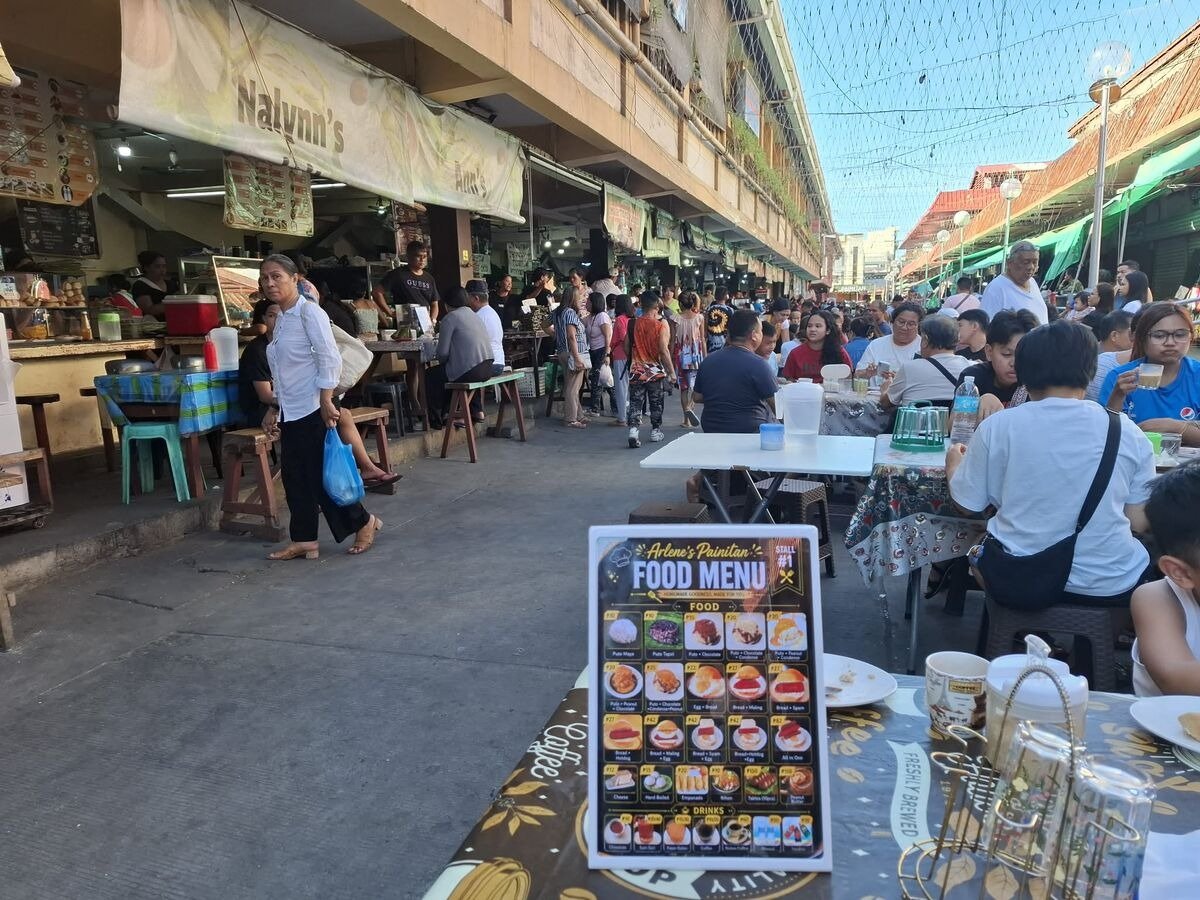
- The vendor relocation, rental adjustment, and return-to-stall guarantees during construction, including the future of the Painitan section.
This is not a question of whether Dumaguete should modernize its public market. It is a question of how, on what financial terms, and with what level of disclosure to the people who will be paying for it.
The City Council retains full authority to approve, modify, or reject the proposal. The borrowing has not yet been finally perfected.
Sources: Bureau of Local Government Finance Statement of Receipts and Expenditures by LGU, FY 2024 (Preliminary). Project costs and financing models from publicly reported records. Population data from the Philippine Statistics Authority 2024 Census.
Verified figures only. No fabricated quotes. BNNO Editorial, 10 May 2026.