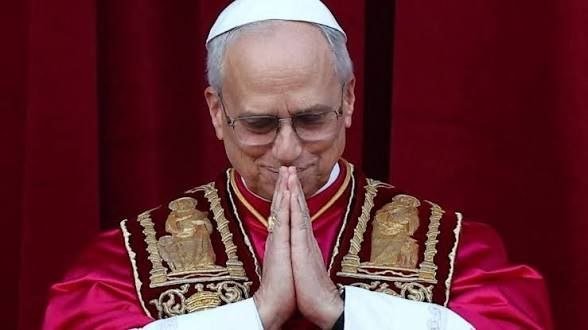
DUMAGUETE CITY — In what marks a historic first for the Catholic Church, Pope Leo XIV—the Chicago-born pontiff who became the first American to hold the papal office—has issued unprecedented criticism of the United States’ military campaign against Iran throughout his Holy Week and Easter observances in 2026.
The 70-year-old pope’s condemnation of the U.S.-Israeli military operation, which began on February 28, 2026, represents the strongest papal opposition to American foreign policy from a sitting pontiff in modern church history, particularly significant given Leo XIV’s American origins and intimate understanding of U.S. political dynamics.
Palm Sunday Declaration Sets Confrontational Tone
The papal criticism reached its most direct form during Palm Sunday Mass in St. Peter’s Square, where Pope Leo XIV addressed tens of thousands of faithful with an unambiguous message about the relationship between faith and warfare.
“Brothers and sisters, this is our God: Jesus, King of Peace, who rejects war, whom no one can use to justify war,” the pontiff declared from the steps of St. Peter’s Basilica. “He does not listen to the prayers of those who wage war, but rejects them, saying: ‘Even though you make many prayers, I will not listen: your hands are full of blood.'”
The statement appeared directed at U.S. Defense Secretary Pete Hegseth, who has organized prayer services at the Pentagon while publicly requesting divine blessing for what he terms “overwhelming violence of action” against America’s adversaries.
Escalating Opposition Throughout Holy Week
Pope Leo XIV’s criticism intensified as the Iran conflict entered its sixth week. Beginning March 1, just one day after bombing operations commenced, the American pontiff used social media platforms to communicate his opposition.
“Stability and peace are not achieved through mutual threats, nor through the use of weapons, which sow destruction, suffering, and death,” he posted on the Vatican’s official social media accounts.
During subsequent Holy Week addresses, Pope Leo XIV called for aerial bombardment to be “banished forever” and denounced what he characterized as “imperialist occupation of the world” during his Holy Thursday homily.
Historic English-Language Appeal to Trump
In an extraordinary departure from typical papal protocol, Pope Leo XIV addressed reporters in English during a Tuesday evening appearance at the papal retreat of Castel Gandolfo, directly appealing to President Donald Trump to seek peaceful resolution.
“Hopefully he’s looking for a way to decrease the amount of violence, of bombing, which would be a significant contribution to removing the hatred that’s being created and that’s increasing constantly in the Middle East and elsewhere,” the pontiff stated.
Vatican experts emphasized the rarity of popes directly naming sitting world leaders in public statements, making Leo XIV’s appeal particularly noteworthy for its diplomatic boldness.
Good Friday Cross-Carrying Demonstrates Personal Commitment
Pope Leo XIV reinforced his peace message through personal action on Good Friday, becoming the first pontiff in over thirty years to personally carry the wooden cross through all fourteen Stations of the Cross at Rome’s historic Colosseum.
The torchlit ceremony drew approximately 30,000 pilgrims to witness the hour-long procession, while millions more followed via global livestream as the American pope climbed the steep stairs of Palatine Hill before delivering final benediction.
“I carry all of this suffering in my prayer,” Pope Leo XIV explained to journalists before the ceremony, describing his decision to bear the cross personally rather than delegate the responsibility as his predecessors typically did.
The candlelit service incorporated prayers specifically for war orphans and displaced children, featuring meditations that warned world leaders their decisions would face divine judgment.
Easter Vigil Warning Against Conflict Normalization
During Saturday night’s Easter Vigil celebration in St. Peter’s Basilica, Pope Leo XIV challenged the global Catholic community of 1.4 billion faithful not to become desensitized to widespread warfare.
“Let us not allow ourselves to be paralyzed,” he declared, cautioning that mistrust and fear had been permitted to “sever the bonds between us through war, injustice and the isolation of peoples and nations.”
Vatican Leadership Supports Papal Position
High-ranking Vatican officials have publicly endorsed Pope Leo XIV’s anti-war stance. Cardinal Robert McElroy, archbishop of Washington, D.C., described to CNN the conflict’s “cascading global destructiveness” as evidence of “the illusions which led us to attack Iran.”
Vatican Secretary of State Cardinal Pietro Parolin offered even stronger criticism, declaring that the military campaign “does not seem to meet the conditions” required under traditional Catholic just war doctrine.
Opposition Voices Challenge Papal Stance
The American pope’s position has attracted criticism from defense policy analysts and certain Catholic theologians. The Foundation for Defense of Democracies released analysis contending that military strikes against Iran’s nuclear infrastructure align with just war principles, describing the dismantling of Iran’s offensive capabilities as a “grave duty” under Catholic moral teaching.
Some conservative American Catholics have accused Pope Leo XIV of political inexperience, arguing that military intervention serves legitimate defensive objectives.
White House Responds to Vatican Criticism
The White House has defended the administration’s integration of religious observances and biblical language, characterizing Pentagon prayer services as spiritual support for military personnel rather than divine sanctification of combat operations.
However, Pope Leo XIV appears unconvinced by such explanations. His Easter Sunday Urbi et Orbi blessing—the traditional papal message “to Rome and to the world”—maintained his firm opposition to the conflict as international observers monitored whether he would further intensify his criticism.
Regional Impact and Humanitarian Crisis
According to United Nations assessments, the U.S.-Israeli campaign against Iran has resulted in thousands of casualties, displaced more than one million Lebanese civilians, forced closure of the strategically vital Strait of Hormuz, and triggered chaos in global energy markets.
Pope Leo XIV’s intervention carries unprecedented significance compared to Pope John Paul II’s 2003 Iraq War opposition, given the current pontiff’s American nationality and sophisticated understanding of U.S. political and religious culture.
Unprecedented Papal-Presidential Confrontation
The dispute between Pope Leo XIV and President Trump represents the first occasion in church history when an American pope has directly opposed a U.S. president’s military policies. Previous papal criticism of American military actions originated from European pontiffs with limited firsthand knowledge of American political and religious dynamics.
As the Middle East conflict continues without clear resolution prospects, the pope from Chicago has articulated an uncompromising position: divine favor does not extend to those who initiate warfare, regardless of their declared justifications.
“God is not on anyone’s side in this war,” Pope Leo XIV concluded in his Easter message. “And He is not listening to the prayers of those who started it.”
Photo credit: Vatican Media
Related stories