Fifty-four years is a long time to be away from home — and for one 66-year-old woman who ended up homeless on the streets of Zamboanga City, the journey back to her hometown in Negros Oriental required the intervention of multiple government agencies spanning two administrative regions of the Philippines. On Wednesday, May 20, 2026, Ms. Shirley Labao finally set foot again in Barangay Inacban, Ayungon, Negros Oriental, reuniting with relatives she had not seen since she left as a young teenager.
A Teenager Who Left and Never Came Back — Until Now
Ms. Labao’s story begins in Barangay Inacban, the small community in Ayungon where she grew up. As a teenager, she left the village and made her way to Jolo, Sulu, where she found work as a housemaid. From Jolo, she eventually relocated to Zamboanga City, taking up employment as a laundress. For decades, she built what life she could in that city in the Zamboanga Peninsula — a place far removed from her roots in Negros Oriental.
Life in Zamboanga City, however, was not kind to Ms. Labao in the long run. Over the years, she suffered devastating personal losses: the deaths of her children and her partner left her without anyone to rely on in the city. Her situation reached a critical low when the small shelter she had been occupying in Barangay Tetuan, Zamboanga City, was destroyed, leaving her without housing and forcing her into life on the streets.
These circumstances led to her being classified as an individual in street situation (ISS) — a designation used by the Department of Social Welfare and Development (DSWD) to identify persons living without adequate housing and in need of government-assisted social protection services.
City Social Welfare Office Initiates the Process
The case of Ms. Labao came to the attention of the City Social Welfare and Development Office (CSWDO) of Zamboanga City, which referred her to the DSWD’s Pag-Abot Program, according to information released in connection with her reintegration. This national program, operating under the DSWD’s Comprehensive Program for Street Children, Street Youth, Street Families, and Indigenous Peoples, is specifically designed to assist homeless and displaced individuals and, where appropriate, facilitate their return to their communities of origin.
During the formal assessment conducted under the Pag-Abot Program, Ms. Labao made clear her strong and unwavering wish to return to Ayungon — a desire that, despite more than five decades of separation from her hometown, had evidently never left her. The DSWD said the assessment also confirmed that family members remained in Barangay Inacban and that conditions there were suitable for a safe and sustainable return.
Coordinated Effort Across Two Regions
Facilitating the reintegration of Ms. Labao was no small logistical undertaking. According to DSWD Negros Island Region (DSWD-NIR), the process required close coordination among several government offices: DSWD-NIR, the DSWD Field Office for Region 9 based in Zamboanga, the CSWDO of Zamboanga City, the Local Government Unit (LGU) of Ayungon, and the Municipal Social Welfare and Development Office (MSWDO) of Ayungon, which is headed by Marybeth Batomalaque.
Before the return could be finalized, DSWD-NIR conducted a home visit and formal community assessment in Barangay Inacban — a standard component of the Pag-Abot Program’s reintegration protocol intended to verify that returning individuals will not be placed in precarious situations upon arrival. The assessment came back positive, clearing the way for Ms. Labao’s journey home.
Welcomed at the Port of Dumaguete
When Ms. Labao arrived in Negros Oriental on May 20, 2026, she was met at the Port of Dumaguete by personnel from DSWD-NIR and representatives from the Ayungon MSWDO. The reception at the port marked the completion of the inter-regional transfer leg of the reintegration process.
From Dumaguete, Ms. Labao was accompanied overland to Ayungon, where she took part in a courtesy call with Ayungon Mayor Dennis Amancio. The occasion was attended by representatives from DSWD-NIR, DSWD Region 9, the Zamboanga City CSWDO, and the Ayungon MSWDO. Following the official formalities, Ms. Labao made her way to Barangay Inacban, where her reunion with relatives — the first face-to-face meeting in 54 years — finally took place.
Mayor Thanks the Agencies Behind the Reintegration
Ayungon Mayor Dennis Amancio publicly expressed his gratitude following the successful homecoming. The mayor thanked DSWD Region 9, DSWD Negros Island Region, and the Ayungon MSWDO for the dedication and collaborative work that made the reintegration possible, according to statements reported in connection with the event.
Mayor Amancio’s remarks drew attention to the significance of inter-agency cooperation in the outcome — an effort that bridged the Zamboanga Peninsula in Region 9 and the Negros Island Region, two geographically distant administrative areas of the country.
More Assistance on the Way
Ms. Labao’s arrival in Barangay Inacban does not mark the end of her engagement with government social services. According to DSWD-NIR, additional assistance and interventions under the Pag-Abot Program are currently being prepared to help her rebuild her life in Ayungon. These are expected to include access to social protection services and livelihood support programs available through both the DSWD and the Ayungon local government, though the specific details and timelines of those programs had not yet been disclosed as of May 25, 2026.
The Pag-Abot Program’s mandate, the DSWD has explained, centers on the sustainable reintegration of ISS individuals into their home communities — places where existing family ties and local support networks can provide a foundation for long-term recovery and stability, rather than simply a temporary fix.
A Life Shaped by Distance, Loss, and the Long Road Home
Taken in full, the story of Shirley Labao spans more than half a century of displacement, labor, grief, and survival in the southern Philippines. She left Ayungon as a teenager — likely sometime in the early 1970s — and spent her adult years in Jolo and later Zamboanga City, working in domestic service and laundry work. The collapse of her shelter and the loss of her loved ones stripped away what stability she had managed to build, leaving her exposed and vulnerable on the streets of a city far from home.
Her return at the age of 66 is the result of a process that began with a referral from a city-level social welfare office and culminated in a government-facilitated reunion involving local officials, social workers, and family members waiting in a barangay she had left behind as a girl. As of May 25, 2026, Ms. Labao is reported to be settled in Barangay Inacban, with continued social welfare support being coordinated by the DSWD and the Ayungon local government.
Her case stands as a concrete example of how the DSWD’s street situation programs function in practice — reaching individuals wherever displacement has taken them and, when the desire is there, helping them find their way back.
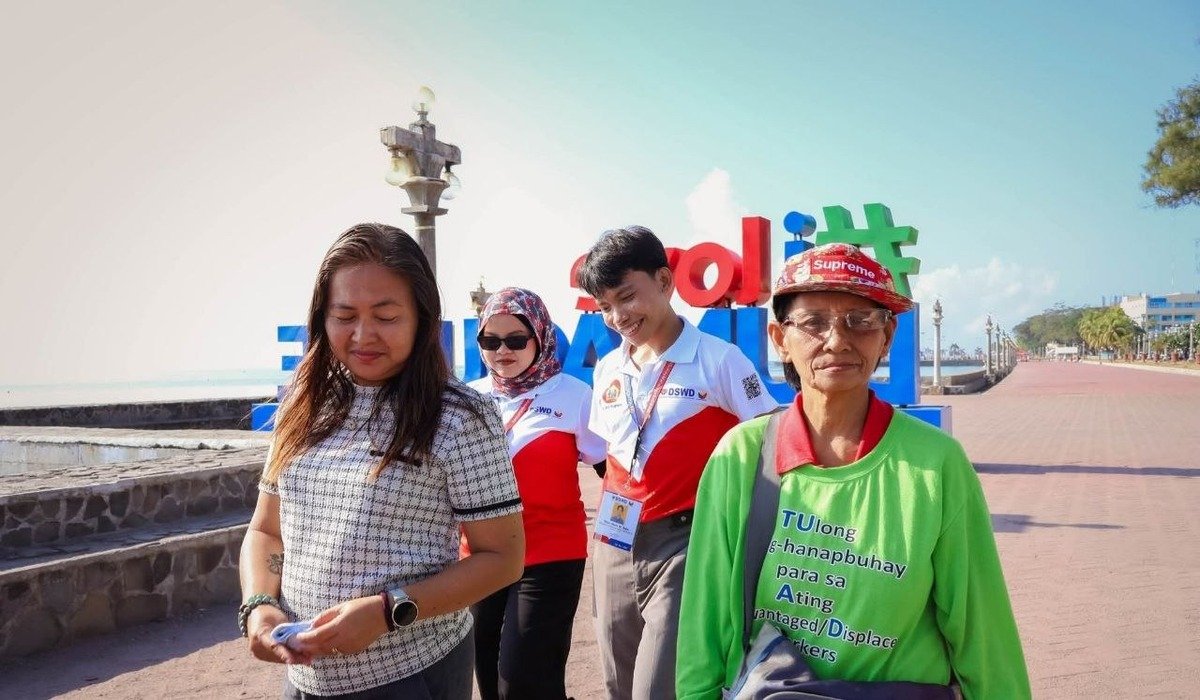
Photo courtesy of DSWD Negros Island Region.
Source: Breaking News Negros Oriental (breakingnewsnegrosoriental.com)