
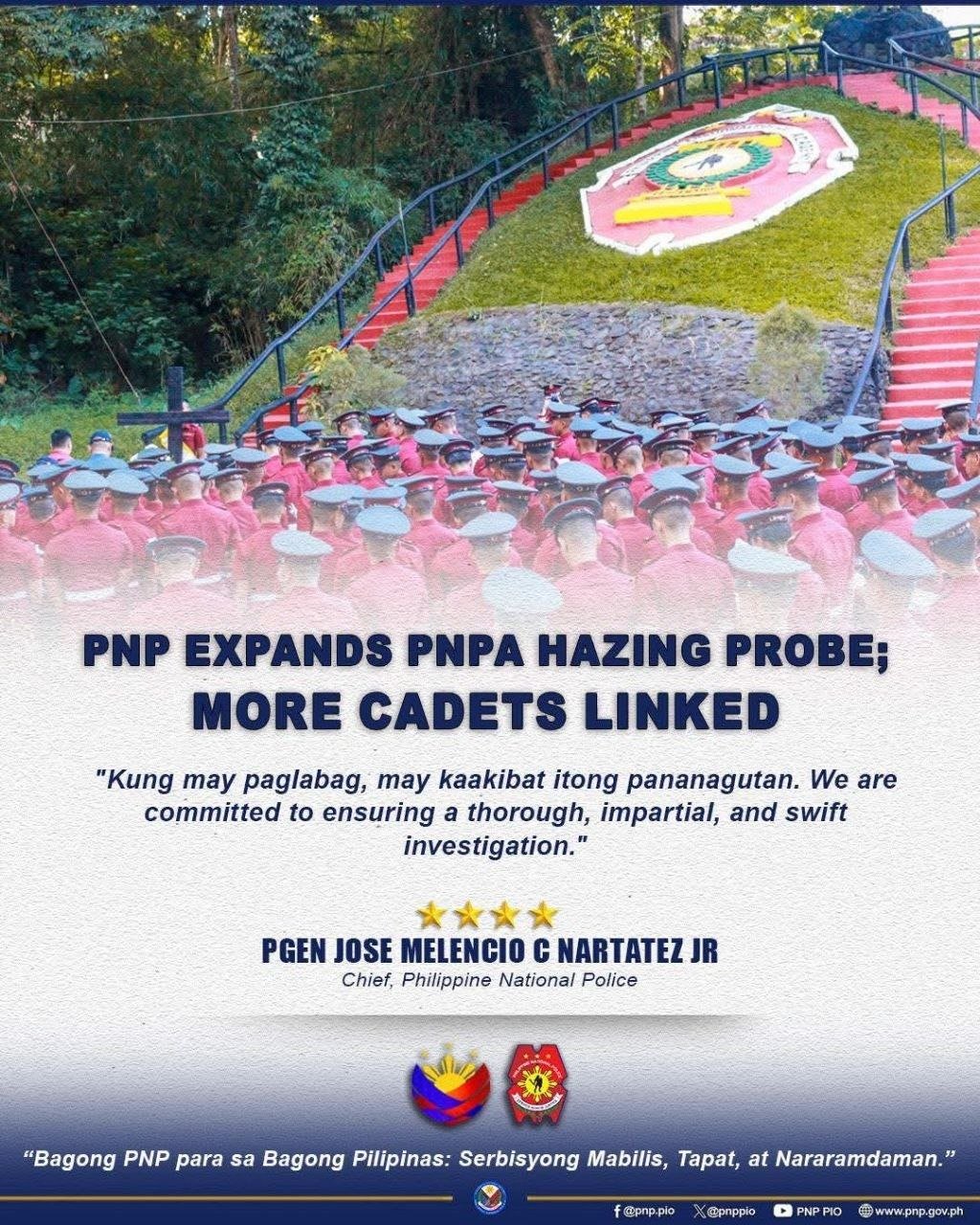
Intensive investigations conducted by the Philippine National Police have resulted in charges against four additional cadets in connection with an alleged hazing incident at the Philippine National Police Academy, expanding the scope of suspects from three to seven individuals.
The broadened investigation stems from evidence collected during a concentrated three-day inquiry period spanning April 10-12, 2026, which employed multiple investigative techniques including witness interviews, physical evidence collection, and comprehensive facility inspections.
Initial arrests involved three cadets, but subsequent investigative work revealed the direct involvement of four more individuals in the hazing incident, according to official statements from the PNP Public Information Office released Monday, April 13, 2026.
Comprehensive Evidence Collection Procedures
Investigators employed a multi-faceted approach to gather evidence and verify testimonies throughout the inquiry process. All relevant personnel and cadets received subpoenas requiring their appearance before investigative panels for formal questioning sessions.
Coordination between various investigative units occurred through joint case conferences designed to consolidate findings and ensure comprehensive coverage of all evidence. Physical inspections of cadet residential facilities were conducted to corroborate witness statements and identify potential physical evidence.
The systematic methodology reflects the organization’s emphasis on building robust cases supported by multiple forms of evidence. Officials indicated that evidence compilation continues as investigators work to develop prosecution-ready materials that meet legal standards.
Zero Tolerance Policy Reinforced by Leadership
PNP Chief Police General Jose Melencio C. Nartatez Jr. issued strong condemnations of hazing practices, declaring the organization’s refusal to tolerate such behavior. “Hindi natin kukunsintihin ang ganitong gawain. Kung may paglabag, may kaakibat itong pananagutan. Ang hazing ay walang lugar sa PNP,” the chief stated emphatically.
The police leadership emphasized their dedication to conducting thorough, impartial, and expeditious investigations into all allegations of abuse. “We are committed to ensuring a thorough, impartial, and swift investigation,” Nartatez declared, highlighting institutional accountability standards.
All academy trainees and personnel received direct reminders about adhering to professional standards and maintaining respectful conduct toward colleagues. These directives form part of broader efforts to address institutional culture within police training environments.
Educational Philosophy Versus Abusive Practices
Leadership articulated clear distinctions between legitimate training methodologies and harmful practices that constitute abuse. “Ang layunin ng pagsasanay ay maghubog ng kakayahan at integridad, hindi takot o pananakit,” Nartatez explained, emphasizing capability and integrity development over fear-based approaches.
Strong warnings were issued regarding consequences for engaging in abusive conduct: “Maging malinaw ito sa lahat—anumang uri ng pang-aabuso ay mahigpit na ipagbabawal at papatawan ng kaukulang aksyon.” These statements establish clear policy boundaries regarding acceptable training practices.
The focus on constructive skill development rather than intimidation tactics suggests potential modifications to existing PNPA training protocols. This philosophical shift represents ongoing modernization efforts within police education systems.
Dual-Track Accountability Framework
Individuals determined to be responsible for hazing activities will face both administrative sanctions and criminal prosecution, ensuring comprehensive consequences through multiple legal channels.
Internal administrative proceedings may result in various disciplinary actions including suspension, rank reduction, or termination from police service. These internal measures operate independently of criminal court proceedings that could impose imprisonment and monetary penalties under existing anti-hazing legislation.
Public cooperation in identifying and reporting similar incidents receives strong encouragement from authorities. This community engagement strategy creates additional oversight mechanisms supplementing internal monitoring systems already in place.
Presidential Support and Systematic Reform Integration
The investigation operates within the PNP Focused Agenda framework, particularly through the Integrity Monitoring component established to enhance accountability and discipline throughout police organizations. This structured approach demonstrates institutional dedication to addressing conduct violations systematically.
High-level political support from President Ferdinand R. Marcos Jr. provides additional authority for comprehensive police reform initiatives, according to official statements. Presidential backing strengthens institutional capacity for implementing meaningful changes.
Anti-hazing efforts align with broader professionalism and rule of law principles that guide current police modernization programs. These initiatives extend beyond individual incident responses to address underlying cultural challenges within the organization.
Long-term Monitoring and Cultural Transformation
Continued reforms and enhanced monitoring within all training facilities represent ongoing commitments rather than temporary responses to isolated incidents, officials emphasized. Systematic changes aim to prevent future violations through comprehensive institutional culture modification.
The organization’s “Bagong PNP para sa Bagong Pilipinas: Serbisyong Mabilis, Tapat at Nararamdaman” initiative encompasses broader service delivery improvements emphasizing speed, integrity, and responsiveness to public needs.
Enhanced oversight mechanisms for training programs, improved reporting systems for abuse allegations, and strengthened disciplinary procedures form core components of future monitoring frameworks. These structural modifications target prevention of hazing incidents through proactive institutional transformation rather than reactive enforcement alone.
The willingness to expand investigations even when additional personnel become implicated demonstrates institutional commitment to comprehensive accountability regardless of case complexity or scope, signaling serious dedication to eliminating hazing practices from police training environments.