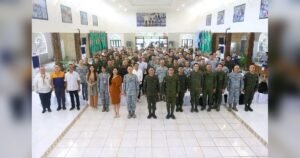
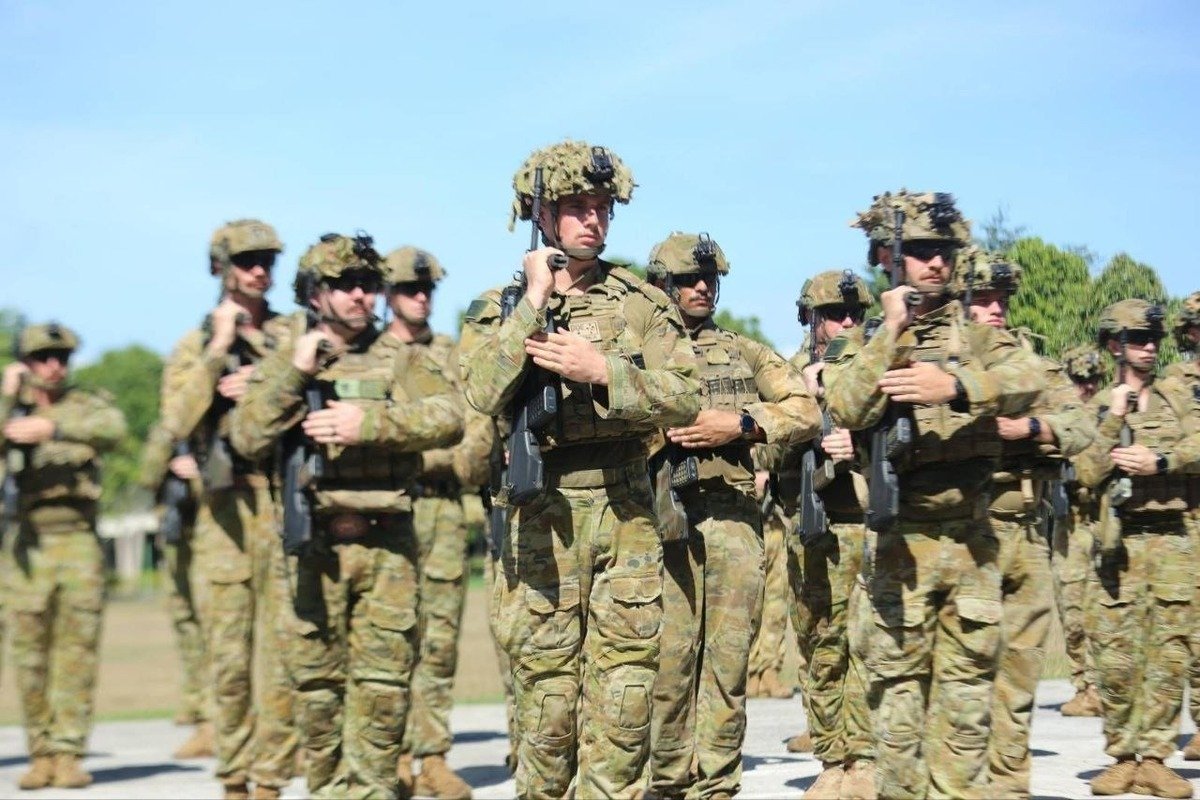
More than 400 military personnel from the Philippines and Australia assembled at Camp Elias Angeles in San Jose, Pili, Camarines Sur last Sunday, May 25, 2026, to formally launch the latest edition of their bilateral ground-force exercise — an event that carries added significance this year as two additional Philippine military branches participated for the very first time in the exercise’s history.
The opening ceremony for the Philippines-Australia Army-to-Army Exercise (PAAAE), officially designated Kasangga 2026-1, was held at the 9th Infantry Division Grandstand inside the camp. Colonel Louie G. Dema-ala, Chief Public Affairs of the Philippine Army, announced the formal commencement in a statement released on May 25, 2026.
What “Kasangga” Means and Why It Matters
The exercise takes its name from the Filipino word kasangga, which translates roughly to “ally” or “partner” — a fitting label for what has grown into a structured, institutionalized training program between two nations with deepening defense ties in the Indo-Pacific. According to the Philippine Army, the bilateral exercise is conducted in partnership between the Philippine Army’s 9th Infantry “Spear” Division and the Australian Army (AUSA).
The exercise is not a recent arrangement. Its roots in the Bicol Region trace back to November 2024, when the first Kasangga was conducted there as a pilot activity. The Philippine Army has stated that the success of that initial iteration directly led to a second run — now labeled Kasangga 2026-1 — in the same regional setting, with the 9th Infantry Division again serving as host.
The “2026-1” designation is noteworthy in itself. It implies that at least one more iteration may be scheduled within the calendar year, consistent with the Philippine Army’s publicly stated goal of regularizing and deepening its bilateral training programs with key partner nations.
Participants: Four Philippine Branches, One Australian Contingent
According to the Philippine Army’s public affairs office, a total of 278 Philippine Army soldiers are taking part in Kasangga 2026-1. These personnel are drawn from several units under the 9th Infantry Division, including the 83rd Infantry Battalion, the 9th Division Training School (9DTS), the 565th Engineer Construction Battalion, the 9th Field Artillery Battalion, and the 21st Cavalry Company.
The Australian Army contributed 86 personnel to the exercise, bringing the combined two-army total to 364 troops. However, the overall headcount climbs well past 400 when accounting for the historic participation of two additional Philippine military services.
The Philippine Air Force deployed 18 personnel, while the Philippine Navy sent 22 — marking the first time either branch has participated in a Kasangga exercise. The Philippine Army’s announcement described this expansion as a significant development, signaling a shift toward a more joint and comprehensive approach to bilateral military training between Manila and Canberra.
Training Disciplines: From Jungle Warfare to Medical Operations
The month-long exercise covers a wide range of military training disciplines. According to the Philippine Army, activities under Kasangga 2026-1 include intelligence operations, movement and maneuver, fires support, civil-military operations, sustainment, medical operations, jungle warfare, and force protection.
The breadth of these activities reflects the exercise’s dual purpose: building individual and unit-level competencies while also developing the interoperability frameworks needed for combined operations. The Philippine Army noted that the training scenarios are specifically designed to challenge participants and deepen their mutual understanding of each other’s tactics, techniques, and procedures (TTPs).
The inclusion of jungle warfare, combined arms maneuver, and fires support training is particularly telling. These disciplines are more closely associated with conventional military operations than with counterinsurgency — a deliberate alignment with the Philippine Army’s broader institutional priorities.
Kasangga and the Army’s External Security Pivot
The Philippine Army’s public affairs statement explicitly linked Kasangga 2026-1 to the institution’s ongoing strategic reorientation toward External Security Operations (ESO). This pivot moves the Army’s primary focus away from internal security missions — historically centered on counterinsurgency — and toward conventional, territorial, and external defense responsibilities.
Bilateral training exercises such as Kasangga serve as practical instruments for this transition, the Army said. They provide opportunities to develop not only combat skills but also command and control capabilities and the doctrinal alignment needed when operating alongside partner forces. The strengthening of interoperability between Philippine and Australian troops is cited as a central training objective of the month-long exercise.
The 9th Infantry “Spear” Division, whose area of responsibility covers the Bicol Region, serves as the primary Philippine coordinator and host unit for the exercise’s ground-level activities. Its headquarters at Camp Elias Angeles in Camarines Sur provides the main venue and administrative hub for Kasangga operations throughout the exercise period.
A Growing Defense Partnership Between Manila and Canberra
Kasangga is one of several bilateral military engagements conducted annually between the Philippines and Australia. The two countries have been building defense cooperation across multiple domains, including maritime security, humanitarian assistance and disaster response (HADR), and conventional military training.
The formal Philippines-Australia Army-to-Army Exercise structure represents the institutionalized dimension of that partnership — moving the relationship beyond occasional, informal engagements toward a regularized, programmatic framework. The expansion of Kasangga in its 2026-1 iteration to include Air Force and Navy personnel is widely seen as a step toward an even more integrated bilateral training architecture in future years.
Colonel Dema-ala’s May 25 announcement did not specify an end date for the exercise. Given the opening date, however, the month-long program is expected to conclude sometime within June 2026. The 9th Division Public Affairs Office (9DPAO) is expected to release further updates as training activities unfold across the exercise period.
No casualties or incidents were reported in connection with the opening of the exercise, and no additional statements from Australian defense officials were included in the Philippine Army’s announcement.
Originally reported by: Philippine Army Public Affairs Office / 9th Division Public Affairs Office (9DPAO)