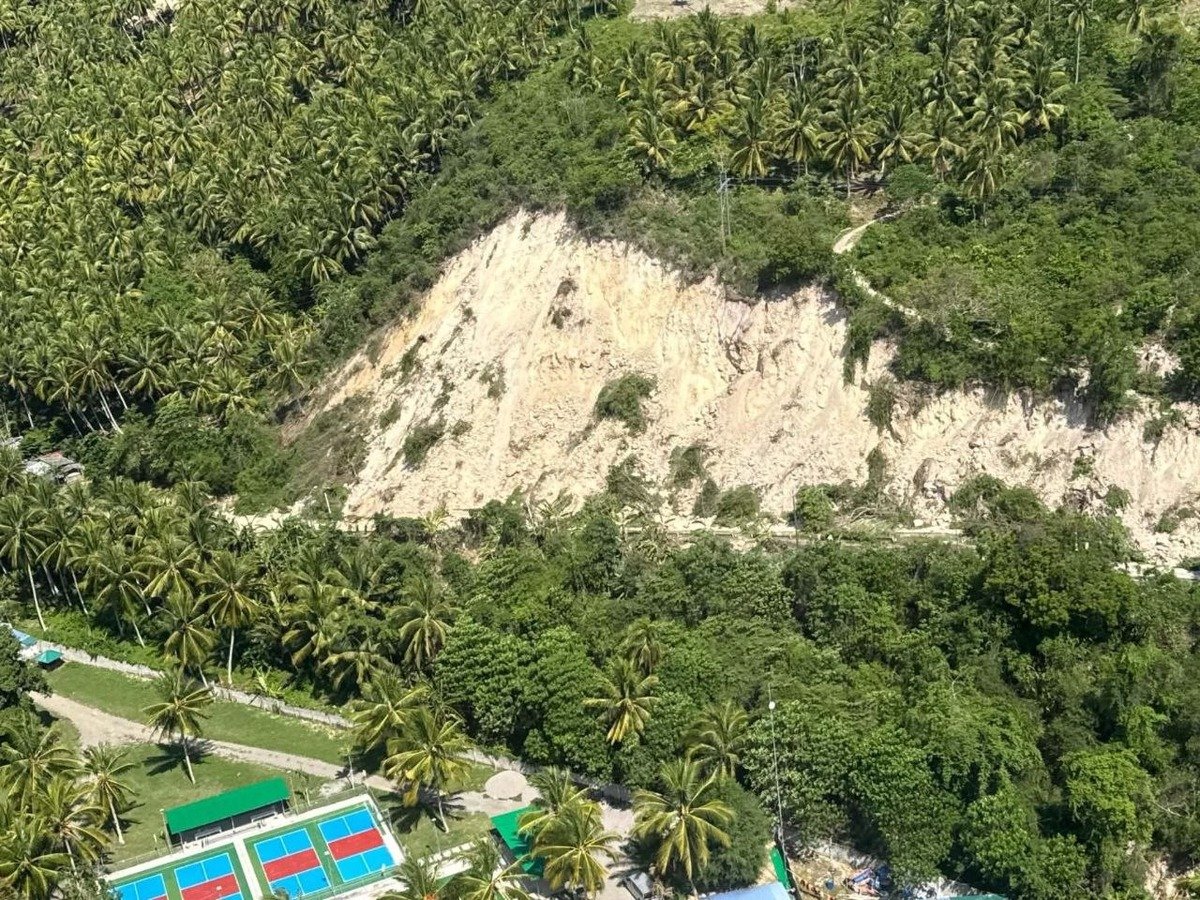
Hours after a magnitude 7.8 earthquake shook Sarangani Province and surrounding communities in Mindanao on June 8, 2026, the Philippine Air Force moved quickly — putting both rotary and fixed-wing aircraft into service as part of an immediate humanitarian assistance and disaster response effort. The mobilization was confirmed through an official statement released under the authority of Colonel Ma Christina O. Basco PAF (GSC), Chief of the Air Force Public Affairs Office.
Two Aircraft Form the Core of the Initial Air Response
According to the PAF public affairs statement, the initial deployment consisted of two aircraft: an S-70i Black Hawk helicopter and a C-295 fixed-wing transport. Each platform was assigned a distinct but complementary mission — one focused on reconnaissance over the disaster zone, and the other on rapidly ferrying senior government officials to the nearest major operational hub.
The choice of these two specific platforms reflects the PAF’s established doctrine for early-phase disaster response, where speed, versatility, and inter-agency coordination take priority. The C-295, in particular, is widely used by the PAF for both troop and cargo transport missions and is well-suited for rapidly projecting personnel across long distances within a single operational day.
Black Hawk Tasked With Rapid Damage Assessment Over Sarangani
The S-70i Black Hawk was dispatched from Tactical Operations Group 11, located in Davao City, with personnel from the Office of Civil Defense (OCD) onboard. Its primary mission was to conduct a Rapid Damage Assessment and Needs Analysis, commonly referred to as RDANA — a standard early-response protocol used to generate an accurate and timely picture of disaster conditions on the ground.
Aerial reconnaissance takes on heightened importance in the immediate wake of a major seismic event. Ground-level access to affected communities is frequently disrupted by landslides, collapsed bridges, damaged road surfaces, and ground fissures — all of which can delay or entirely block conventional rescue and relief teams. Flying above these obstacles allows responders to identify the most critically affected areas, prioritize zones for ground operations, and make informed decisions about where limited resources should be directed first.
The OCD, which functions as the operational arm of the National Disaster Risk Reduction and Management Council (NDRRMC), plays a central coordinating role in disasters of this scale. The inclusion of OCD personnel aboard the Black Hawk positioned the agency to conduct real-time assessments that would directly shape the national government’s relief priorities in the critical first hours following the earthquake, the PAF statement indicated.
C-295 Flies National Agency Officials Directly to Davao City
At the same time, the C-295 was mobilized from Colonel Jesus Villamor Air Base in Pasay City and transported senior representatives from several key national government departments directly to Davao City. Officials onboard represented the Department of National Defense (DND), Department of Health (DOH), Department of Education (DepEd), Department of Social Welfare and Development (DSWD), and the Philippine Army, according to the PAF’s official statement.
The composition of the delegation signals the broad scope of the government’s initial response concerns. DOH representation indicates an early awareness of potential mass casualty situations requiring organized medical intervention. DSWD officials are expected to take charge of mobilizing relief goods, managing temporary shelter arrangements, and delivering social protection services to families displaced by the quake. The presence of DepEd personnel suggests that damage to school buildings and educational infrastructure is already being factored into the overall assessment.
By airlifting these officials to Davao City — the nearest major urban center and logistical hub relative to the affected area — the PAF effectively compressed the coordination timeline, allowing national-level decision-makers to interface directly with local disaster response teams far more quickly than surface transport would have permitted.
Sarangani Province: A Seismically Vulnerable Region
Sarangani Province, situated within the SOCCSKSARGEN region of Mindanao, has a predominantly coastal and agricultural population and lies near several known seismically active fault systems. A magnitude 7.8 earthquake is classified as a major seismic event, capable of producing severe structural damage, triggering coastal tsunami advisories, and setting off secondary hazards such as landslides across wide geographic areas.
The Philippines as a whole sits along the Pacific Ring of Fire and ranks among the most earthquake-prone nations on Earth. Mindanao, in particular, is crossed by multiple significant fault lines, including the Mindanao Fault, and has been struck by destructive earthquakes on several occasions in recent decades. The 2019 Cotabato earthquake series and the devastation caused by Typhoon Yolanda in 2013, while different in nature, both demonstrated the need for flexible and rapidly scalable air response capabilities — lessons that have since been absorbed into the PAF’s operational planning, the statement implied.
As of the PAF’s June 8, 2026 release, official figures on casualties, the number of displaced persons, and the total extent of infrastructure damage had not yet been formally established. The air force noted that further situational reports from the OCD and other concerned agencies were expected as reconnaissance data from the RDANA mission was compiled and analyzed.
Unified Command Framework Guides Overall Operations
The PAF stated that all HADR missions being conducted are operating within the framework of Unified Command — a standard Philippine military protocol that consolidates command and control across military branches and civilian government agencies under a single integrated operational structure during large-scale disaster events.
According to the PAF public affairs statement authorized by Colonel Basco, the air force is working in close coordination with Unified Command operations, relevant national government agencies, and local authorities in the affected areas. This whole-of-government approach is designed to prevent duplication of effort and ensure that resources are channeled efficiently to where they are most urgently needed.
The PAF further indicated that the current deployment of the Black Hawk and C-295 constitutes an initial surge response, and that additional air assets and support resources stand ready to be committed as evolving damage assessments and ground-team requirements dictate. The statement emphasized the institution’s readiness to sustain HADR operations for as long as conditions require.
PAF Reaffirms Long-Term Commitment to Disaster Support Mission
In the formal statement released through official PAF channels on June 8, 2026, the air force made clear that its involvement would not be limited to the immediate response phase. The PAF expressed its commitment to maintaining available HADR capabilities in support of ongoing Unified Command operations, and confirmed that inter-agency coordination with both national departments and local authorities would remain active throughout the duration of the response.
The statement was accompanied by seven media files distributed via the PAF’s official public affairs channels, providing documentation of the deployment for the public record.
The speed and scope of the PAF’s initial mobilization — multiple aircraft, cross-agency personnel, and a clearly defined reconnaissance-and-coordination mission structure — reflects the institutional growth of the Philippine government’s disaster response capacity, refined over years of confronting the country’s persistent exposure to seismic and weather-related emergencies. The full picture of damage, displacement, and required assistance in Sarangani Province and the wider affected areas of Mindanao is expected to become clearer as RDANA findings and subsequent field reports are formally released by the NDRRMC and its member agencies.
Originally reported by: Philippine Air Force Public Affairs Office / wire reports
Related stories