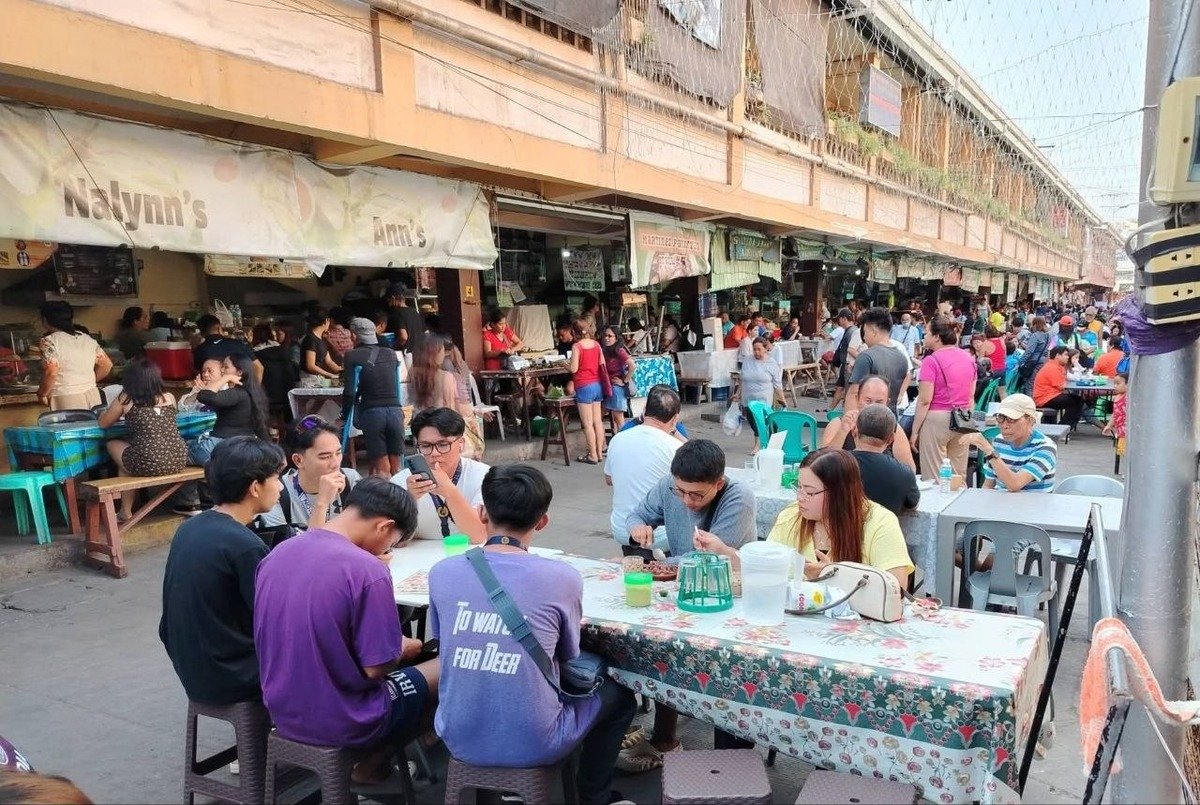
A proposed four-storey public market in Barangay Poblacion 3, Dumaguete City, carries a price tag of ₱1.948 billion — a figure that, when stacked against publicly documented loan-financed public market projects by other local government units across the Philippines, is substantially higher than anything comparable found in available records backed by the Development Bank of the Philippines, Land Bank of the Philippines, or Bangko Sentral ng Pilipinas Monetary Board opinions.
The market facility is one component of a broader ₱2.185-billion borrowing package being pursued by the city government. The remainder of the package — approximately ₱237 million — would fund an expansion of City Hall and a parking facility. Unlike public-private partnership arrangements common in larger cities, the entire ₱1.948-billion market component is structured as a direct LGU loan, meaning repayment obligations would fall entirely on Dumaguete City and its public revenues.
Measuring Dumaguete Against Other LGU-Financed Public Markets
When compared against reported LGU borrowings for public market construction in other Philippine cities and municipalities, the Dumaguete figure occupies a league of its own among purely loan-financed projects.
Bacolod City allocated ₱525 million for its Burgos Public Market as part of a larger ₱4.4-billion DBP-approved credit facility. The Burgos Market allocation was eventually opposed by vendors, and the funds were later redirected toward other city projects, including the Legislative Building, Old City Hall, the City Health Complex, and a tree park.
Tacurong City in Sultan Kudarat entered into a ₱500-million DBP term loan, but the facility covered a broad range of infrastructure — public terminals, public markets, solar streetlights, computerization systems, and heavy equipment procurement — making it a multi-purpose borrowing rather than a market-specific loan.
Mandaue City in Cebu secured ₱400 million from DBP specifically for a new public market following the 2013 earthquake. Also in Cebu, the municipality of Moalboal negotiated a ₱400-million Land Bank loan for a public market with 91 stalls and more than 2,500 square meters of leasable floor area. Talisay City likewise obtained a combined DBP and Land Bank loan offer of ₱387 million for the four-storey Tabunok Public Market.
The Gap in Numbers: Four to Five Times Higher
The arithmetic reveals a striking disparity. Dumaguete’s proposed ₱1.948-billion market is approximately 3.7 times the ₱525-million Burgos Market allocation in Bacolod — the next highest publicly reported comparable figure. Against the ₱500-million Tacurong package — which covered multiple infrastructure types, not just a market — the Dumaguete figure is about 3.9 times larger.
Compared to the ₱400-million-class projects in Mandaue and Moalboal, Dumaguete’s proposal is nearly 4.9 times greater. Most pointed is the comparison with Talisay City’s Tabunok Public Market: also a four-storey structure funded through LGU borrowing, it came in at ₱387 million — meaning Dumaguete’s proposal is approximately five times the cost of a structurally similar project.
In absolute terms, the gap between Dumaguete’s figure and the nearest comparable — Bacolod’s Burgos allocation — amounts to roughly ₱1.423 billion.
What the Numbers Cannot Automatically Prove
A side-by-side comparison of headline loan figures does not, by itself, establish that the Dumaguete project is overpriced. Public market construction costs are shaped by a wide range of technical variables: total floor area and stall count, structural and foundation requirements, mechanical and electrical systems, fire safety compliance, wastewater management, parking and traffic circulation, vendor relocation costs during construction, contingency provisions, and prevailing construction price indices at the time of design.
The comparison projects also differ in their approval dates and local cost environments. A ₱400-million market approved several years ago would naturally reflect lower construction cost indices than a project designed today, given the significant rise in construction input prices across the Philippines in recent years.
The most technically valid comparison — cost per square meter — cannot be established from available public information, because detailed floor area data and itemized cost breakdowns for each project have not been uniformly disclosed in public records.
Larger Markets Exist — But Built Differently
In absolute value, some Philippine public market redevelopment projects exceed ₱1.948 billion — but they operate under fundamentally different financial structures.
In January 2021, Cebu City executed a ₱5.5-billion joint venture agreement with Megawide Construction Corp. through its subsidiary Cebu2World Development Inc. for the modernization of the Carbon Public Market complex. In August 2022, Iloilo City entered a 25-year lease arrangement with SM Prime Holdings Inc. for the redevelopment of its Central Market and Terminal Market, with close to ₱3 billion invested across both facilities — markets that soft-opened in November 2025 at no direct cost to Iloilo City. In February 2026, General Santos City signed a ₱2.33-billion public-private partnership agreement with Robinsons Land Corp. for its central public market, with Robinsons financing, constructing, and managing the facility over a 25-year lease before turning it over to the city.
In each of these cases, the private sector partner absorbs the upfront capital expenditure. The city government does not carry direct debt service of the same character as in a conventional LGU loan. Dumaguete’s proposed arrangement is different: the ₱1.948 billion would be borrowed directly by the city government and repaid from public revenues over the loan’s term.
Why Loan Financing Raises the Scrutiny Threshold
The distinction in financing model is not a technical footnote — it is the core of why Dumaguete’s proposed market cost warrants close examination. Because the city government would be the borrower of record, the full debt service obligation would be borne by Dumaguete and financed through its public income streams over the repayment period.
This structure means the question is not merely whether Dumaguete should have a modern public market. The more precise question is whether the ₱1.948-billion loan-financed cost is properly justified by the facility’s design specifications, total floor area, projected stall occupancy, and revenue generation capacity — and whether the city has made the technical and financial documentation behind that figure available for public review before the borrowing receives final approval.
At roughly four to five times the cost of comparable LGU-loan-financed public market projects — including a similarly four-storey facility in Talisay City at ₱387 million — the proposed cost requires a correspondingly higher standard of public justification.
What Transparency Requires Before Final Approval
Standard fiscal accountability expectations for Philippine LGU borrowings, particularly at this scale, would call for the public release of several key documents before the loan package is finalized. These include a detailed project cost breakdown with line items, a cost-per-square-meter analysis, the project’s feasibility study, projected market income and stall occupancy rates, rental and fee assumptions used in revenue forecasting, the debt service schedule and its repayment sources, and documentation of whether phased construction or alternative financing models — including PPP arrangements — were evaluated and why they were set aside.
For Dumaguete City residents, market vendors, and other stakeholders, the fundamental issue surfaced by this cost comparison is one of public accountability: whether, before a nearly ₱2-billion loan obligation is locked in, the city government will provide the level of financial and technical disclosure that a commitment of this magnitude demands from any local government in the Philippines.
The city government has described the proposed facility as a four-storey public market in Barangay Poblacion 3. Beyond that basic description, the public documentation supporting the ₱1.948-billion figure remains the central point of scrutiny as the borrowing package moves toward final approval.