Ground forces from the Philippines and Australia have stepped up their ongoing bilateral military exercise this week, carrying out a broad slate of combat training activities at several installations across Camarines Sur as part of the Philippines-Australia Army-to-Army Exercise (PAAAE) formally designated KASANGGA 26-01. The intensification of drills was confirmed through an official statement issued on Thursday, June 4, 2026, by Colonel Louie G. Dema-ala, Chief Public Affairs of the Philippine Army.
What “Kasangga” Means — and Why It Matters
The exercise takes its name from a Filipino word that translates roughly to “ally” or “trusted companion,” a deliberate choice that reflects the nature of the defense relationship it is meant to strengthen. Far from being a routine alliance formality, the Kasangga series is designed as a recurring, structured engagement between the two armies at the unit level — building the kind of practical, field-level familiarity that formal policy agreements alone cannot produce.
The Philippine Army’s public affairs office described KASANGGA 26-01 as a key instrument in advancing sustained force-on-force interoperability between the Philippine Army and the Australian Army, with exercises structured to progressively build on skills and procedures developed in prior iterations of the series.
Live-Fire Training at Magtuto Firing Range in Naga City
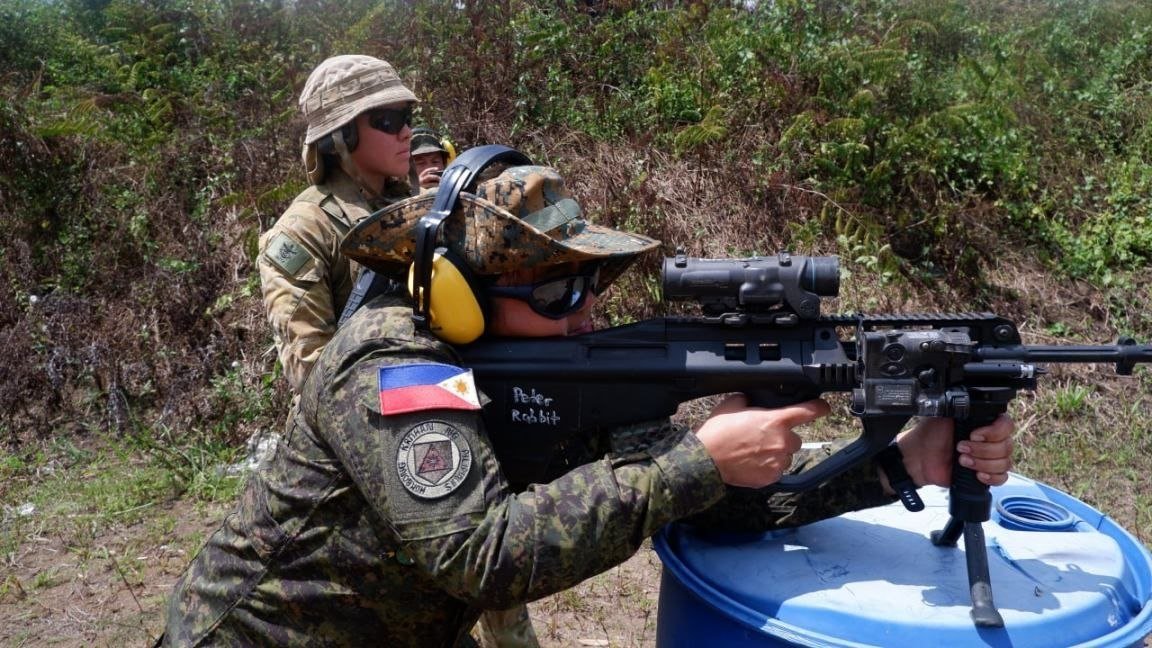
One of the primary venues for the exercise is the Magtuto Firing Range in Barangay Carolina, Naga City, Camarines Sur. According to the Philippine Army statement attributed to Colonel Dema-ala, concurrent training activities at this site included Armor Operations Training and Advanced Marksmanship Training — drills aimed at synchronizing each army’s tactical proficiency and familiarizing personnel with the platforms, weapons systems, and operating procedures of their counterpart force.
The live-fire components of the exercise drew heavily on this facility, with both Philippine and Australian military personnel undergoing assessments of their weapons competencies at both the individual and unit levels. The Magtuto Firing Range effectively served as the central hub for the exercise’s kinetic training elements during this phase.
Explosives, Jungle Warfare, and Digital Battlefield Systems
Demolitions Range Training was among the standout activities conducted during this phase of the exercise. The drills focused on reinforcing safe handling, proper placement, and controlled detonation of explosive charges — skills directly applicable to breaching operations and obstacle clearance in combined arms assaults.
Beyond live-fire and demolitions work, the full training program for KASANGGA 26-01 covers a wide spectrum of warfighting disciplines. As listed in the Philippine Army’s official statement, the exercise curriculum includes:
- Jungle Operations Practical Exercises
- Map Theory sessions
- Command and Control Communications Exercises (COMEX) using Blue Force Tracking systems
- Mortar Gunnery and Weapons Training
- Force Training Unit activities
- Tactical Combat Casualty Care (TC3)
The integration of Blue Force Tracking technology into the COMEX component is a notable feature of this year’s exercise. The system allows field commanders to monitor the real-time positions of friendly units on a digital display, reducing the risk of fratricidal incidents and sharpening overall situational awareness — capabilities that are critical in modern combined operations involving forces from different national militaries.
Tactical Combat Casualty Care, meanwhile, rounds out the medical readiness dimension of the program. TC3 training ensures that combat personnel from both armies can deliver immediate, potentially life-saving treatment to wounded soldiers in the field — a skill set that has become a standard inclusion in contemporary multinational military exercises.
Strategic Backdrop: Philippine Army’s Shift Toward External Defense
KASANGGA 26-01 carries weight beyond its individual training components. The Philippine Army’s public affairs office stated that the bilateral exercise formally supports the Army’s ongoing transition toward External Security Operations (ESO) — a doctrinal realignment that signals a broader shift in the institution’s mission priorities away from internal armed conflict and toward conventional, territorial defense postures.
This evolution in doctrine reflects the Philippine military’s growing focus on state-level external threats and the security challenges of the wider Indo-Pacific environment. Joint exercises with capable partners such as the Australian Army provide concrete platforms for developing the combined arms proficiency and interoperability demanded by this expanded operational mandate, according to the Philippine Army.
Regular participation in exercises like Kasangga allows the two armies to align their respective tactics, techniques, and procedures through repeated structured engagement — a process that experts and military planners generally regard as more effective than isolated, one-time training events.
Philippines and Australia: A Long-Standing Defense Partnership
The PAAAE Kasangga series sits within a larger framework of defense cooperation between the Philippines and Australia, two countries with long-standing bilateral security ties in the Indo-Pacific. Australia is recognized as one of the Philippines’ most active defense partners in the region, with collaboration extending across joint exercises, capability-building programs, and humanitarian assistance and disaster response operations.
The army-to-army format of the Kasangga exercise is particularly valued because it fosters interaction below the strategic and policy level — at the unit and soldier tier where practical interoperability is actually built and tested. Each successive iteration of the series is intended to build incrementally on the procedures and familiarity established in previous exercises, creating a continuity of engagement that deepens bilateral military relations over time.
9th Infantry Division Hosts and Documents the Exercise
The Philippine Army’s 9th Infantry Division (9ID), which holds area of operations responsibility over Camarines Sur and the wider Bicol Region, is providing hosting support and documentation for KASANGGA 26-01. The 9th Division Public Affairs Office (9DPAO) is credited with accompanying photography released alongside Colonel Dema-ala’s official statement.
Camarines Sur’s inclusion as an exercise venue is consistent with its role as a regularly utilized training ground for ground forces activities in the Bicol Region. The province falls squarely within the 9ID’s operational jurisdiction, making it a natural and logistically practical host for exercises of this scale.
As of the date of Colonel Dema-ala’s June 4, 2026 statement, the Philippine Army had not announced a specific end date for the exercise. Additional updates are expected from the Army’s public affairs channels as KASANGGA 26-01 moves through its remaining training phases.
Originally reported by: Breaking News Negros Oriental / Philippine Army Public Affairs Office
Related stories