
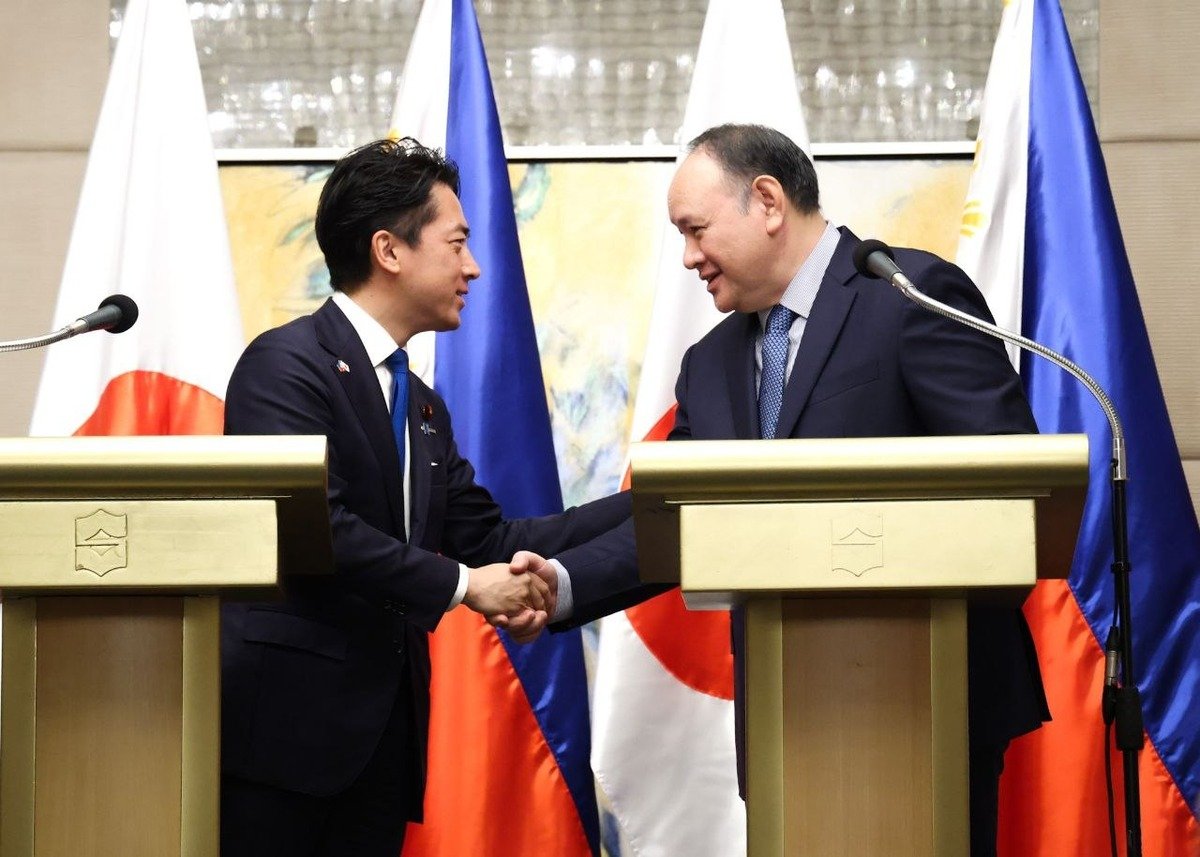
A high-level defense summit between the Philippines and Japan held in Makati City on May 5, 2026 produced significant strides in military cooperation, with both nations pledging to convert shared strategic goals into concrete operational outcomes amid rising tensions across key Indo-Pacific waterways.
Secretary of National Defense Gilberto C. Teodoro, Jr. represented the Philippine side, while Japan’s Minister of Defense Koizumi Shinjiro led the Japanese delegation at what officials described as a landmark Defense Ministerial Meeting. A formal statement issued on May 6, 2026 by Assistant Secretary Arsenio R. Andolong confirmed the scope of discussions, which centered on joint operational readiness and the evolving security environment in the region.
Landmark Bilateral Agreements Move Forward
At the heart of the discussions was the implementation progress of two foundational defense pacts: the Philippines-Japan Reciprocal Access Agreement (RAA) and the Acquisition and Cross-Servicing Agreement (ACSA), the latter of which was recently signed. Together, these agreements form the bedrock of a deepening military relationship between Manila and Tokyo.
The RAA allows armed forces from both countries to operate within each other’s territories with greater ease, particularly during joint military exercises and disaster response missions. The ACSA, meanwhile, establishes a framework for the two militaries to share logistics, supplies, equipment, and services during cooperative engagements.
Secretary Teodoro underscored that the RAA carries a significance that goes beyond standard military-to-military arrangements. In his remarks during the meeting, Teodoro stated that it “should not be taken as a pure defense-to-defense or a military-to-military agreement, but as an expression of the highest form of trust and confidence, and an expression of the highest level of engagement of two countries, because of shared interests and a shared future.”
Japan Broadens Role in Philippine-Led Exercises
One of the more notable developments from the summit was the acknowledgment of Japan’s expanding participation in Exercise Balikatan — the Philippines’ flagship annual military drill historically conducted alongside the United States. Japan’s inclusion signals a meaningful shift toward trilateral security cooperation in the region.
Both defense ministers identified humanitarian assistance and disaster relief (HADR) exercises as key vehicles for building interoperability between their respective armed forces. Regular joint training in HADR scenarios prepares both militaries to respond more efficiently to natural calamities and humanitarian emergencies affecting the broader Asia-Pacific region.
This growing Japanese engagement in Southeast Asian defense activities reflects a broader evolution in Tokyo’s security posture — one that moves incrementally beyond the country’s long-standing pacifist constitutional framework toward a more active role in regional defense partnerships.
South and East China Sea Tensions Drive Cooperation
The two defense ministers expressed shared concern over escalating tensions in both the South China Sea and the East China Sea, where rival territorial claims and military posturing have increasingly tested the rules-based international order. Both sides reaffirmed their commitment to preserving freedom of navigation and peaceful dispute resolution in these critical waterways.
To address these challenges, the ministers agreed on the need to strengthen maritime domain awareness, expand intelligence-sharing mechanisms, and improve operational coordination between their naval and coast guard forces. These bodies of water serve as arteries for a substantial share of global maritime trade, making stability there a concern that extends well beyond the two nations alone.
Practical maritime cooperation between Manila and Tokyo now encompasses joint patrols, shared intelligence assessments, and coordinated incident response — all contributing to a broader regional effort to uphold safe and open sea lanes.
Defense Equipment and Technology Pact Signed
A key concrete outcome of the ministerial meeting was the formal signing of a Statement on the Further Promotion of Defense Equipment and Technology Cooperation. The agreement builds on Japan’s recent policy revisions regarding its Three Principles on the Transfer of Defense Equipment and Technology and associated implementing guidelines.
This development reflects Tokyo’s evolving approach to defense exports — one that increasingly accommodates technology transfers, potential joint defense system development, and collaborative research with trusted security partners. For the Philippines, the agreement opens avenues to benefit from Japanese defense technology as the Armed Forces of the Philippines continues its modernization program.
Both sides committed to strengthening institutional mechanisms and introducing new initiatives designed to bolster regional deterrence. Officials framed this technological cooperation as a building block for a wider regional security architecture that serves the interests of multiple Indo-Pacific stakeholders.
From Vision to Operational Reality
A recurring theme throughout the summit was the urgency of translating policy commitments into real-world security outcomes. Secretary Teodoro stressed the need “to make sure that we work very rapidly into translating our shared vision into operational realities, not only bilaterally, but together with our allies.”
This focus on implementation suggests that both governments are aware of the gap that can exist between signed agreements and genuine defense readiness. Steps toward operational concreteness include establishing regular communication channels between military commands, harmonizing procedures for joint operations, and developing rapid-response mechanisms for security contingencies.
The reference to working alongside allies also points to continued coordination with the United States and potentially other regional partners, indicating that the Philippines-Japan relationship is being cultivated not in isolation but as part of a broader web of interlocking security commitments.
Strategic Weight of a Strengthened Alliance
The Makati summit underscores the Philippines’ deliberate strategy of cultivating multiple high-value defense partnerships as part of its broader approach to national security in an increasingly contested Indo-Pacific environment. For Japan, the expanded engagement with the Philippines represents one strand of a wider effort to build more diverse and resilient regional security ties beyond its core alliance with Washington.
Taken together, the agreements, joint exercises, maritime cooperation frameworks, and technology-sharing initiatives that emerged from — or were reaffirmed at — this meeting contribute to an overlapping network of bilateral and multilateral security arrangements. Analysts observe that such layered partnerships tend to reinforce regional stability by raising the costs of unilateral destabilizing actions by any single actor.
The Philippine Department of National Defense, through Assistant Secretary Andolong’s statement, described the meeting as a further milestone in what both governments view as a maturing and strategically vital partnership for the long-term peace and stability of the Indo-Pacific region.
Photo credit: Department of National Defense