Following a destructive earthquake that battered communities across Mindanao, the Philippine Army on Tuesday, June 9, 2026, launched an extensive military humanitarian response — deploying an 18-member Urban Search and Rescue (USAR) team to General Santos City while simultaneously positioning hundreds of additional troops and dozens of military vehicles across multiple affected provinces in Regions XII and nearby areas.
USAR Team Dispatched to General Santos City
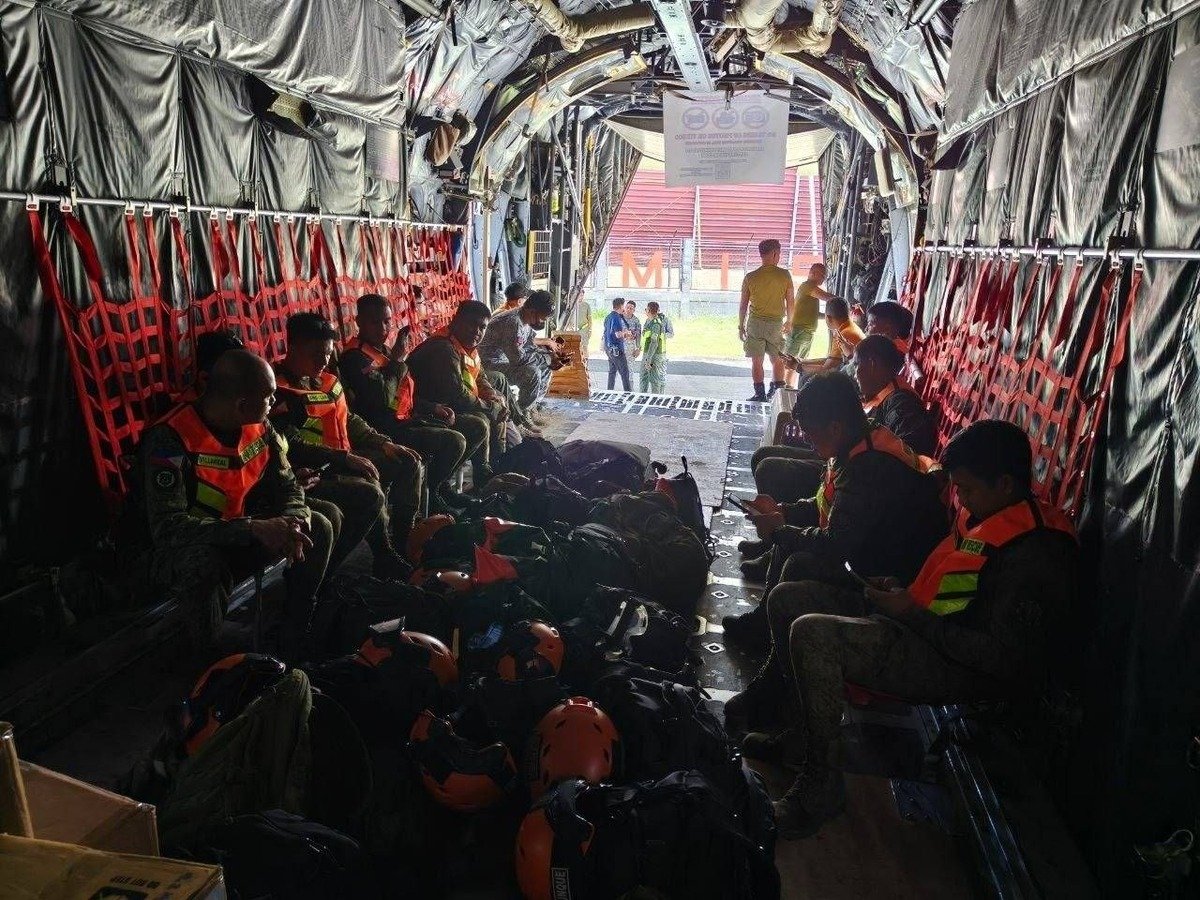
The Philippine Army confirmed that an 18-member USAR team was specifically dispatched to General Santos City, which military officials identified as one of the hardest-hit urban centers following the earthquake and its series of aftershocks. According to Colonel Louie G. Dema-ala, Chief Public Affairs of the Philippine Army, the deployment announcement was issued through an official statement released from Fort Bonifacio in Taguig City.
General Santos City, located in the Soccsksargen region of Region XII, functions as a major economic and urban hub in Mindanao. The concentration of infrastructure damage in a densely populated commercial center like General Santos City elevated its priority in the military’s Humanitarian Assistance and Disaster Response (HADR) operational plan. USAR teams are trained to locate and extract survivors from collapsed or heavily damaged structures — a capability that becomes critical in the aftermath of major seismic events in urban settings.
10th Infantry Division Fields 200 Troops in Multiple Formations
Alongside the specialized USAR unit, the 10th Infantry Division (10ID) deployed roughly 200 personnel to General Santos City, drawn from several subordinate units. Colonel Dema-ala’s statement identified the composition as: one platoon from the 10th Emergency Response Company (10ERC), three platoons belonging to Task Force Gensan, one platoon from the 1002nd Infantry Brigade, and a full company from the 28th Infantry Battalion.
This multi-platoon configuration allows the 10ID to distribute its forces across different sectors and operational priorities within the affected city. The 10th Emergency Response Company, as a dedicated emergency unit, is expected to take the lead in technical rescue missions, while the infantry components handle logistics, civilian evacuation support, and area security.
The Philippine Army further reported that approximately 530 soldiers organized into 53 HADR teams under the 10ID remain on standby alert, according to Colonel Dema-ala’s official statement. These reserve forces can be rapidly surged into the disaster zone should rescue teams locate additional survivors, or if deteriorating conditions in affected communities demand reinforcement.
6th Infantry Division Covers Sarangani and Sultan Kudarat
The 6th Infantry Division (6ID) has extended the military’s reach beyond General Santos City into neighboring provinces. The 6ID deployed 53 personnel drawn from 12 HADR teams, sourced from both the 105th Infantry Battalion and the 37th Infantry Battalion, the Philippine Army said.
These teams are currently operating across several distinct localities: General Santos City itself, the municipalities of Maitum, Kiamba, and Maasim in Sarangani Province, and the municipality of Lebak in Sultan Kudarat Province. The geographic breadth of the 6ID’s deployment highlights how the earthquake’s destructive impact was not confined to the urban core of General Santos City, but extended into coastal and inland communities spread across provincial boundaries.
In addition to its deployed forces, the 6ID maintains a standby contingent of 77 soldiers organized into 9 HADR teams. When combined with the 10ID’s standby strength, the Philippine Army’s total deployment-ready manpower for this disaster response operation surpasses 850 personnel, according to the statement attributed to Colonel Dema-ala.
Military Vehicles Supporting Ground Operations
The Philippine Army’s response extends well beyond personnel. According to the official statement from Colonel Dema-ala, a substantial fleet of military vehicles is currently active in the disaster zone. Vehicles already in the field include eight KM250 trucks, five KM450 trucks, two mobile patrol vehicles, and three motorcycles.
Furthermore, the Army has pre-positioned 56 additional military trucks and one patrol car from both the 6ID and 10ID on standby status, ready for immediate deployment. The KM250 and KM450 are utility trucks widely used by the Armed Forces of the Philippines in both combat and humanitarian logistics, capable of transporting personnel, relief supplies, and equipment through road networks that may have sustained damage from the earthquake.
The sheer volume of vehicles on standby and in the field reflects the logistical scale of conducting simultaneous operations across multiple municipalities in different provinces — a challenge that requires robust transportation infrastructure independent of civilian road conditions.
Coordination With Government Agencies and Local Units
The Philippine Army stressed that its operations are being conducted in close coordination with national government agencies and local government units (LGUs), in accordance with the country’s National Disaster Risk Reduction and Management (NDRRM) framework. Under this framework, LGUs serve as the primary frontline of disaster response, with national agencies and the military providing augmentation and specialized support.
This coordination framework becomes especially complex in a multi-province response, as General Santos City operates as an independent chartered city with its own governance structure, while Sarangani Province and Sultan Kudarat Province each maintain separate provincial DRRM offices. Synchronizing military operations across these distinct administrative jurisdictions requires structured inter-agency communication — an area the Philippine Army’s statement indicated is being actively managed.
Colonel Dema-ala’s statement did not specify the precise magnitude or exact origin date of the triggering earthquake, nor did it name the specific national agencies participating in the joint response. The statement did confirm, however, that the continuing series of aftershocks has compounded infrastructure damage and displacement across the affected region.
525th Combat Engineer Battalion Documents Field Activities
Field photographs documenting the Philippine Army’s on-ground operations were provided by the 525th Combat Engineer Battalion (525CEBn), according to the official statement. Combat engineers bring specialized expertise to disaster response — including structural assessment of damaged buildings, rubble clearing, and the establishment of temporary access routes — making them a valuable asset in the post-earthquake environment.
The visual documentation produced by the 525CEBn serves both accountability and public information purposes, supporting the Philippine Army’s Office of the Chief Public Affairs in communicating the scope of military operations to the public and to coordinating agencies.
Army Sustains Heightened Alert Posture as Aftershocks Persist
With aftershocks continuing to rattle the region, the Philippine Army has maintained an elevated operational posture throughout Mindanao. The military’s posture — combining actively deployed forces with large, rapidly deployable standby contingents — signals that commanders are prepared for the possibility of newly discovered affected communities or a worsening of conditions in areas already under response.
The overall scale of the operation is significant: two full infantry divisions engaged, multiple specialized battalions contributing technical and engineering expertise, more than 60 vehicles either in the field or on standby, and upward of 850 soldiers committed to HADR duties. As Colonel Dema-ala’s statement made clear, the Philippine Army is treating the earthquake disaster in Mindanao as a major operational commitment requiring sustained, organized military presence across the affected region until rescue and relief objectives are met.
Originally reported by: Philippine Army Public Affairs Office / wire reports
Related stories