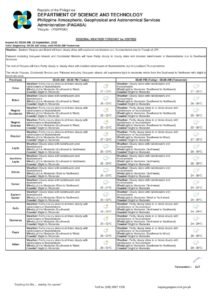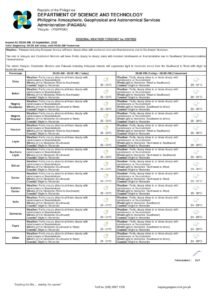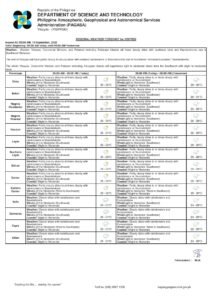
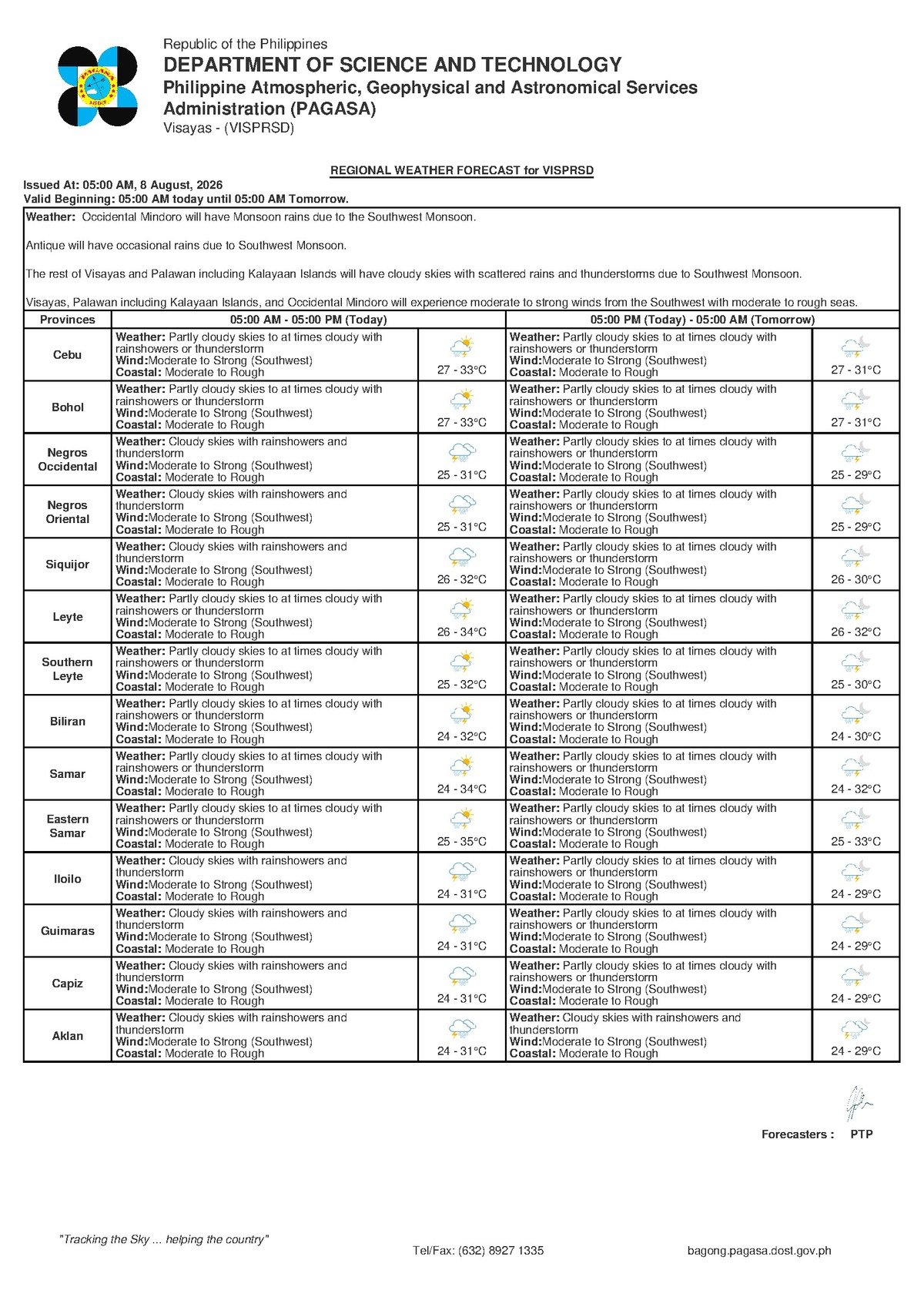
DUMAGUETE CITY, Negros Oriental — A volatile Saturday is shaping up for the Visayas region as the Philippine Atmospheric, Geophysical and Astronomical Services Administration (PAGASA) has placed the area under a forecast of rainshowers, thunderstorms, and moderate to rough coastal waters for August 8, 2026 — posing direct risks for fisherfolk, ferry passengers, and outdoor workers across Negros Oriental and neighbouring island provinces.
The forecast was officially released at 5:00 AM on Saturday, August 8, 2026, PAGASA confirmed, covering the full extent of the Visayas. A separate extended outlook issued by PAGASA at 9:00 AM on August 7, 2026, further reinforced that this unsettled weather pattern is not a one-day event.
What Is Behind the Wet Weather
PAGASA attributed the adverse conditions to the southwest monsoon, known locally as habagat — a seasonal wind system that dominates Philippine weather from June through October. According to the state weather bureau, winds across the Visayas are currently blowing at moderate to strong speeds from the southwest, drawing warm and moisture-heavy air over the region. When this air mass rises and cools rapidly, it produces the persistent cloud buildup, showers, and thunderstorm activity that characterise active habagat episodes.
Afternoon and early evening hours are typically the most hazardous windows during these conditions, as daytime heat builds convective energy that can trigger sudden, intense thunderstorms with lightning. PAGASA noted that skies will be partly cloudy to at times cloudy throughout the day — meaning brief spells of sunshine are possible, but regular interruptions by cloud formation and rainfall should be expected.
Temperature and Conditions Across Negros Oriental
For communities stretching the length of Negros Oriental — including the provincial capital Dumaguete City, the southern city of Bayawan, and the northern cities of Bais and Guihulngan — the day will feel warm and muggy despite the overcast conditions. PAGASA’s forecast places daytime high temperatures at up to 33°C, with overnight lows hovering around 27°C. The combination of high humidity and intermittent rain will make the atmosphere feel heavier than the thermometer alone suggests.
Residents of the island province of Siquijor, connected to Dumaguete by a short but now-choppy sea crossing, face the double challenge of rough coastal waters and thunderstorm risk simultaneously. Similar conditions are forecast by PAGASA across waters surrounding Cebu, Bohol, and the broader Visayas cluster.
Sea Conditions: Understanding the Coastal Warning
PAGASA has rated Visayas coastal waters as moderate to rough for this Saturday. This classification means wave heights are significantly elevated — enough to make small, wooden fishing boats and outrigger bancas difficult or unsafe to operate. The state weather bureau stressed that these conditions fall short of a full storm signal but still represent a serious maritime hazard.
In practical terms:
- Moderate seas can cause smaller vessels to rock severely, increasing the risk of swamping or capsizing — particularly for overloaded or poorly maintained craft.
- Rough seas heighten that danger further, and PAGASA advises even experienced small-boat operators to avoid venturing out under such conditions.
Larger commercial ferries and fast crafts — such as those operated by OceanJet along the Dumaguete–Siquijor and Dumaguete–Cebu routes — are built to handle rougher water, but PAGASA cautioned that operators may still adjust schedules or cancel trips if sea conditions worsen during the day. The state weather bureau advises all passengers to confirm departure status directly with their ferry operator before proceeding to the port.
Specific Guidance for Different Groups
Fisherfolk and Small-Boat Operators
PAGASA’s most urgent advisory targets small-boat fisherfolk operating along the Negros Oriental coastline — from Dumaguete southward to Bayawan and northward through Bais and into the Tañon Strait. The combination of moderate to rough seas and the threat of sudden thunderstorms creates genuinely dangerous conditions for small vessels. PAGASA strongly recommends that these operators remain onshore for the duration of Saturday. Those already at sea are urged to seek the nearest safe harbor and wait for conditions to improve before heading back out.
Ferry Passengers and Inter-Island Travellers
Sea travellers planning crossings on any Visayas inter-island route this Saturday — including the Dumaguete–Siquijor and Dumaguete–Cebu passages — should contact their ferry or fast craft operator before leaving for the terminal. While larger vessels may continue operating under moderate to rough conditions, PAGASA noted that departures can be delayed or cancelled without much warning if seas deteriorate further. Passengers are advised to arrive early, remain patient, and strictly follow crew instructions — particularly when boarding with children or elderly companions.
Farmers and Agricultural Workers
For Negros Oriental’s farming communities — spanning the province’s lowland sugarcane fields to upland vegetable farms above Dumaguete — intermittent showers during the morning can be beneficial, but PAGASA warned that afternoon thunderstorms bring the added hazard of strong, gusty winds capable of damaging standing crops or recently transplanted seedlings. Farmers are advised to secure or cover vulnerable crops before the afternoon convective peak, and to avoid working in open fields whenever lightning activity is present.
Students, Commuters, and Outdoor Workers
Parents with children attending Saturday classes or special school activities should equip them with raincoats or umbrellas and allow extra travel time. PAGASA’s guidance is clear: at the first sound of thunder or sign of heavy rain, seek solid indoor shelter and move away from trees and metal structures. Construction workers, delivery riders, market vendors, and event organisers are likewise advised to prepare covered shelter options and to suspend outdoor activities immediately when a thunderstorm develops — resuming only after it has fully passed.
The Outlook Beyond Saturday
According to PAGASA’s extended weather forecast issued at 9:00 AM on August 7, 2026, the same unsettled pattern of moderate to strong southwest winds, rainshowers, thunderstorms, and moderate to rough coastal seas is expected to persist through at least Sunday, August 10. Temperature ranges are forecast to remain between 27°C and 33°C across both days. The state weather bureau indicated no signs of the weather system easing in the immediate short term.
Residents and planners across Negros Oriental, Siquijor, Cebu, and the wider Visayas are advised by PAGASA to treat the entire weekend as potentially disrupted and to arrange activities, travel, and livelihoods accordingly.
By the Numbers
- 5:00 AM, August 8, 2026 — time PAGASA issued its Saturday forecast
- 9:00 AM, August 7, 2026 — time PAGASA released its extended weather outlook
- 33°C — forecast daytime high temperature across Negros Oriental
- 27°C — forecast overnight low temperature
- 3 days — duration of the forecast weather pattern (Friday through Sunday, August 8–10)
Why This Matters
A sustained stretch of thunderstorms and rough seas across the Visayas carries real economic and safety consequences for a region heavily dependent on inter-island ferry travel, coastal fishing, and outdoor agriculture. PAGASA’s warning of moderate to rough coastal waters means that small-boat fisherfolk — among the most economically vulnerable workers in Negros Oriental — face direct income disruption if they heed the advisory and remain onshore. At the same time, the risk of injury or loss of life from sea accidents or lightning strikes makes compliance with PAGASA’s guidance critical for communities throughout the province and the wider Visayas.
Source: PAGASA / breakingnewsnegrosoriental.com original reporting