Several towns across the province of Leyte were shaken on the afternoon of Wednesday, September 17, 2026, when a tectonic earthquake measuring magnitude 4.4 struck near the municipality of Capoocan. State seismologists have since cleared the event, saying neither structural damage nor follow-on tremors are anticipated.
Event Details and Origin Point
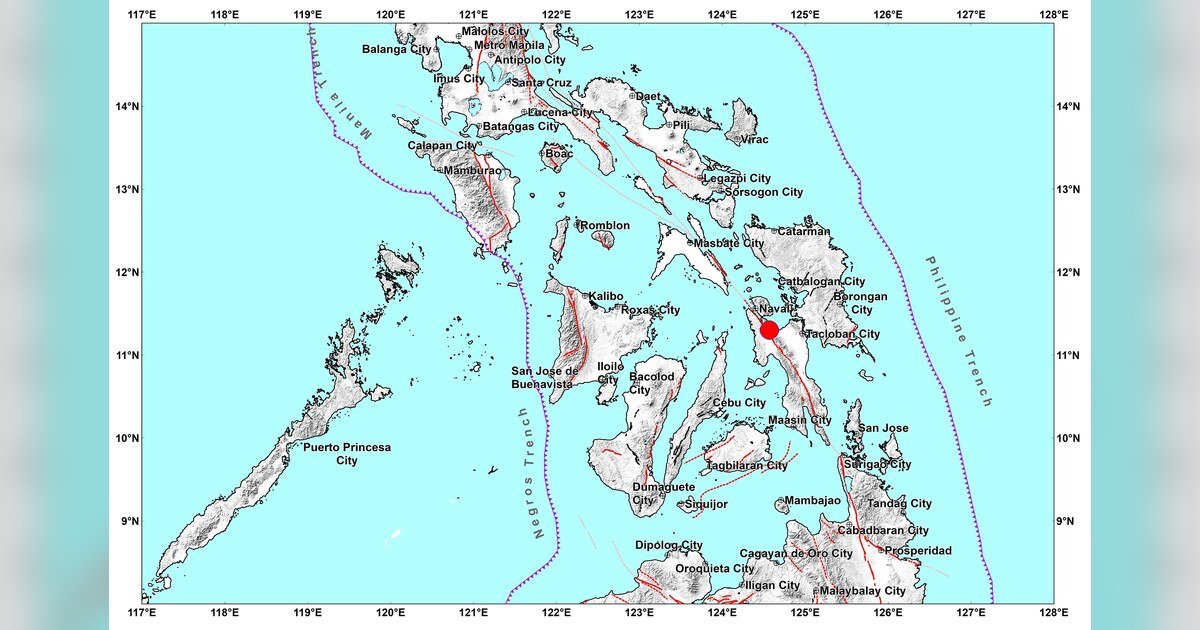
According to the Philippine Institute of Volcanology and Seismology (PHIVOLCS-DOST), the earthquake struck at exactly 3:59:13 in the afternoon, Philippine Standard Time. The agency pinpointed the epicenter roughly 8 kilometers west-northwest of Capoocan, Leyte, placing its coordinates at 11.29°N, 124.57°E. PHIVOLCS-DOST further classified the quake as tectonic in origin, with a focal depth of only 8 kilometers — considered shallow and therefore more likely to be felt at the surface.
PHIVOLCS-DOST released its formal bulletin — designated Earthquake Information No. 2 — at 4:29 PM PHT on the same day, approximately 30 minutes after the tremor occurred. The agency indicated this bulletin serves as its final release on the event, barring any new developments that would require a follow-up report.
Shaking Intensities Reported Across Leyte
Using the PHIVOLCS Earthquake Intensity Scale (PEIS), the agency documented varying levels of shaking across multiple localities in Leyte. The strongest recorded felt intensity was Intensity IV, which was reported in both Capoocan and the municipality of Leyte. PHIVOLCS-DOST describes Intensity IV as strong shaking — enough to be felt by many persons indoors, cause hanging objects to swing noticeably, and potentially rouse those who are asleep.
Intensity III — characterized as weak to moderate shaking, comparable to the vibration of a passing light truck — was felt across four Leyte communities: Villaba, Carigara, Tabango, and Kananga. Residents indoors in these areas would have noticed the tremor, though it was not described as alarming in strength.
Intensity II, described as very slight shaking noticeable only to a few people at rest or on upper floors, was experienced in Palompon, the City of Ormoc, Matag-ob, Alangalang, and San Isidro — all within Leyte province, as PHIVOLCS-DOST reported.
Instrumental Seismic Readings
Beyond the felt reports submitted by local residents, PHIVOLCS-DOST also released data from seismic monitoring instruments deployed across the region. These instruments registered Intensity III in Kananga and Villaba in Leyte. Intensity II was recorded instrumentally in Alangalang and the City of Ormoc, also in Leyte. Meanwhile, Intensity I — the lowest detectable level — was recorded in San Jorge and Villareal in Samar, indicating that the tremor’s reach extended slightly beyond Leyte’s borders, though at a barely perceptible level.
Instrumental readings provide objective measurements that complement resident-reported intensities, helping PHIVOLCS-DOST build a fuller picture of how seismic energy propagated from the epicenter outward.
No Threat to Life or Property
PHIVOLCS-DOST assessed that the September 17 earthquake does not pose a risk of structural damage to buildings or infrastructure. The agency also stated that no aftershocks are expected to follow the main event. This assessment is consistent with the quake’s moderate magnitude and the relatively short duration of shaking reported across affected areas.
Residents in Leyte localities who felt the tremor are encouraged to monitor the official PHIVOLCS website at phivolcs.dost.gov.ph for any updates, should the agency revise its assessment based on new information.
By the Numbers
- Magnitude 4.4 — strength of the tectonic earthquake
- 8 km — shallow focal depth of the quake
- 8 km — distance of epicenter west-northwest of Capoocan, Leyte
- 3:59:13 PM PHT — precise time the quake struck on September 17, 2026
- 4:29 PM PHT — time PHIVOLCS-DOST released Earthquake Information No. 2
- Intensity IV — highest felt intensity, recorded in Capoocan and Leyte municipality
- 11 localities — number of towns and cities across Leyte and Samar with recorded shaking
Why This Matters
Shallow tectonic earthquakes, even at moderate magnitudes, can be felt across wide areas and cause alarm among communities unaccustomed to frequent seismic activity. PHIVOLCS-DOST’s prompt bulletin — issued within 30 minutes of the event — reflects the importance of timely, official communication in preventing unnecessary panic and guiding public response. The agency’s clear declaration that no damage or aftershocks are expected provides residents across affected Leyte towns with authoritative reassurance based on scientific assessment.
Source: Philippine Institute of Volcanology and Seismology (PHIVOLCS-DOST), Earthquake Information No. 2, September 17, 2026