CEBU, Philippines — Seismic monitors picked up a magnitude 4.1 earthquake near the coastal town of Medellin in northern Cebu on the afternoon of Tuesday, September 22, 2026 — yet another reminder that the ground beneath the region has not fully settled following a major rupture nearly 12 months ago.
Event Details and Location
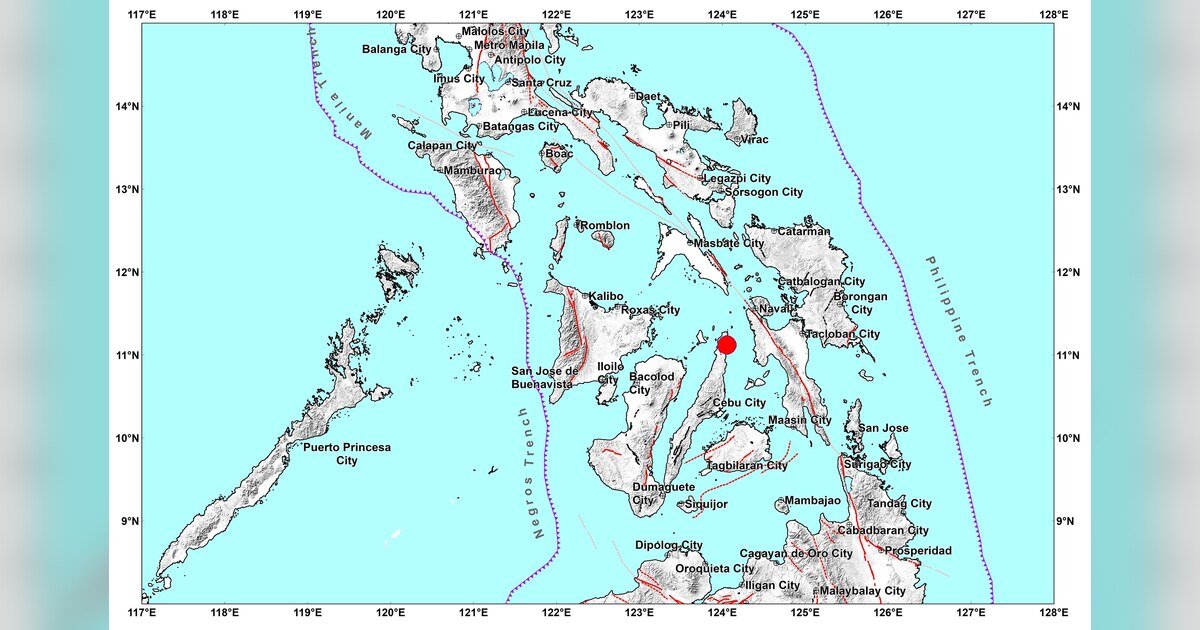
The Philippine Institute of Volcanology and Seismology (PHIVOLCS-DOST) logged the tremor at exactly 2:48 PM Philippine Standard Time (PHT) on September 22, 2026. According to PHIVOLCS-DOST, the earthquake’s epicenter was situated roughly 11 kilometers south-southeast of Medellin, Cebu, at geographic coordinates 11.12°N, 124.06°E. The agency further noted that the quake originated at a shallow depth of focus of only 2 kilometers beneath the surface, classifying it as tectonic in origin.
Shallow earthquakes — those occurring at depths of less than 70 kilometers — are generally capable of producing stronger ground shaking relative to their magnitude compared with deeper events, though the relatively modest magnitude of this particular tremor limited its potential impact on the surrounding communities.
Linked to the 2025 Northern Cebu Earthquake
PHIVOLCS-DOST officially identified the September 22 tremor as an aftershock connected to the powerful Mw6.9 Offshore Northern Cebu earthquake that struck on September 30, 2025. That earlier earthquake was a significant seismic event that caused widespread concern across the northern portions of Cebu province. As the agency’s records confirm, aftershock sequences from major earthquakes can continue for months or even years following the initial mainshock, gradually decreasing in frequency and magnitude over time.
The fact that a perceptible aftershock was still being recorded nearly one full year after the September 30, 2025 mainshock underscores the prolonged nature of seismic sequences tied to large-magnitude ruptures. PHIVOLCS-DOST has been tracking ongoing seismic activity in the area throughout this extended period.
Damage Assessment and Bulletin Status
In its official bulletin released at 2:56 PM PHT on September 22, 2026, PHIVOLCS-DOST stated that no damage is expected as a result of this magnitude 4.1 earthquake. The agency similarly indicated that it does not anticipate further aftershocks stemming directly from this particular event. PHIVOLCS-DOST also confirmed that the bulletin issued that afternoon is intended to be the sole official release for this earthquake, unless new or additional information comes to light that warrants a follow-up advisory.
This kind of single-bulletin approach is standard practice for lower-magnitude events where monitoring data indicates a low probability of significant follow-on activity. Authorities have not reported any injuries, structural damage, or disruptions to public services in connection with the tremor.
Continued Monitoring by PHIVOLCS-DOST
PHIVOLCS-DOST emphasized that it continues to maintain active seismic monitoring across the Philippine archipelago. The agency routinely tracks earthquakes of all magnitudes and issues timely bulletins to keep the public informed of any developments. Residents in earthquake-prone areas are consistently advised by PHIVOLCS-DOST to stay updated through official government channels rather than relying on unverified social media reports.
The public may access real-time earthquake information and official advisories directly through the PHIVOLCS-DOST website at phivolcs.dost.gov.ph. In the event of felt earthquakes, residents are also encouraged to submit intensity reports to help the agency gather data on local ground shaking.
Medellin is a municipality located in the northern tip of Cebu island, an area that falls within a seismically active zone given its proximity to offshore fault systems. Communities in the area have grown accustomed to periodic seismic activity, though public awareness and preparedness remain key priorities for both local government units and national agencies involved in disaster risk reduction.
By the Numbers
- M4.1 — Magnitude of the September 22, 2026 aftershock
- 2:48 PM PHT — Time the earthquake was recorded by PHIVOLCS-DOST
- 11 km — Distance of the epicenter south-southeast of Medellin, Cebu
- 2 km — Shallow depth of focus of the earthquake
- Mw6.9 — Magnitude of the September 30, 2025 mainshock that generated this aftershock sequence
- 2:56 PM PHT — Time PHIVOLCS-DOST issued its official bulletin for the event
Why This Matters
The continued occurrence of aftershocks nearly a year after the Mw6.9 Offshore Northern Cebu earthquake illustrates how prolonged seismic sequences can persist long after a major rupture, requiring sustained public vigilance. Although PHIVOLCS-DOST confirmed no damage is expected from this M4.1 event, its detection serves as a reminder that northern Cebu remains seismically active and that communities in the area should maintain earthquake preparedness measures. Ongoing monitoring by PHIVOLCS-DOST is essential for providing timely warnings and accurate public information in a region that continues to experience residual seismic activity from the 2025 mainshock.
Source: PHIVOLCS-DOST bulletin / wire reports