
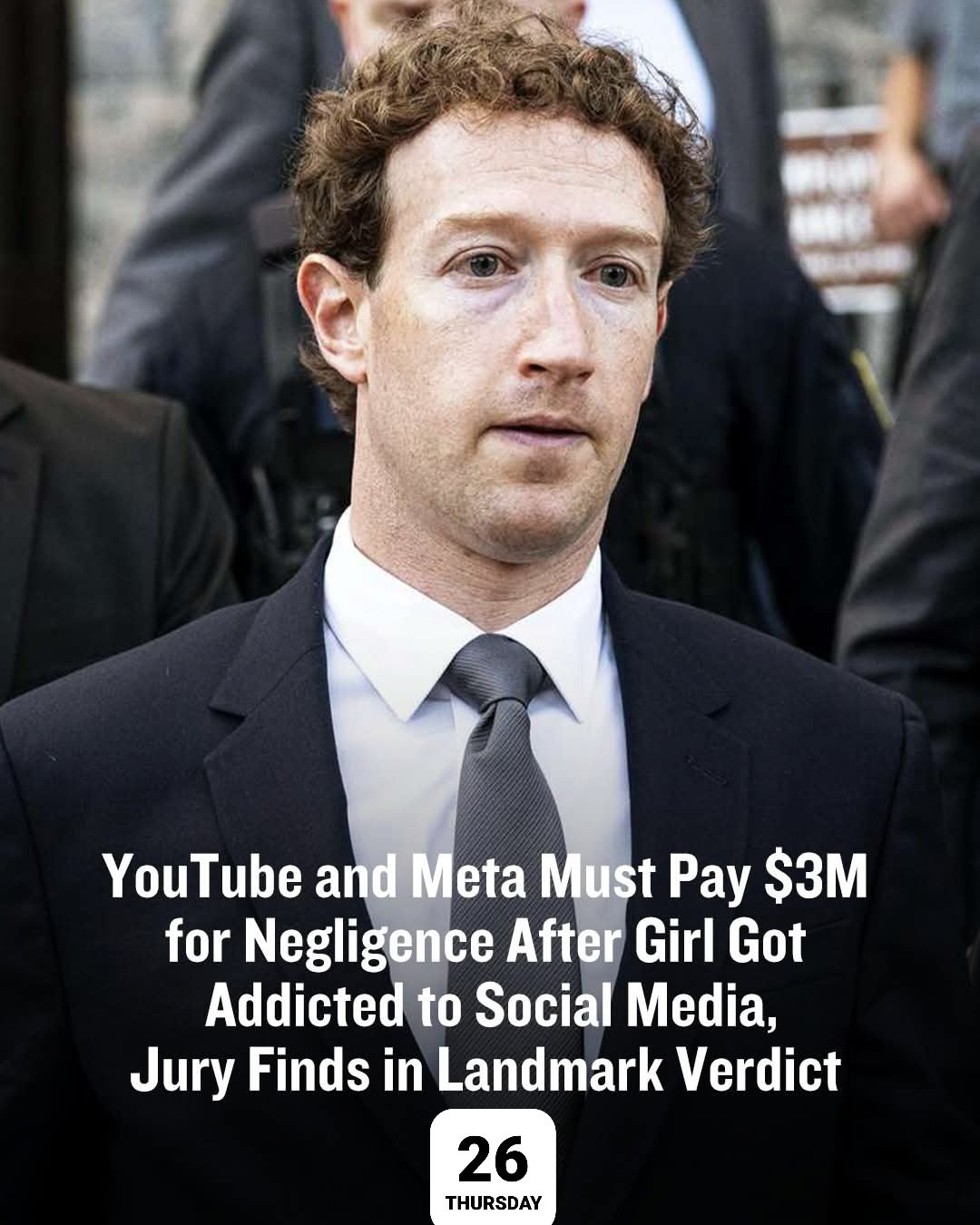
LOS ANGELES — In a landmark verdict that could have far-reaching implications for the technology industry, a California jury has found Meta and YouTube liable for designing their social media platforms in a way that contributed to addiction and mental health harm in a young user.
The ruling, delivered in Los Angeles Superior Court after weeks of testimony, marks the first major trial of its kind in the United States to reach a jury decision. The jury concluded that the companies were negligent in the design of their platforms and failed to adequately warn users about the potential risks, thereby playing a substantial role in causing psychological harm to the plaintiff.
Jury Orders $3 Million in Damages, Assigns Blame
Jurors ordered Meta and YouTube to pay a total of $3 million in compensatory damages to the plaintiff, a now-20-year-old woman who claimed she became addicted to social media as a child. The jury assigned roughly 70 percent of the responsibility to Meta and 30 percent to YouTube, which is owned by Google’s parent company, Alphabet. The court also recommended additional punitive damages, though these are expected to be subject to appeal.
Legal analysts suggest that this decision could influence thousands of pending lawsuits accusing social media companies of harming children and teenagers through addictive design features. These features include autoplay, infinite scrolling, algorithmic recommendations, and image filters, all designed to maximize user engagement.
Lawsuit Alleges Deliberate Engineering for Addiction
The lawsuit was initiated by a young California woman, identified only by her first name in court. She testified that she began using YouTube and Instagram at a young age and developed compulsive habits that led to anxiety, depression, body dysmorphia, and social withdrawal by her early teens. Her legal team argued that the platforms were deliberately engineered to keep young users engaged for as long as possible, despite internal research and expert warnings indicating that these designs could be harmful.
The trial included testimony from executives, engineers, and expert witnesses. The jurors also reviewed internal company documents that discussed strategies to increase user engagement among younger audiences.
The plaintiff’s attorneys drew parallels between this case and past lawsuits against tobacco companies, arguing that the technology industry was aware of the potential harm caused by its products but prioritized growth and profit over user safety.
Advocates Hail the Verdict as a Turning Point
Following the verdict, James Steyer, founder of the nonprofit Common Sense Media, stated, “This case represents a major step toward holding social media companies accountable. For years families have warned that these platforms were harming children, and now a jury has agreed.”
Companies Reject Responsibility, Plan Appeals
Both Meta and Google have rejected the verdict and announced their intention to challenge it in court.
Meta stated that the ruling disregards the complexity of teen mental health and the numerous factors that can contribute to it. “We respectfully disagree with the verdict and will appeal,” the company said in a statement, highlighting that it has introduced parental controls, content filters, and other safety tools to protect younger users.
Google also expressed disagreement with the decision, arguing that it misunderstands how YouTube operates. The company described YouTube as a streaming service rather than a traditional social network.
During the trial, defense lawyers argued that the plaintiff faced personal and family challenges unrelated to social media use. They also presented records suggesting that she did not spend excessive time on the platforms while logged into her accounts.
The plaintiff’s legal team countered that much of her activity occurred without logging in, making official usage data incomplete.
A Bellwether Trial with Widespread Implications
The case is widely regarded as a bellwether trial, serving as one of the first in a series of lawsuits that could determine how courts handle claims regarding social media companies’ responsibility for mental health problems among young users.
Currently, over a thousand similar cases have been filed in state and federal courts across the United States, including lawsuits from parents, school districts, and state attorneys general. These cases argue that companies designed their platforms to maximize user attention, even when internal research indicated that certain features could increase the risks of anxiety, self-harm, and depression among teenagers.
Future Trials Could Force Industry Changes
Additional trials are expected later this year, and repeated losses could expose technology companies to billions of dollars in damages and potentially force significant changes in how their products are designed and operated.
Growing Scrutiny from Lawmakers and Regulators
This verdict occurs amid increasing scrutiny of social media companies from lawmakers, regulators, and parents who are concerned about the impact of online platforms on young people. The Philippine government, like many others, is monitoring these developments closely, although no direct impact on existing Philippine laws or regulations has been officially announced. However, this case may influence future policy discussions regarding social media regulation and user protection in the Philippines.
In recent months, courts have also heard cases involving child safety, online exploitation, and consumer protection claims against major technology firms. This signals a broader shift toward holding platforms accountable for the effects of their products.
Legal experts suggest that the addiction trial could become a defining moment, similar to earlier cases against cigarette manufacturers, which ultimately led to strict regulations and substantial financial settlements.
While the ruling currently applies only to one plaintiff, its implications could extend far beyond a single courtroom. If the decision is upheld on appeal, it could compel social media companies to re-evaluate how their platforms are designed, particularly for children and teenagers, and potentially mark the beginning of a new era of legal accountability for the technology industry.
Photo credit: Photo by Gerd Altmann from Pixabay