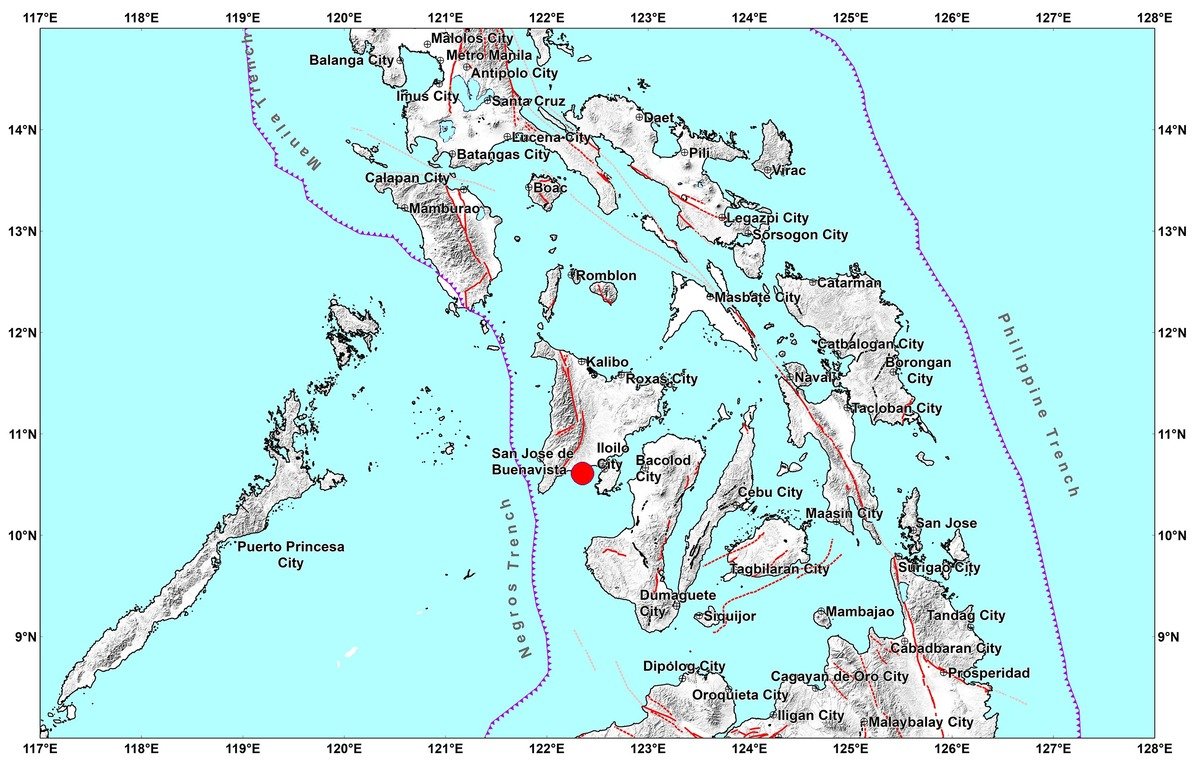
The Philippine Institute of Volcanology and Seismology (PHIVOLCS-DOST) recorded a 4.3-magnitude tectonic earthquake in the waters near Guimbal, Iloilo on Tuesday morning, generating light tremors felt across several areas in Guimaras province and Iloilo City. The seismic agency has determined that no structural damage or aftershocks are anticipated from this seismic event.
Seismic Event Specifications
The tremor was registered at exactly 9:21 AM Philippine Standard Time on April 15, 2026, with PHIVOLCS pinpointing the earthquake’s epicenter at coordinates 10.60°N, 122.36°E. The seismic activity originated from a relatively shallow focal depth of 4 kilometers underground, positioned approximately 7 kilometers south 30 degrees east of Guimbal municipality in Iloilo province.
PHIVOLCS classified this seismic event as tectonic in nature, meaning it resulted from the natural movement and displacement of rock formations along existing fault systems beneath the Earth’s crust. Such geological activity is characteristic of the Philippines’ position within the tectonically active Pacific Ring of Fire, where multiple crustal plates converge and interact.
Regional Shaking Measurements
Instrumental monitoring stations operated by PHIVOLCS documented different levels of ground motion intensity throughout the affected region. Jordan municipality in Guimaras province recorded the most significant shaking at Intensity III on the PHIVOLCS Earthquake Intensity Scale, classified as weak tremors that are generally perceptible to many individuals indoors, particularly those occupying higher floors of multi-story structures.
Meanwhile, seismic instruments in Iloilo City and Buenavista, Guimaras registered Intensity II shaking, representing slightly weaker ground motion typically noticed by fewer people in stationary positions, especially residents on elevated floors of buildings. The municipality of San Lorenzo in Guimaras experienced the mildest tremors at Intensity I, which represents barely perceptible shaking felt only by very few individuals under optimal conditions.
Damage Assessment and Forecasting
In its official bulletin released at 10:30 AM, PHIVOLCS provided assurance that the earthquake’s magnitude and characteristics do not pose threats to buildings, infrastructure, or public safety in the affected communities. The agency’s seismologists have evaluated the tremor’s parameters and concluded that no structural damage should be expected from this particular seismic event.
Furthermore, PHIVOLCS analysts do not forecast any subsequent aftershocks stemming from this earthquake. This assessment is based on the tremor’s relatively moderate magnitude, shallow depth, and tectonic characteristics, which suggest it represents a single, isolated release of accumulated geological stress rather than the beginning of a prolonged seismic sequence.
Geological Context
The earthquake’s tectonic classification reflects the complex geological dynamics underlying the Philippine archipelago, where several major crustal plates interact along numerous active fault systems. The movement of these massive rock formations generates periodic seismic activity as accumulated stress is released through sudden displacement along fault planes.
This particular tremor occurred in a region where ongoing tectonic processes continuously shape the landscape through gradual crustal movements and periodic earthquake activity. The shallow 4-kilometer depth of this event places it within the upper crustal layers where such tectonic adjustments commonly occur.
Ongoing Seismic Surveillance
PHIVOLCS announced that this bulletin represents the final official communication regarding this specific earthquake unless new developments or additional information warrant further updates. The agency maintains continuous surveillance of seismic activity throughout the Philippine archipelago through its comprehensive network of monitoring instruments and observation stations.
Citizens and local government units can access current seismic information and official updates through the PHIVOLCS website at phivolcs.dost.gov.ph, where real-time earthquake data and safety information are regularly published for public awareness and preparedness purposes.